Imagine a quiet, overcast afternoon in a London flat. You pull a freshly baked tray of cookies from the oven. They look the part—golden edges, slightly puffed centres, chocolate pooling perfectly on the surface. But the first bite brings a faint sense of disappointment. They are sweet, certainly, but they lack depth. They taste a little hollow. The missing element is not an expensive vanilla bean paste or a rare sea salt. The answer sits quietly in your fridge, waiting for a little heat.
The Alchemy of the Pan
We are often taught that room temperature butter, beaten until pale and fluffy with sugar, is the only true starting point for cookie dough. It is a gospel repeated in nearly every standard recipe. Yet, relying solely on creamed butter leaves a vast reservoir of flavour untouched. Think of standard butter as a blank canvas; it provides texture and fat, but very little personality.
By introducing heat, you force the butter to mature. You coax out a rich, toasted complexity that grounds the heavy sweetness of the sugar. I learned this lesson leaning against a stainless steel counter in a small, fiercely busy bakery in Soho. The head baker was preparing a massive batch of shortbread. Instead of tossing blocks of butter into the commercial mixer, she stood over a roaring hob, swirling a pan of melted fat.
“Raw butter is just milk asleep,” she murmured, watching the bubbles turn into a thick foam. As the moisture evaporated, the room filled with an aroma like roasted hazelnuts and warm caramel. It was a revelation. That simple application of heat transformed a basic fat into a primary seasoning, elevating a humble dough into something extraordinary.
| Baker Profile | The Practical Benefit |
|---|---|
| The Casual Weekend Baker | Elevates cheap supermarket ingredients into professional-tasting bakes without buying premium extracts. |
| The Flavour Purist | Introduces complex, layered toffee notes that perfectly balance cloying sugar and intense chocolate. |
| The Texture Seeker | Removing water weight creates a noticeably chewier, denser centre with beautifully crisp edges. |
The Physical Craft of the Pan
Browning butter demands your full attention, but the process is deeply rewarding. Begin by placing your unsalted butter into a light-coloured, heavy-bottomed saucepan. You need a pale surface to monitor the colour change; a black non-stick pan will hide the transformation until it is too late. Place the pan over a medium heat and simply watch.
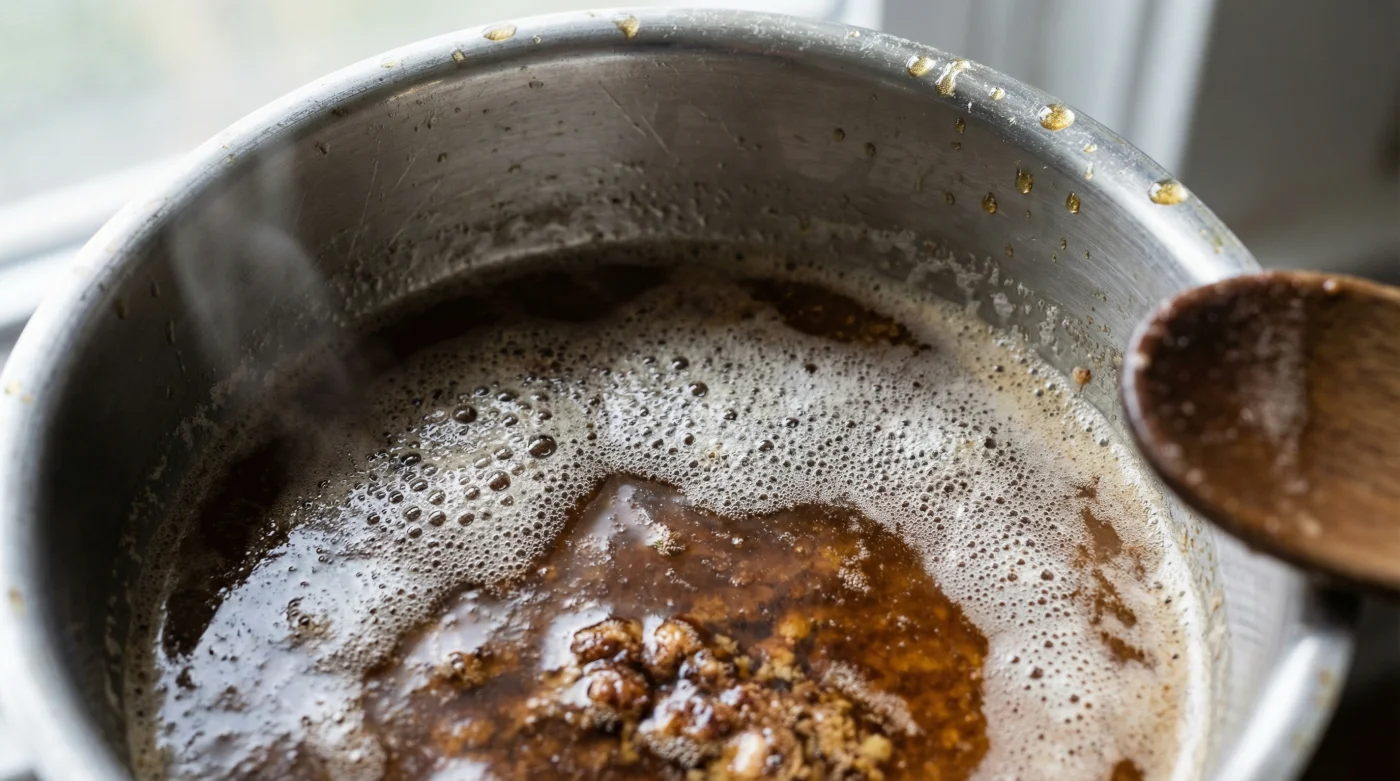
At first, the butter will melt into a cloudy yellow pool. Then, it will begin to boil and sputter loudly. This is the sound of water evaporating from the fat. Listen closely to this sputtering. As the water disappears, the loud bubbling will suddenly quieten down, replaced by a dense, silent layer of foam on the surface.
This quiet moment is your cue. Underneath the foam, the milk solids are dropping to the bottom of the pan and beginning to toast. Gently swirl the pan continuously. You will start to see dark amber specks gathering at the base, and that unmistakable hazelnut aroma will hit the air.
- Red onions lose their harsh acidic burn during this rapid ice soak.
- Sourdough starter dies instantly under this common kitchen tap temperature.
- Porridge oats develop rich bakery flavours undergoing this dry pan toasting.
- Frozen spinach ruins delicate homemade quiches skipping this aggressive dehydration step.
- Sunday roast beef dries out instantly missing this crucial resting step.
| Temperature Phase | Physical Reaction | Sensory Indicator |
|---|---|---|
| 30°C – 35°C | Fat liquefies and separates from milk solids and water. | Butter turns into a cloudy yellow liquid. |
| 100°C | Water boils off and escapes as steam. | Aggressive sputtering and large bubbles. |
| 120°C – 140°C | Amino acids and sugars toast. | Sputtering stops; dense foam appears; hazelnut scent emerges. |
To use it in your dough, you must consider the texture you want. If your recipe calls for melted butter, allow the browned butter to cool slightly before mixing it with your sugars. This method produces a wonderfully chewy biscuit. If your recipe demands creamed butter, place your bowl of browned butter in the fridge until it solidifies again. Once firm, you can beat it with sugar exactly as you normally would, injecting that toffee note straight into a cake-like crumb.
Because you have evaporated roughly fifteen percent of the butter’s weight in water, your dough might feel a fraction drier than usual. A solitary teaspoon of milk, added during the mixing stage, restores that balance perfectly, ensuring your dough remains pliable and rich.
| Element | What to Look For | What to Avoid |
|---|---|---|
| Pan Choice | Stainless steel or pale enamel to monitor colour change. | Dark non-stick pans that hide the toasting solids. |
| Aroma | Rich, toasted, nutty, and sweet caramel notes. | Sharp, acrid, or bitter smells indicating burnt milk solids. |
| Appearance | Deep amber liquid with dark brown specks at the bottom. | Black specks or a completely blackened liquid. |
A Slower Rhythm for Sweeter Rewards
Baking is often treated as a race to the finish line, a hasty mixing of bowls to get a sweet treat in front of the television. Taking those extra five minutes to stand by the hob shifts that dynamic. It is a moment of deliberate slowness. You are no longer just following a set of dry instructions; you are actively cooking your ingredients before they even reach the dough.
This small act of patience changes the entire character of your kitchen. The smell lingers in the air long after the oven is turned off. It turns a mundane task into a craft. When you finally bite into that biscuit, the flavour does not just vanish into sweetness. It lingers, grounded by the nutty, savoury depth of toasted butter. It is proof that the best things we make require just a fraction more time, and a little more care.
“Browning butter is the culinary equivalent of turning the volume up on a quiet song; suddenly, you hear every single instrument.” – London Pastry Chef
Frequently Asked Questions
Can I use salted butter instead of unsalted?
It is highly recommended to stick with unsalted. As the water evaporates during browning, the salt concentrates. This makes the final flavour unpredictably sharp and difficult to control.How do I stop the butter from burning once it browns?
The transition from browned to burnt happens in seconds. Remove the pan from the heat the moment you smell toasted nuts and pour the butter into a cool, heatproof bowl immediately.Do I need to adjust the liquid in my standard recipe?
Yes, slightly. Because browning removes about fifteen percent of the water weight, adding a tiny splash of milk or an extra egg yolk helps restore the moisture balance in your dough.Can I brown butter in advance to save time?
Absolutely. You can brown a large batch, let it cool, and keep it in an airtight container in the fridge for a couple of weeks. Just scoop it out when you are ready to bake.Does using browned butter change the physical texture of the cookie?
If used melted, it leads to a denser, chewier biscuit. If you chill it until solid and cream it with sugar, it retains a lighter, cake-like structure while still delivering that intense toffee flavour.