You know the morning sound. It is a harsh, frantic crackle. You stand over the hob, spatula in hand, watching a pool of vegetable oil spit aggressively across the kitchen tiles. You are trying to coax a simple egg into submission. But the edges turn to a tough, plastic-like lace, and the white bubbles up into a rubbery blister. You have likely spent years believing the kitchen gospel: that a high-smoke-point oil or a rapidly melting knob of standard butter is the only proper way to fry an egg. It turns out, that advice has been robbing you of the most comforting, structurally perfect breakfast of your life.
There is a quieter, richer method that contradicts everything we are taught about high-heat frying. It involves placing the oil bottle back in the cupboard and reaching for a small pot of double cream instead. This single ingredient shift completely changes how the egg cooks, turning a daily frustration into a reliable morning ritual.
The Geography of the Frying Pan
Frying an egg is entirely about the geography of the pan. Usually, when you drop a cold egg into hot oil, you are forcing an immediate, violent reaction. The water in the egg white hits the fat and explodes. The bottom burns before the top can set. But using double cream changes the gravity of the cooking process. Instead of a shock, it provides a gentle, evolving heat.
I learned this years ago while watching Chef Arthur work a breakfast shift in a damp, slate-floored kitchen in Penzance. The tickets were piling up, but Arthur never seemed rushed. He never reached for the sunflower oil. Instead, he poured a modest splash of rich Cornish double cream directly into his pans. He would crack the eggs right into the cold cream and only then turn up the heat. “You cannot fight the egg,” he told me, wiping down his station. “You have to let the fat do the talking. The cream builds a cradle for the white, and then it builds the fire to crisp the base.”
| The Cook | The Frustration | The Double Cream Benefit |
|---|---|---|
| The Rushed Parent | Splattering hot oil on clothes and surfaces. | Zero splatter. The water evaporates gently before the frying stage begins. |
| The Texture Critic | Rubbery whites and chalky, overcooked yolks. | Steams the top while frying the bottom, ensuring tender whites and runny yolks. |
| The Flavour Chaser | Bland, greasy edges that taste of refined cooking oil. | Caramelised milk solids create a nutty, browned-butter crust. |
The Mechanics of the Split
To understand why this works, you have to look at what double cream actually is. It is an emulsion of water, butterfat, and milk solids. When you heat vegetable oil, it just gets hotter. When you heat double cream, it undergoes a beautiful, physical transformation. It separates.
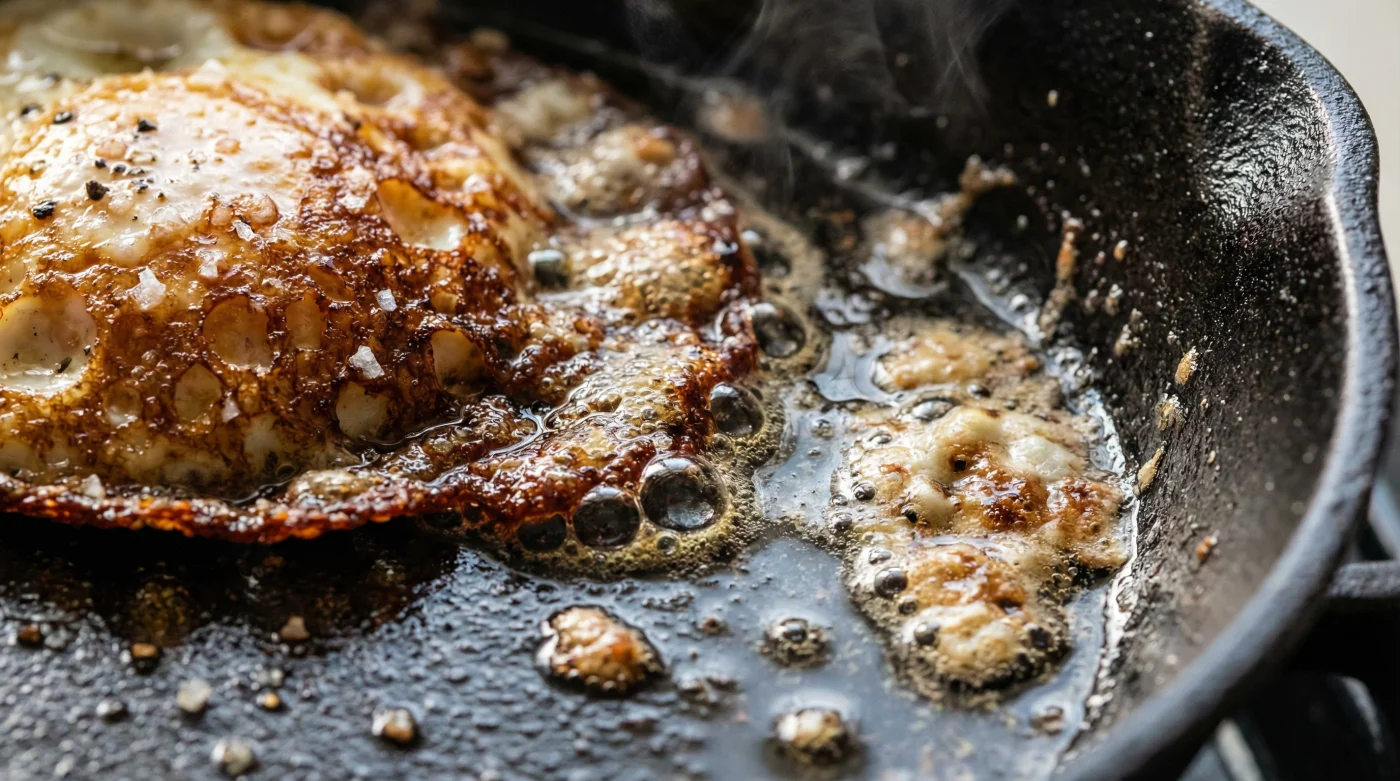
As the cream warms in the pan, the water content begins to simmer. This gentle bubbling steams the bottom of the egg, cooking the white softly without any aggressive blistering. As the heat rises, the water evaporates entirely. What is left behind? Pure, concentrated butterfat and milk solids. The butterfat then begins to fry the bottom of the egg, while the milk solids toast in the heat, wrapping the edges of your egg in a delicate, caramelised crust that tastes remarkably like brown butter.
| Temperature Stage | Physical Reaction in Pan | Impact on the Egg |
|---|---|---|
| Low Heat (Start) | Cream thins and begins to bubble gently. | The egg white sets slowly and evenly, preventing rubbery textures. |
| Medium Heat (Middle) | Water evaporates; bubbling changes pitch. | The top of the white steams to a finish while the yolk remains soft. |
| High Heat (Finish) | Butterfat separates; milk solids brown. | The bottom fries in pure fat, creating a crisp, nutty-tasting edge. |
The Rhythm of the Pour
Cooking this way requires a different physical rhythm. You are no longer managing a frantic sizzle; you are guiding a process. The actions are mindful and deliberate.
Start with a cold frying pan on the hob. Do not turn the heat on yet.
- Minced pork achieves tender restaurant textures following this aggressive water whipping.
- Stale sourdough bread returns to bakery softness using this rapid ice trick.
- Red onions lose their harsh acidic burn during this rapid ice soak.
- Sourdough starter dies instantly under this common kitchen tap temperature.
- Porridge oats develop rich bakery flavours undergoing this dry pan toasting.
Now, turn the heat to medium-high. Stand back and listen. You will first hear a soft, wet simmer. This is the water doing its work. Watch as the white turns opaque, merging seamlessly with the bubbling cream.
After about three minutes, the sound will change. The wet simmer will tighten into a sharp, dry crackle. This is the precise moment the butterfat takes over. The edges will begin to turn a deep, golden brown. Once the edges are crisp and the top of the white is set, slide your spatula underneath. It will lift effortlessly, leaving nothing behind but a few toasted milk solids.
| Ingredient Element | What To Look For | What To Avoid |
|---|---|---|
| The Cream | Standard fresh UK double cream (around 50% fat). | Single cream or UHT cream. They lack the fat content to fry the egg and will simply boil it. |
| The Pan | A heavy-based non-stick or well-seasoned cast iron pan. | Thin aluminium pans that distribute heat unevenly and scorch the milk solids. |
| The Heat | Starting cold and bringing up to medium-high. | Dropping the cream into a pre-heated pan; it will instantly scorch. |
A Softer Start to the Day
Changing how you fry an egg might seem like a trivial domestic detail, but it alters the entire tone of your morning. You are trading the harsh, defensive posture of dodging spitting oil for a few moments of quiet observation. You are taking a £1.50 pot of supermarket double cream and using it to orchestrate a small piece of culinary magic.
When you slide that egg onto a piece of heavily buttered sourdough, you will notice the difference immediately. The base holds its structure, offering a satisfying crunch. The white is exceptionally tender, and the flavour carries a rich, nutty depth that oil could never provide. It is proof that sometimes, the best way to improve a daily habit is to completely ignore the conventional rules.
“The cream holds the egg like a cradle, gently setting the white, long before it builds the fire to crisp the base.”
Frequently Asked Questions
Does the egg end up tasting like milk or dairy?
Not at all. Because the water evaporates and the milk solids toast, the final flavour profile is entirely savoury, closely resembling brown butter or ghee.Can I use single cream or whipping cream instead?
Single cream contains too much water and not enough fat; it will boil your egg rather than fry it. Whipping cream can work in a pinch, but double cream provides the optimal fat-to-water ratio for a crisp edge.Do I need to cover the pan with a lid?
It is usually unnecessary because the evaporating water from the cream naturally steams the top of the egg. However, if you prefer your yolks slightly firmer, you can place a lid on for the final thirty seconds.Will this ruin my non-stick frying pan?
No. Because you are starting with a cold pan and allowing the heat to rise gradually, this method is actually far gentler on non-stick coatings than searing with high-smoke-point oils.How do I clean the pan afterwards?
The toasted milk solids might look intimidating, but because they are suspended in butterfat, they lift away easily. A simple wipe with a paper towel followed by warm, soapy water is all that is required.