It is half-past six on a dark Tuesday morning. The kitchen floor is cold, the kettle is beginning its low rumble, and you are standing by the cooker, tipping a cascade of dusty, pale flakes from a cardboard box straight into a saucepan. You pour over cold milk, turn up the heat, and wait for the familiar, gluey mass to form. Most mornings, you accept this grey, homogenous bowl as an inevitability, masking its blandness with a heavy pour of golden syrup. You do this because it is the habit you were taught.
The Perspective Shift: Waking the Dormant Grain
For decades, we have treated porridge oats as an instant ingredient, ready to be boiled the second they leave the packet. But this is a culinary misunderstanding. Think of a raw oat not as a finished product, but as a sleeping seed. Tipping cold oats straight into cold milk is like trying to force a stiff engine into high gear on a freezing morning; it lacks the heat required to wake up the internal mechanics. By skipping the dry heat, you bypass the natural, nutty oils trapped inside the grain, leaving them locked away beneath a starchy exterior.
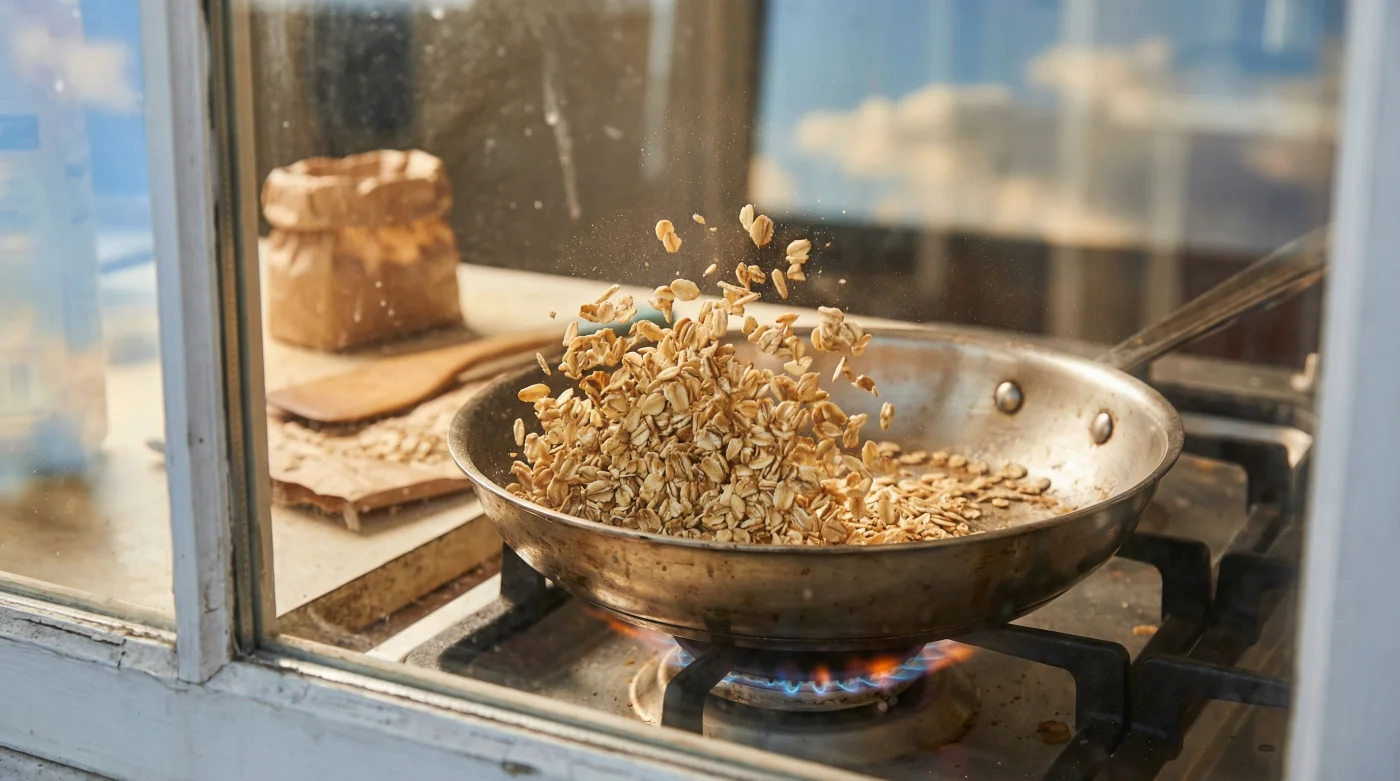
I learned this distinct difference watching Thomas, an artisan baker in a cramped Edinburgh kitchen, preparing his morning staff meal. He would never let a drop of water or milk touch an oat until it had first met bare metal. He would throw handfuls of jumbo oats into a dry, heavy frying pan, tossing them over a medium flame. Within three minutes, the kitchen smelled of warm shortbread and toasted hazelnuts. He was coaxing out the essential oils, fundamentally altering the oat’s character before the cooking process even began.
| The Eater | The Specific Benefit |
|---|---|
| The Rushed Commuter | Demands just three extra minutes but creates a naturally rich flavour, reducing the need for sugary syrups to make breakfast palatable. |
| The Texture Critic | Transforms the final bowl from wallpaper paste into distinct, toothsome grains with a slight, satisfying chew. |
| The Weekend Baker | Provides a robust, bakery-style foundation for crumbles, flapjacks, and homemade granola. |
The Practical Application: The Three-Minute Pan Toss
To master this, you need nothing more than a wide frying pan and your senses. Place your dry pan over a medium heat and wait until you can feel a gentle warmth radiating an inch above the metal. Scatter your oats in an even layer. Do not crowd the pan; they need space to breathe and toast evenly. Grab a wooden spoon and keep them moving, shifting them gently from the edges to the centre.
For the first minute, nothing will seem to happen. By the second minute, you will hear a faint rustling sound as the residual moisture evaporates from the grains. By the third minute, the magic occurs. The air will suddenly fill with a rich, buttery aroma, and the edges of the oats will take on a faint, golden hue. This is the exact moment the oils have warmed and become volatile.
- Fresh coriander survives weeks in fridges adopting this simple floral storage.
- Minced pork achieves tender restaurant textures following this aggressive water whipping.
- Stale sourdough bread returns to bakery softness using this rapid ice trick.
- Red onions lose their harsh acidic burn during this rapid ice soak.
- Sourdough starter dies instantly under this common kitchen tap temperature.
| The Physical Process | The Scientific Logic |
|---|---|
| The Maillard Reaction | Applying dry heat at 140 degrees Celsius causes amino acids and reducing sugars to react, creating roasted, biscuit-like flavour compounds. |
| Lipid Warming | Oats contain a high percentage of natural fats. Dry toasting warms these dormant lipids, turning them into volatile, aromatic oils. |
| Starch Modification | Toasting alters the exterior starch structure, delaying gelatinisation so the oat retains a distinct bite instead of instantly dissolving. |
| What to Look For | What to Avoid |
|---|---|
| Jumbo or large rolled oats for the best texture and structure. | Dusty, instant oat sachets which will burn almost instantly. |
| A smell resembling baking biscuits or warm roasted nuts. | Acrid, smoky smells indicating the heat is far too high. |
| A gentle, golden edge on the very tips of the flakes. | Blackened, charred spots that will turn the entire bowl bitter. |
The Bigger Picture: Reclaiming the Morning Rhythm
Changing how you make your breakfast is rarely just about the food. It is about disrupting a mindless routine. Taking three minutes to stand at the cooker, moving a wooden spoon in circles, and waiting for the scent of toasted grain to hit the air is a profoundly grounding act. It forces you to be present, shifting your focus from the rush of the impending workday to the simple, physical reality of the pan in front of you.
When you sit down to eat, the difference is undeniable. The bowl is no longer a vehicle for sugar, but a complex, comforting meal with genuine depth. You have taken a humble, inexpensive staple and, through nothing more than a little heat and attention, elevated it into something that feels quietly luxurious. It is a small victory, but it sets a deliberate, calm tone for the entire day ahead.
“Treat the humble oat with the same respect you would a raw spice; heat it dry, wake up its oils, and it will reward you with flavours you never knew it possessed.”
Frequently Asked Questions
Does this work with quick oats? Quick oats are milled too finely and will burn very rapidly; stick to traditional rolled or jumbo oats for pan toasting.
Should I add butter or oil to the pan? No, the pan must be entirely dry. The oats possess enough natural fat to toast beautifully without requiring extra oil.
Can I toast a large batch in advance? Absolutely. Toast a week’s worth of oats, let them cool completely on a baking tray, and store them in an airtight jar in the cupboard.
Does toasting change the final cooking time? Yes, toasted oats often require a minute or two longer to absorb the liquid because their outer starches have been slightly sealed.
Can I use these toasted oats for overnight oats? Yes, soaking toasted oats in cold milk overnight yields a remarkably complex, nutty flavour compared to using standard raw oats.