You know the exact sensation. You have spent twenty minutes carefully assembling a beautiful summer salad. You have sourced heirloom tomatoes, whisked together a gentle vinaigrette, and crumbled over a generous handful of good feta. You take that first, anticipated bite, expecting a harmony of delicate flavours. Instantly, a sharp, aggressive sting hijacks your palate. The raw red onion has struck again, acting less like a supporting ingredient and more like a culinary bulldozer. It leaves a lingering, pungent aftertaste that seemingly follows you for the rest of the afternoon.
We often accept this harsh acidic burn as the inevitable price of enjoying raw alliums. We assume that a red onion simply is what it is: a loud, brash component that demands the centre stage. But what if you could strip away that intense sulfurous heat while retaining the brilliant magenta colour and that satisfying crunch? The solution is incredibly simple, costing exactly zero pence and requiring merely ten minutes of your time. By plunging your sliced onions into a rapid ice soak, you draw out those potent compounds, leaving behind a crisp, surprisingly sweet vegetable that actually plays nicely with others.
The Myth of the Bully Bulb
Think of the raw red onion as a defensive mechanism wrapped in papery layers. When your knife slices through the cell walls of the onion, an enzyme called alliinase reacts with sulfur-rich amino acids. This creates a volatile compound known as sulfenic acid, which rapidly reorganises into thiosulfinates. In simpler terms, slicing the onion sets off a microscopic tear-gas canister. The finer you slice, the more cells you rupture, and the more aggressive the resulting flavour becomes.
I remember sitting at a battered wooden table in the kitchen of a tiny Cornish seafood bistro, watching the head chef, Thomas, prep his garnish for a delicate crab salad. I noticed he was dropping fistfuls of finely shaved red onions into a massive stainless-steel bowl filled with ice and water. When I asked him why he was chilling them, he smiled and offered me a slice straight from the chopping board, followed by a slice from the icy water. The difference was staggering. The un-soaked onion was fiercely sharp, while the bathed onion was mild, sweet, and unbelievably crunchy. “An onion should be coaxed into the dish, never forced,” he explained, wiping his hands on his apron. “The ice bath is the great equaliser.”
| The Cook | The Daily Frustration | The Ice Bath Benefit |
|---|---|---|
| The Salad Purist | Delicate greens are overpowered by raw heat. | Allows subtle vinaigrettes and herbs to shine through. |
| The Lunch Prepper | Sandwiches smell intensely of onion by midday. | Provides a clean crunch without the lingering afternoon breath. |
| The Fussy Eater | Finds raw onions too spicy or wholly indigestible. | Transforms the texture to be crisp and the flavour to be sweet. |
The Chemistry of the Chill
Water alone is excellent at washing away those defensive sulfur compounds that pool on the surface of the freshly cut vegetable. However, using room temperature or warm water comes with a significant penalty: it softens the cellular structure. Your onion loses its bite in more ways than one, becoming a limp, unappetising ribbon. The introduction of ice is where the true physical transformation happens.
The freezing temperatures physically shock the pectin within the onion’s cell walls. This extreme cold tightens the structure, reinforcing the structural integrity of the vegetable. As the harsh acids leach out into the surrounding liquid, the icy water rushes in to plump up the cells. You are simultaneously neutralising the chemical burn while amplifying the physical crunch.
| Technical Factor | Mechanical Logic | The Culinary Result |
|---|---|---|
| Water Submersion | Dilutes water-soluble thiosulfinates on the cut surface. | Removes the sharp, eye-watering burn entirely. |
| Ice Temperature (0°C) | Contracts cellular pectin and prevents moisture loss. | Maximises structural crispness, preventing limpness. |
| Ten-Minute Duration | Optimal window for osmosis without structural breakdown. | Balances the extraction of heat with the retention of flavour. |
The Ten-Minute Transformation
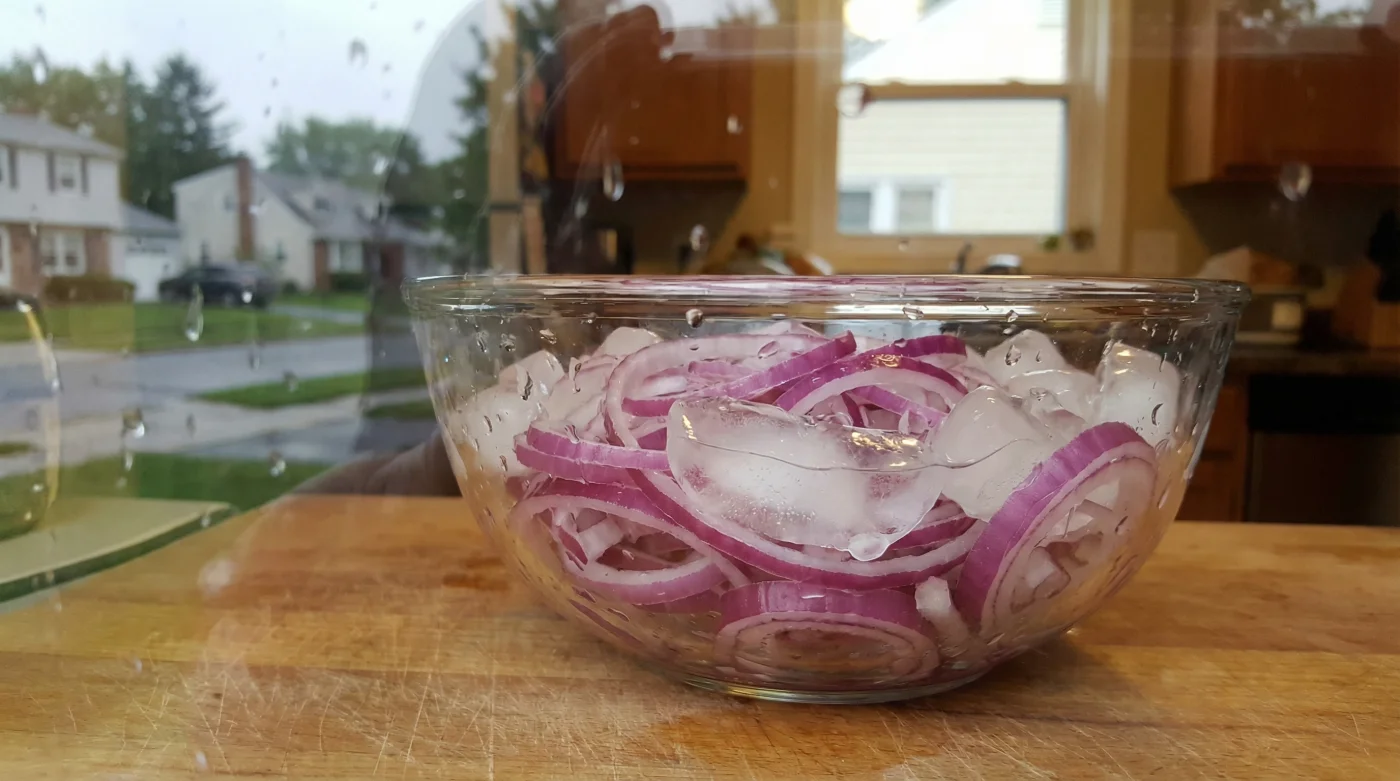
Executing this technique requires mindfulness rather than complex equipment. Begin by taking a sharp chef’s knife and slicing your red onion as thinly as you possibly can. You want delicate, translucent half-moons. A dull knife will crush the cells rather than slice them, releasing more of the bitter compounds and making the onion prone to bruising.
- Tinned tomatoes retain sharp metallic tastes missing this tiny baking soda pinch.
- Fresh coriander survives weeks in fridges adopting this simple floral storage.
- Minced pork achieves tender restaurant textures following this aggressive water whipping.
- Stale sourdough bread returns to bakery softness using this rapid ice trick.
- Red onions lose their harsh acidic burn during this rapid ice soak.
Once the ten minutes are up, the final step is crucial. Drain the onions thoroughly through a sieve, then turn them out onto a clean tea towel or a sheet of kitchen paper. Pat them completely dry. If you introduce wet onions to your salad bowl, the residual water will repel your oil-based dressing, leaving you with a soggy, uninspiring puddle at the bottom of the dish.
| Ingredient Status | What to Look For | What to Avoid |
|---|---|---|
| The Whole Bulb | Heavy for its size, firm to the touch, tight papery skin. | Sprouting green tops, soft spots, or a strong sulfur smell. |
| The Slicing Process | Clean, uniform cuts that leave the board mostly dry. | Crushed edges or an immediate, overwhelming eye-watering sting. |
| The Final Product | Rigid, brightly coloured rings that snap when bent. | Translucent, limp strips that flop over the tines of a fork. |
Harmony in the Bowl
Incorporating this quick, icy ritual into your meal prep completely shifts the dynamic of your cooking. It transforms an ingredient from a necessary evil into a genuinely delightful component. When you remove that harsh, defensive burn, you allow the natural, subtle sweetness of the red onion to step forward. It becomes a team player rather than a solo act.
There is a quiet satisfaction in taking a harsh, unforgiving ingredient and taming it with nothing more than cold tap water and a little patience. You are no longer masking the onion’s bite with heavy dressings or avoiding it altogether. Instead, you are coaxing out its best qualities through a gentle, physical process. It brings a profound sense of balance to your kitchen routine.
The next time you find yourself constructing a quick Greek salad or assembling a lunchtime bagel, give those fiery red slices a brief winter holiday in a bowl of ice. The vibrant colour remains, the satisfying crunch is amplified, and your palate is spared the assault. It is a tiny, effortless adjustment that elevates the humblest of meals into something that feels professionally crafted.
“A raw onion should whisper its presence to a dish, never shout down the other ingredients.”
Frequently Asked Questions
Why red onions specifically, and not white or brown? Red onions are naturally sweeter and traditionally eaten raw in salads, making this technique ideal to highlight their colour and texture without the burn.
Can I leave them in the ice bath for longer than ten minutes? Yes, you can leave them for up to an hour in the fridge, but ten minutes is the sweet spot to remove the bite without them becoming completely waterlogged.
Does this trick work for shallots or spring onions? Absolutely, though they are naturally milder, a brief five-minute plunge will crisp them up beautifully and remove any residual sharpness.
Can I use warm water if I do not have ice? Warm water will wash away the sulfur compounds, but it will also soften the onion slightly, leaving you with a limp texture instead of a crisp snap.
Do I need to add salt or vinegar to the water? No, pure ice water is all you need for crispness. Adding vinegar effectively begins the pickling process, which changes both the flavour profile and the texture entirely.