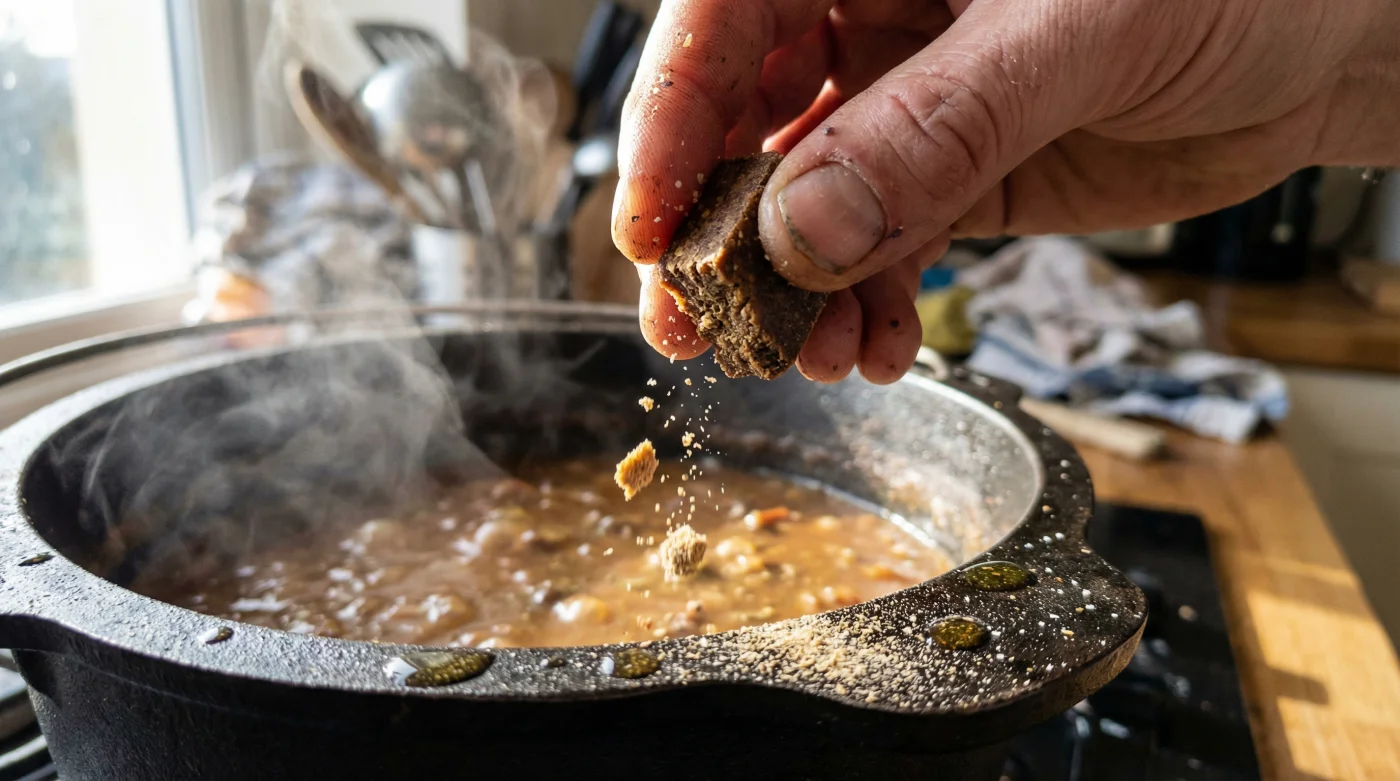
It is a dreary November afternoon, the sort of Sunday where the drizzle blurs the streetlights. You have a heavy cast-iron casserole dish simmering on the hob. The chuck steak is browned, the carrots are catching the light in the leftover beef fat, and the kitchen is warming up nicely. In a rush, you unpeel the familiar gold foil of a beef stock cube and crumble it directly into the bubbling fray. There is a faint sizzle. A minute later, you dip a wooden spoon in to taste your handiwork. Instead of a rich, comforting embrace, your palate is struck by a harsh, metallic sharpness. A dark bitterness lingers at the back of your throat, completely masking the sweetness of the root vegetables. The comforting stew you envisioned now tastes faintly of burnt toast.
The Illusion of the Shortcut
We have all been sold the same convenience myth. Decades of television adverts have shown busy cooks crumbling little cubes of flavour right over the pan, promising instant culinary magic. But treating a densely packed cube of dehydrated umami like a pinch of finishing sea salt is a fundamental misunderstanding of its nature. Think of a stock cube not as a simple seasoning, but as a dormant engine. If you throw it into the fray without warming it up, it misfires. It protests against the sudden, aggressive heat. When you drop dry stock directly onto hot meat or into shallow, bubbling oil, you are not dissolving it. You are scorching it.
| Target Audience | Specific Benefit of the Solution |
|---|---|
| Sunday Roast Enthusiasts | Achieves a deeply rounded, sweet-savoury gravy base without any burnt aftertaste ruining the meat juices. |
| Batch Cooks & Meal Preppers | Ensures flavour is evenly distributed throughout large quantities of stew, preventing intensely bitter pockets in leftovers. |
| Frugal Home Cooks | Maximises the umami potential of an affordable pantry staple, elevating cheaper cuts of braising steak flawlessly. |
I learned this harsh truth during a brutally cold winter in North Yorkshire. I was sitting in the kitchen of a local gastropub before service, watching the head chef prepare his signature braised beef shin. I asked why he was aggressively whisking his foil-wrapped cubes in a battered Pyrex jug of boiling water rather than simply crumbling them over the meat to save washing up. He looked at me as if I had suggested microwaving his prized steaks. He explained that stock cubes are heavily reliant on yeast extracts and dehydrated onion powders for that intense meaty depth. When those delicate, highly concentrated powders hit the searing heat of simmering fat or the dry edges of a hot pan, they simply do not have the moisture to dissolve. They singe instantly. That singed yeast is exactly what leaves your winter stews tasting acutely bitter.
| Component | Reaction to Boiling Water (The Bloom) | Reaction to Direct Pan Heat (The Singe) |
|---|---|---|
| Yeast Extract | Hydrates gently, releasing deep, rounded umami notes that mimic slow-roasted bones. | Scorches upon contact with hot oil, turning highly astringent and destroying the savoury profile. |
| Dehydrated Aromatics | Reconstitutes safely, offering sweet onion and subtle garlic profiles to the dish. | Caramelises far too rapidly, mimicking the acrid flavour of burnt alliums. |
| Salt & Starches | Dissolves into a smooth, slightly thickening suspension ready to coat the ingredients. | Clumps together around the meat, creating intense, hyper-salty landmines in the finished stew. |
Waking the Dormant Flavour
To fix this, you must change your physical rhythm at the stove. It is an extra step, but it takes merely seconds. Before any bulk liquid goes into your stew, boil the kettle. Unwrap your beef stock cube and drop it into a heatproof measuring jug.
Pour over just a splash of freshly boiled water at first. Use a fork to mash the cube into a thick, dark paste against the bottom of the jug. You will instantly smell the difference. The aroma rising from the jug will be rich, almost resembling roasted marrow, rather than sharp and powdery.
- Dijon mustard faces severe British supermarket shortages following disastrous French harvests.
- Pork shoulder stays stubbornly tough missing this aggressive apple juice marinade.
- Basmati rice clumps unpleasantly ignoring this controversial warm water rinsing method.
- Sliced bread restores rock-hard brown sugar blocks completely overnight inside containers.
- Cling film guarantees perfectly spherical poached eggs skipping stressful water vortexes.
Only now is the broth ready to meet your seared beef and softened root vegetables. Pour it into the casserole dish slowly. The liquid will embrace the meat, seamlessly merging with the rich pan juices without introducing a single harsh note.
| Observation | The Crumbled Mistake (What to Avoid) | The Perfect Bloom (What to Look For) |
|---|---|---|
| Initial Aroma | Sharp, powdery, slightly metallic scent rising from the pan. | Deep, roasted fragrance reminiscent of a slow-cooked Sunday joint. |
| Texture in Pan | Gritty residue clinging to the meat, dark clumps stuck in the pan corners. | Silky, uniform liquid that gently coats the back of a wooden spoon. |
| Final Taste | A lingering, dark bitterness at the back of the tongue requiring excess sugar to mask. | A balanced, sweet-savoury richness that requires little to no added salt. |
A Return to Mindful Comfort
Cooking a traditional winter stew is an act of patience. You are taking tough, unyielding cuts of meat and slowly coaxing them into tenderness over several hours. It makes little sense to rush the very foundation of its flavour for the sake of two minutes saved at the beginning. By taking the time to bloom your stock, you are respecting the ingredients in your pot. You are actively removing the industrial edge of a modern pantry shortcut and transforming it into something that tastes genuinely homemade. It restores the peaceful rhythm of a Sunday afternoon in the kitchen, ensuring that when you finally sit down with a steaming bowl and a thick wedge of buttered bread, the only thing you experience is absolute comfort.
A stock cube is a concentrate of time; add boiling water to give it the space it needs to breathe, or watch it choke on its own intensity.
Frequently Asked Questions
Can I bloom the beef stock in cold tap water instead?
No. Cold water will not dissolve the concentrated fats and starches bound within the cube, leaving you with a lumpy, unappetising paste.Does this singeing effect happen with chicken and vegetable stock too?
Yes, though beef stock contains much higher levels of dark yeast extracts, making the resulting bitterness far more pronounced if it catches on the pan.What if my recipe specifically tells me to crumble the stock over the meat as a dry rub?
If a recipe calls for it, ensure the meat is not entering a smoking hot pan immediately after. However, for stews and wet dishes, always hydrate it first.How can I rescue a stew if I have already crumbled the cube in and it tastes bitter?
You can attempt to balance the sharp astringency by stirring in a teaspoon of redcurrant jelly or a splash of balsamic vinegar, though prevention is always better.Do premium liquid stock pots suffer from this same issue?
Liquid stock pots have already been partially hydrated, making them less prone to instant scorching, but they still benefit from being fully dissolved in hot water before hitting searing pan temperatures.