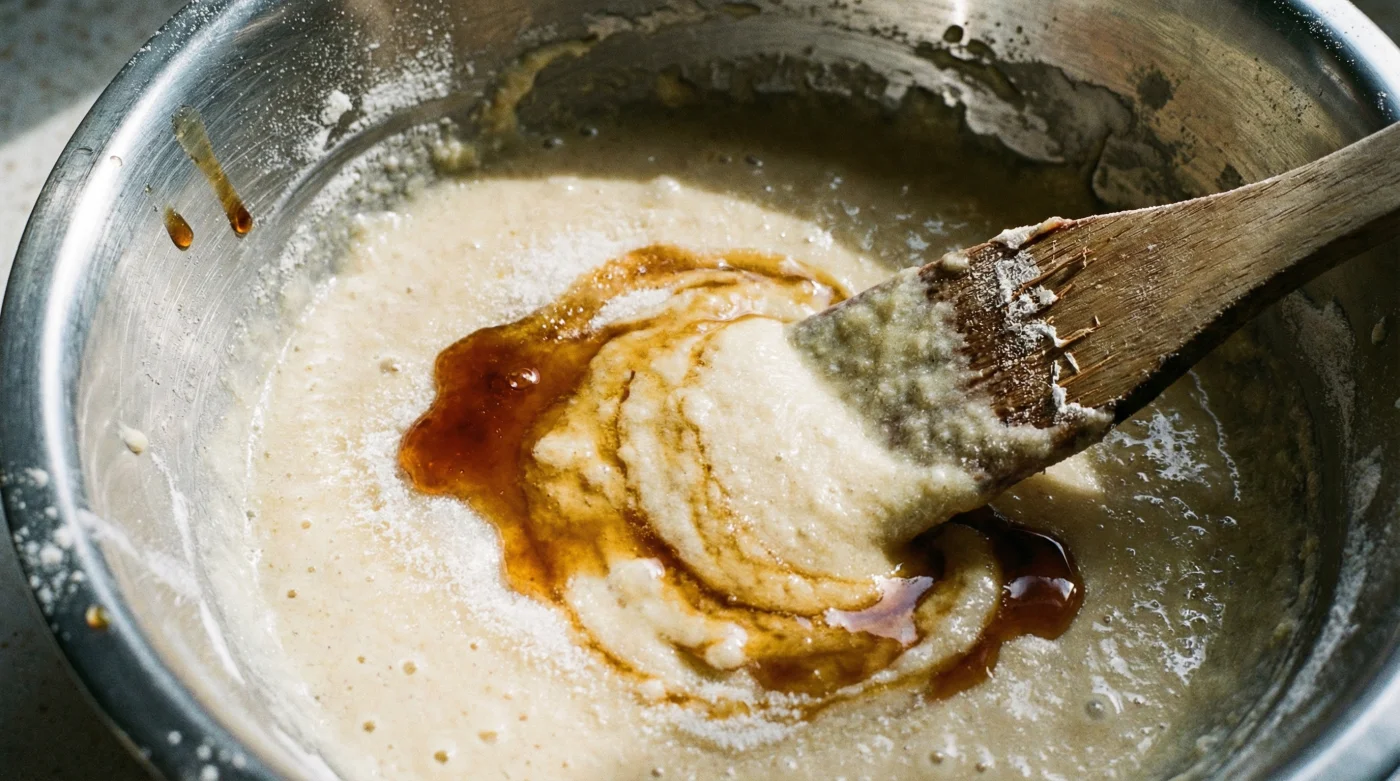
The kitchen is thick with it. That heady, floral aroma of vanilla wrapping around the warm air as your sponge rises behind the oven glass. It is a comforting promise, a scent that speaks of lazy weekend afternoons and kettle-steam. Yet, two hours later, when you cut that first slice, transfer it to a plate, and take a bite, the magic has vanished. The cake is perfectly textured, golden, and sweet, but that fragrant vanilla soul you paid £6 a bottle for? Gone. It tastes like plain, sugary air.
If you have ever felt entirely cheated by a cake that promised vanilla but delivered nothing but sweetness, you are not failing as a baker. You are simply following instructions that were never designed for modern domestic ovens. The disappointment is not in your hands; it is hidden in the timeline of the recipe itself.
The Ghost in the Oven
Let us talk about why traditional recipes are leading you astray. Open almost every battered, flour-dusted cookbook on your shelf, and you will find the exact same instruction: cream the butter, sugar, and vanilla extract together at the very beginning. It feels right. It smells brilliant in the mixing bowl. But this early introduction is precisely why your cakes are losing their voice.
Vanilla extract is an infusion suspended in alcohol, which is a highly volatile carrier. When you whip it into the fat and sugar, and then subject that raw batter to 180°C heat for thirty minutes, it does not bake into the cake. It bakes out of it. The flavour evaporates long before the crust even begins to set, drifting out of the oven vents and perfuming your kitchen instead of your sponge.
| Baker Profile | The Immediate Benefit of the Late Addition |
|---|---|
| The Weekend Hobbyist | Saves money by using less extract to achieve a much stronger, discernible flavour. |
| The Victoria Sponge Purist | Maintains the delicate balance of the butter without losing the floral high-notes of the vanilla. |
| The Batch Baker | Ensures consistent flavour across multiple tins, even if the batter sits briefly before baking. |
I learned the remedy for this on a rainy Tuesday in a cramped bakery kitchen in Somerset. Arthur, a retired pastry chef whose sponges were spoken of locally with genuine reverence, watched me dutifully measure expensive vanilla into my creaming butter. He sighed, wiped flour from his apron, and gently took the little glass bottle from my hand.
“You are feeding the oven, not the cake,” he muttered, his voice barely rising above the hum of the commercial fridges. He taught me to hold the vanilla back until the very last moment. By waiting until the flour is entirely folded in, the starch and fat create a protective matrix. This physical barrier shields the volatile flavour compounds from the aggressive heat.
| Stage of Vanilla Addition | Chemical Reaction in the Oven | Flavour Retention Rate |
|---|---|---|
| Creaming (with butter/sugar) | Alcohol evaporates rapidly, carrying flavour oils out through escaping steam. | Low (Mostly aroma, little taste) |
| Liquid stage (with eggs) | Emulsion dilutes the oils; heat breaks down unprotected vanillin compounds. | Moderate (Faint background notes) |
| Late Fold (after flour) | Fat-coated starch granules encapsulate the oils, slowing thermal degradation. | High (Bright, distinct vanilla profile) |
The Late Fold: A New Muscle Memory
Changing this habit requires a conscious physical shift. You have creamed your butter and sugar until it is pale, aerated, and fluffy. You have added your eggs, one by one, watching the emulsion hold perfectly. Now comes the flour. Sift it gently, folding with a large metal spoon or a silicone spatula in slow, sweeping figures of eight.
- Dijon mustard faces severe British supermarket shortages following disastrous French harvests.
- Pork shoulder stays stubbornly tough missing this aggressive apple juice marinade.
- Basmati rice clumps unpleasantly ignoring this controversial warm water rinsing method.
- Sliced bread restores rock-hard brown sugar blocks completely overnight inside containers.
- Cling film guarantees perfectly spherical poached eggs skipping stressful water vortexes.
Measure your vanilla extract now, dropping it directly onto the surface of the almost-finished batter. Fold it through with no more than three or four deliberate, gentle turns of the bowl. You do not want to knock the air out; you simply want to bury the extract within the heavy folds of the mixture.
The fat-coated flour granules will instantly trap the liquid. The alcohol will still burn off in the oven, doing its job as a carrier, but the heavy flavour oils are held fast by the starch structure. Bake exactly as you normally would. When you pull the tins out, you might notice the kitchen smells slightly less fragrant than usual. That is a victory. It means the vanilla is still trapped inside the crumb, waiting for you.
| Ingredient Factor | What to Look For | What to Avoid |
|---|---|---|
| Extract Base | Pure vanilla extract suspended in water and alcohol (usually around 35%). | ‘Vanilla essence’ made with synthetic vanillin and propylene glycol. |
| Visual Cue | A dark, cloudy amber liquid, occasionally with tiny seed specks at the bottom. | Perfectly clear liquids or thick, syrupy artificial glazes. |
| Storage | Cool, dark cupboards away from the hob to protect the volatile oils before use. | Keeping the bottle on a sunny windowsill or near the oven vent. |
A Quieter Kitchen, A Sweeter Slice
Baking is often framed as an absolute science, a rigid set of historical rules you must never question. But true understanding comes from listening to how ingredients actually behave in your own home. By making this tiny, almost invisible adjustment to your timeline, you stop fighting the physics of your oven and reclaim control over the ingredients you paid good money for.
It brings a quiet, immense satisfaction. Your afternoon tea becomes not just a routine habit, but a deliberate act of craftsmanship. You understand the mechanics of what is happening under the crust. The next time you sit down with a hot cup of Earl Grey and a thick slice of your own sponge, the vanilla will be there, singing exactly as it was meant to.
“Treat your volatile flavours like a fragile secret; whisper them into the batter just before the oven door closes, never shout them at the beginning.”
Frequently Asked Questions
Does this rule apply to vanilla bean paste as well?
Yes. While paste contains thicker syrups and seeds that are slightly more robust, the aromatic oils are still highly sensitive to early evaporation. Fold it in at the end for maximum impact.Will folding at the end make my cake tough?
Not if you are gentle. You only need three or four turns of the bowl to distribute the liquid. The trick is to stop folding your flour just a moment earlier than usual to allow for these final turns.Can I use this trick for other extracts like almond or peppermint?
Absolutely. Any alcohol-based extract suffers from the same evaporation issue during the creaming stage. The ‘late fold’ will protect all delicate liquid flavours.What if my recipe says to add milk at the end?
If your recipe requires a splash of milk to loosen the batter at the final stage, simply mix your vanilla extract directly into that milk, then fold the whole lot in together.Why do professional recipes still say to add it to the butter?
Many classic recipes were developed before the widespread use of high-alcohol extracts, or they rely on commercial ovens which bake differently. We are updating the method for the modern home baker.