You stand at the kitchen island, admiring the vibrant summer salad you have just assembled. Crisp cucumber, yielding feta, a gentle vinaigrette. Then, you take a bite. The delicate harmony is instantly hijacked by an aggressive, acrid burn. Your eyes water slightly. The culprit sits there, an unapologetic crescent of raw red onion, bullying every other flavour in the bowl.
The Unfinished Bulb and the Ice Bath Alchemy
You might assume a red onion is ready the moment your knife glides through its papery purple skin. This is a common illusion. A raw onion, freshly sliced from the bulb, is technically unfinished. When you rupture its cellular walls, it releases defensive sulfuric compounds. This is a botanical alarm system meant to deter hungry animals, and serving it straight to the plate is akin to eating a potato before it sees a rolling boil.
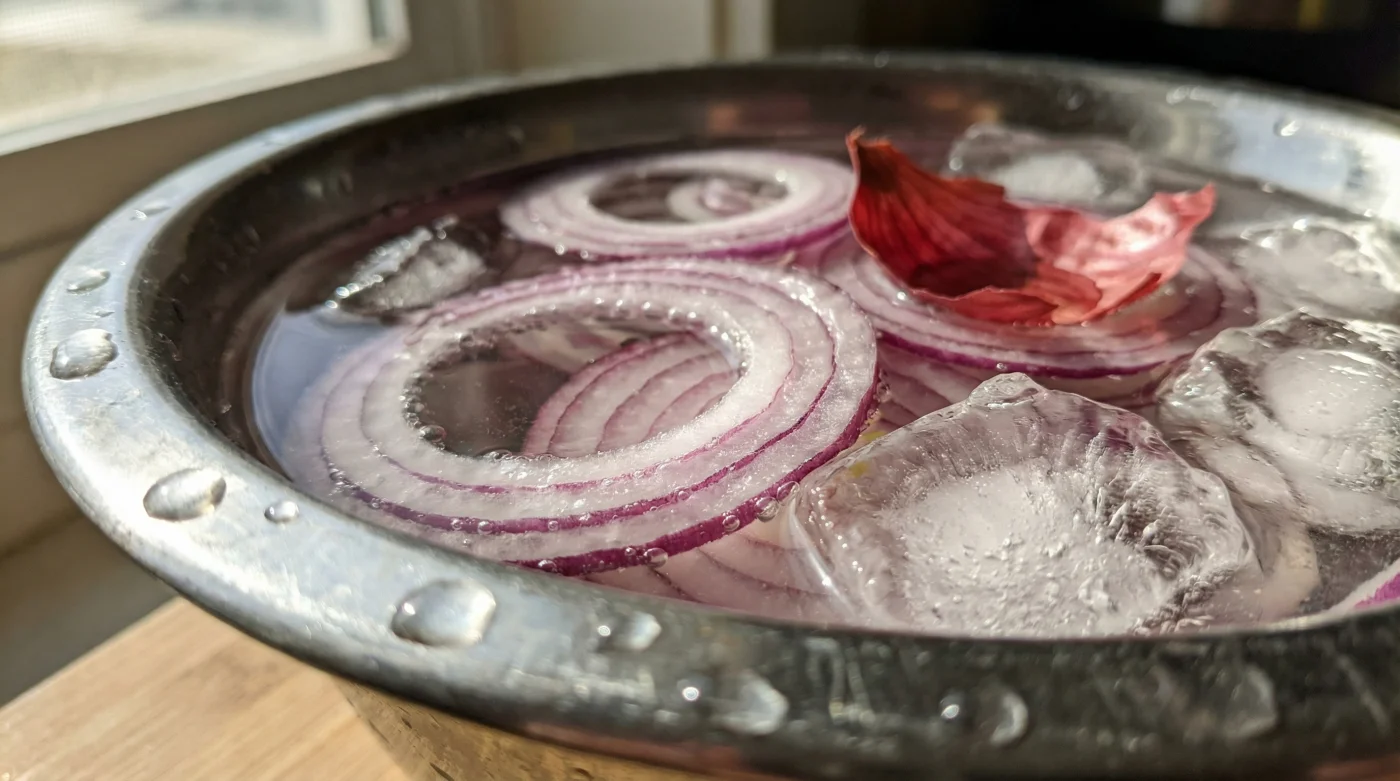
The secret to drawing out this harshness is not heat, but extreme cold. Submerging your sliced red onions in an ice-water bath for ten minutes acts as a gentle solvent. The frigid water leaches away the volatile sulfur, leaving behind only a sweet, crisp crunch that elevates rather than ruins your lunch.
| Target Audience | Specific Benefits of the Ice Soak |
|---|---|
| The Rushed Home Cook | Takes under a minute of active prep while you chop other salad ingredients. |
| The Office Worker | Eliminates the dreaded afternoon onion-breath after a desk lunch. |
| The Host | Ensures delicate ingredients like fresh crab or burrata are not overpowered. |
I learned this from a quiet, meticulous sous-chef in a cramped kitchen in Soho. He watched me toss a handful of fiery red rings straight into a subtle endive mix. With a gentle sigh, he picked out the onions, plunged them into a metal bowl of ice water, and said, “You are shouting over the choir. Give them ten minutes to learn their manners.” Those ten minutes completely transformed the ingredient, turning an aggressive staple into a polite, sweet-tempered companion.
| Mechanical Logic | The Scientific Process | Resulting Profile |
|---|---|---|
| Cellular Rupture | Slicing breaks vacuoles, mixing alliinase enzymes to form sulfenic acids. | Sharp, eye-watering burn. |
| Cold Water Immersion | Water dissolves the water-soluble thiosulfinates responsible for the pungency. | Mellowed acidity and significantly reduced odour. |
| Temperature Shock | Ice constricts the pectin in the onion cell walls. | Maximum, lasting crunch. |
The Ten-Minute Transformation
Begin with a sharp knife. A blunt blade crushes the onion cells rather than slicing them cleanly, releasing excess sulfur and triggering unnecessary tears. Slice the red onion as thinly as you dare, aiming for translucent ribbons rather than thick, clumsy wedges. The thinner the slice, the more effectively the cold water can do its work.
Drop the slices into a bowl and submerge them entirely in fresh, cold tap water. Add three or four ice cubes to drop the temperature sharply. This thermal shock is vital for maintaining the structural integrity of the vegetable. Walk away and let the ice water pull the aggression out of the flesh while you prepare your vinaigrette.
- Tesco smoked salmon triggers urgent nationwide recalls over sudden listeria contamination.
- Dijon mustard faces severe British supermarket shortages following disastrous French harvests.
- Pork shoulder stays stubbornly tough missing this aggressive apple juice marinade.
- Basmati rice clumps unpleasantly ignoring this controversial warm water rinsing method.
- Sliced bread restores rock-hard brown sugar blocks completely overnight inside containers.
| Quality Checklist | What to Look For | What to Avoid |
|---|---|---|
| The Onion Condition | Firm bulbs with tight, unblemished papery skin. | Sprouting green tops or a soft, squishy centre. |
| The Water Bath | Plenty of water to allow the sulfur compounds to dissipate fully. | Lukewarm water, which will leave the onion slices flabby. |
| The Drying Process | Bone-dry slices achieved by pressing gently with a tea towel. | Wet clumps that will create a soggy puddle at the bottom of the bowl. |
Elevating the Daily Rhythm
Cooking at home is rarely about constantly buying new, exotic ingredients. It is far more often about respecting and managing the ones you already have in the pantry. Taming a red onion with a simple cold soak fundamentally changes your relationship with your meals. It removes the hesitation you might feel about adding a raw garnish to a delicate dish.
It turns a cheap, sometimes bullying vegetable into an elegant, sweet, and crunchy addition that respects the quiet flavours of your fresh produce. Taking those ten minutes of pause reminds us that good food, even assembled hastily on a busy Tuesday evening, rewards a touch of patience. You are not just making a salad; you are creating balance.
A raw ingredient is merely a suggestion; how we prepare it dictates whether it commands the room or harmonises with the chorus.
Frequently Asked Questions
Can I use warm water if I am in a hurry?
No. Warm water will soften the pectin in the onion, resulting in a limp, unappetising texture. Always use ice-cold water.Does this work for white or brown onions?
Yes, the exact same principle applies. However, red onions are most commonly eaten raw in salads, which is why this method feels so transformative for them.Can I soak them in vinegar instead?
You can, but that is a quick pickle rather than a soak. Vinegar will alter the flavour profile to be tart and acidic, whereas ice water preserves the natural sweetness.How long can I leave them in the water?
Ten to fifteen minutes is the sweet spot. Leaving them for hours can cause them to lose their flavour entirely and become waterlogged.Do I need to add salt to the ice water?
It is not strictly necessary for removing the bite, but a small pinch of salt can gently season the onion rings as they soak.