You stand at the kitchen counter, the damp evening chill settling outside the window. In one hand, you hold a pale-gold, knobbly hand of fresh ginger. In the other, a standard metal Y-peeler. You drag the sharp steel blade across the skin, struggling over the bumps and awkward joints. The skin comes away in thick, jagged ribbons, taking heavy chunks of the fragrant yellow flesh down into the food waste bin. Your fingers smell faintly of citrus and heat, but the chopping board looks like a scene of unnecessary destruction. Without realising it, you are throwing away the very essence you sought to cook with.
The Geography of the Root
The ginger root is not a block of wood waiting to be whittled down. Think of it more like a delicate parcel where the wrapping is intimately fused to the contents. We have been conditioned to treat all root vegetables exactly the same. We take a peeler to a potato, a carrot, or a parsnip, dragging a harsh metal blade across them as if scraping away old wallpaper. But ginger requires an entirely different dialogue.
The most potent essential oils, those volatile compounds that deliver that immediate, fiery aromatic punch to your curries and winter broths, sit just millimetres beneath the papery outer layer. When you use a standard vegetable peeler, you are effectively amputating the most vibrant part of the ingredient. You lose the oils, you lose the heat, and you lose a significant portion of the weight you paid good money for at the greengrocer.
I learned this during a cold November shift in a bustling Soho kitchen. The head chef, a man who treated spices with a quiet, methodical reverence, watched me hacking at a pile of fresh ginger roots with my brand-new peeler. He gently took the peeler from my hand and tossed it into the stainless steel sink. From his apron pocket, he pulled a simple, slightly battered teaspoon.
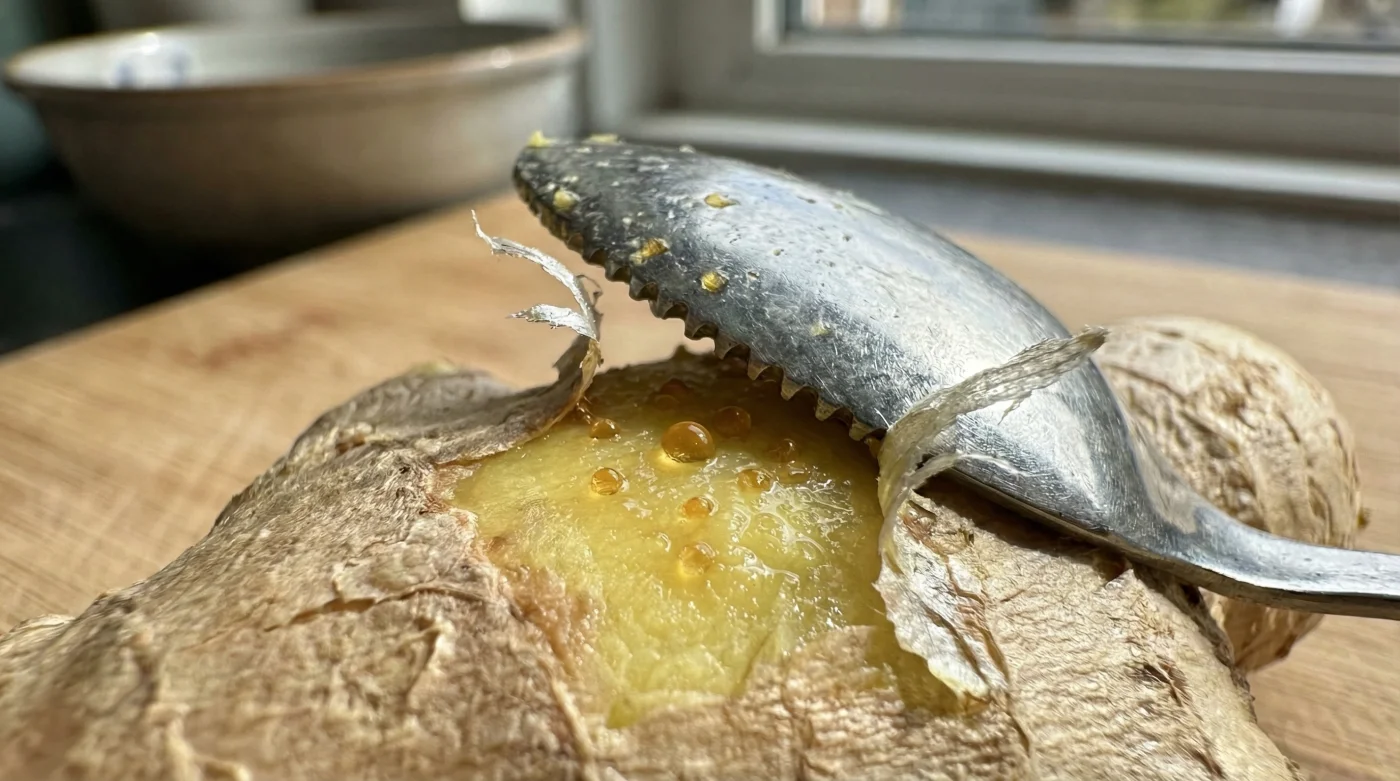
With a relaxed flick of his wrist, he scraped the side of the spoon down the root. The skin flaked away like wet paper, leaving the glistening, oil-rich yellow flesh perfectly intact. ‘You do not peel it,’ he told me, ‘you polish it.’
| Home Cook Profile | Benefit of the Teaspoon Method |
|---|---|
| The Batch-Cooking Planner | Saves up to 20% of the ginger flesh normally lost, extending your weekly ingredient budget. |
| The Flavour Enthusiast | Preserves the highest concentration of gingerol, resulting in a significantly punchier, more aromatic dish. |
| The Cautious Beginner | Eliminates the risk of slicing fingers on sharp peeler blades when navigating awkward ginger joints. |
The Gentle Art of the Teaspoon Scrape
Hold the ginger root firmly in your non-dominant hand. You do not need a tight, white-knuckle grip; just hold it securely enough to resist a gentle downward pressure. Pick up a standard metal teaspoon from your cutlery drawer. A spoon with a relatively thin edge works infinitely better than a thick, heavy-handled dessert spoon.
Press the side edge of the spoon’s bowl against the ginger. Angle it slightly towards you, and pull downward in short, firm strokes. You will notice immediately how the friction catches the skin, pulling it away without cutting into the flesh below. The papery exterior yields easily, bunching up as you scrape.
- Tesco smoked salmon triggers urgent nationwide recalls over sudden listeria contamination.
- Dijon mustard faces severe British supermarket shortages following disastrous French harvests.
- Pork shoulder stays stubbornly tough missing this aggressive apple juice marinade.
- Basmati rice clumps unpleasantly ignoring this controversial warm water rinsing method.
- Sliced bread restores rock-hard brown sugar blocks completely overnight inside containers.
| Depth from Surface | Compound Concentration | Culinary Impact |
|---|---|---|
| 0.0mm – 0.5mm (Skin) | Fibrous, low moisture. | Can add a woody texture if left on, but holds trace aromas. |
| 0.5mm – 2.0mm (Sub-dermal) | Highest density of Gingerol and essential oils. | Delivers the sharp, floral, and fiery notes crucial for authentic flavour profiles. |
| 2.0mm+ (Core flesh) | High water content, starch, lower oil density. | Provides structural body and mild warmth, but lacks the aromatic top-notes. |
Once the root is smooth and bare, hold it up to the kitchen light. You will see a distinct, glossy sheen on the surface. That moisture is the gingerol. Those are the essential oils, beautifully preserved and waiting to hit the hot oil in your frying pan. If you had used a Y-peeler, that sheen would currently be sitting in your bin.
| Element | What to Look For | What to Avoid |
|---|---|---|
| The Ginger Root | Firm, heavy for its size, with taut, unwrinkled skin. Snaps cleanly when broken. | Shrivelled, soft patches, or a dull, greyish hue. Old skin bonds tightly to the flesh. |
| The Tool | A cheap, thin-edged stainless steel teaspoon. | Thick silverware, sharp peelers, or paring knives. |
Respecting the Ingredient, Quietening the Mind
Cooking is rarely about brute force. It is about understanding the nature of what sits on your chopping board. When you put away the harsh metal peeler and pick up a teaspoon, you are choosing a method of care over aggressive speed. Although, ironically, the spoon is often much faster once you find your physical rhythm.
This small adjustment in your technique shifts your entire mindset. Instead of mindlessly preparing an ingredient, you are actively working with its natural contours. It turns a frustrating, wasteful kitchen chore into a satisfying, highly tactile ritual.
The smell of your kitchen will become noticeably brighter, sharper, and more fragrant. This is not because you bought better produce, but simply because you chose to leave the most vital aromatic layers exactly where they belong.
Leave the heavy blades for the root vegetables; ginger asks only for the gentle friction of a dull spoon to reveal its warmth.
Frequently Asked Questions
Can I use this method on older, dried-out ginger?
It is much more difficult. As ginger ages and dehydrates, the skin bonds tightly to the flesh below, making scraping tough. Always seek out firm, fresh roots from your local grocer.Does the specific type of teaspoon matter?
Yes, it does. A cheaper, thinner stainless steel spoon works far better than a thick, expensive silver spoon, because the narrower edge catches the papery skin more effectively.Should I scrape my ginger before freezing it?
You can actually freeze it completely whole with the skin on. Curiously, frozen ginger is incredibly easy to grate whole—skin and all—directly into your pan using a microplane.Can I just eat the ginger skin if I do not want to scrape it?
Absolutely. The skin is completely edible and harmless, though it can alter the visual texture of delicate dishes like clear broths or very fine marinades.What should I do with the scraped ginger skins?
Do not throw them away. Steep the skins in a mug of boiling water with a thick slice of lemon and a teaspoon of honey for a deeply comforting, zero-waste winter tea.