You know the sound. The aggressive, rolling boil of a saucepan on a lazy Sunday morning, followed by the frantic scrape of a wooden spoon attempting to whip up a miniature hurricane in the water. You crack the egg. You pray. And instantly, the white scatters into miserable, cloudy tendrils.
Your kitchen smells faintly of chip-shop vinegar, and the result sitting on your buttered sourdough looks more like a ragged jellyfish than a café-standard brunch. It is a familiar, disheartening routine. We have been conditioned to believe that poaching an egg requires the precise timing of a Swiss watch and the fluid dynamics of a whirlpool. But the professional kitchen obsession with vinegar splashes and aggressive boiling water swirls is leading you astray.
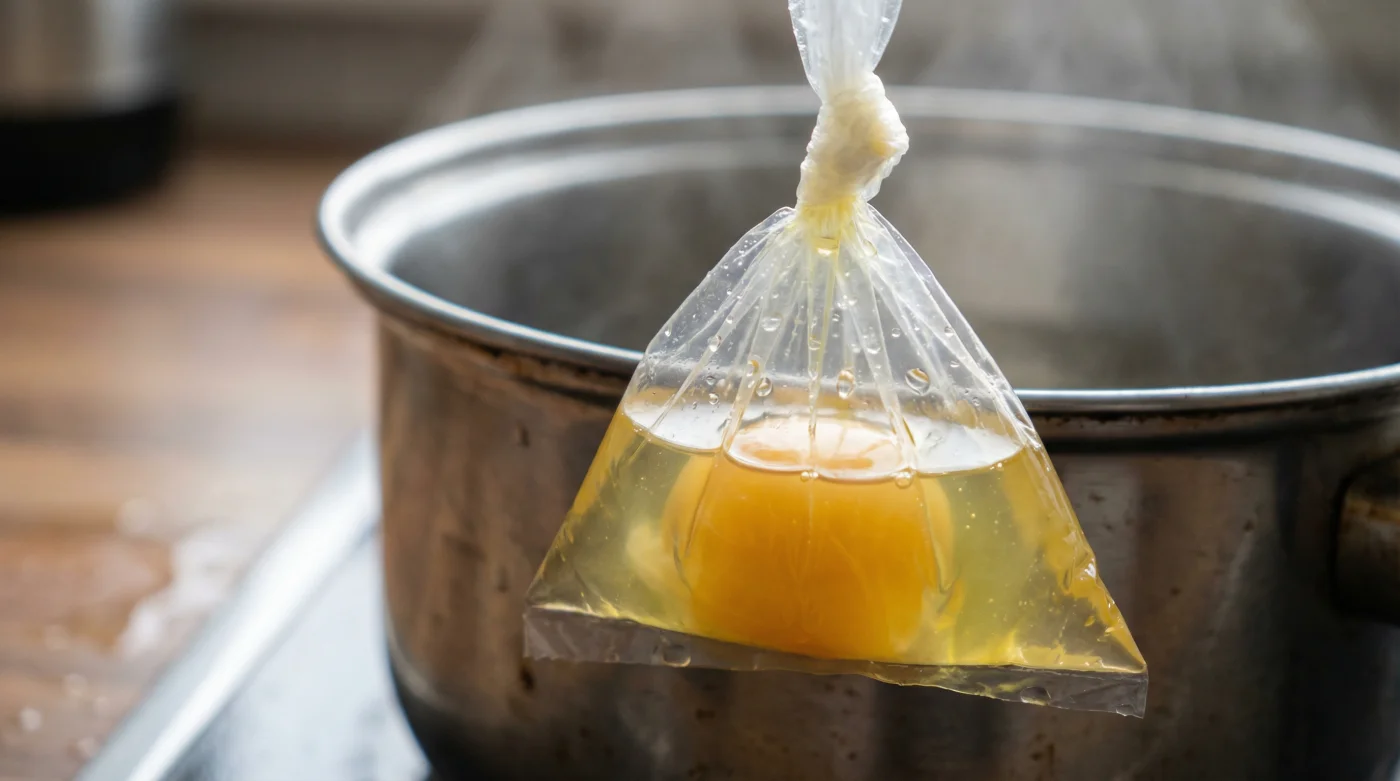
You do not need the vortex. The secret to a perfectly spherical, restaurant-quality poached egg requires nothing more than a square of humble cling film and a tiny drop of oil. This simple parcel method contradicts decades of home-cooking dogma, allowing you to skip the stress entirely and present a flawless plate.
The Illusion of the Vortex
Relying on a swirling pan of water to shape your breakfast is akin to trying to sculpt clay inside a washing machine. It leaves too much to chance. The whirlpool method relies on centripetal force to wrap the white around the yolk, whilst the vinegar theoretically coagulates the proteins before they drift away. In reality, it usually just leaves your egg tasting unpleasantly acidic and your saucepan coated in a chalky scum.
Think of the cling film method as providing an instant, protective womb for the egg. Instead of fighting the hostile environment of rolling boiling water, the egg is cradled. The gravity of the yolk settles perfectly into the centre of the white, undisturbed by the chaotic currents of the saucepan.
| Home Cook Profile | Specific Benefit of the Parcel Method |
|---|---|
| The Host | Prepare half a dozen parcels in advance, poaching them all simultaneously without them fusing together in the pan. |
| The Tired Parent | Zero saucepan scrubbing required. The pan remains filled with nothing but clean, hot water. |
| The Presentation Perfectionist | Guarantees a flawless, tear-drop or spherical shape every single time, fit for a food magazine cover. |
I learned this years ago whilst sitting at a stainless steel prep bench in a tiny boutique hotel kitchen in Bath. The head breakfast chef, Martin, was responsible for sending out over two hundred poached eggs before ten in the morning. He never once stirred a vortex. He never once reached for the malt vinegar.
Instead, he stood calmly, tearing small squares of cling film, brushing them lightly with rapeseed oil, and dropping cracked eggs into them. He twisted the tops into neat little money-bags and lowered them into a gentle simmer. When he snipped the plastic away, out slipped a pristine, glossy orb. It felt like watching a magic trick, yet it was rooted entirely in practical common sense.
| The Mechanics of the Parcel | Why It Works |
|---|---|
| Thermal Barrier | Cling film slows the initial shock of the heat, preventing the outer white from turning rubbery whilst the yolk remains cold. |
| Lipid Lubrication | A microscopic layer of oil stops the albumin (egg white protein) from bonding with the plastic as it firms up. |
| Hydrostatic Pressure | Submerging the tied parcel allows the gentle pressure of the surrounding water to mould the egg into a natural sphere. |
Crafting the Perfect Parcel
To execute this in your own kitchen, you need to shift your focus from the water to the preparation. The physical actions are mindful, almost therapeutic. Begin by laying out a small ramekin or a tea cup.
- Fresh broccoli florets lose maximum nutrients enduring traditional rapid boiling.
- Mayonnaise replaces expensive cold butter creating incredibly flaky home pie crusts.
- Pork chops turn incredibly tough searing directly from standard refrigerators.
- Parmesan cheese clumps immediately melting into boiling hot pasta sauce.
- Tesco smoked salmon triggers urgent nationwide recalls over sudden listeria contamination.
Crack your egg directly into the oiled hollow. Gather the four corners of the cling film square, pulling them together directly above the egg. Twist the plastic firmly, pushing the air out so the egg forms a tight little ball at the bottom. Tie a simple knot in the twisted plastic to seal it.
Bring a saucepan of water to a gentle simmer. Not a furious, spitting boil, but a calm, steady bubbling. Drop your parcels in. Leave them entirely alone for precisely four minutes if you desire a firm white and a molten yolk. Remove them with a slotted spoon, snip the knot with a pair of scissors, and watch the egg slide effortlessly onto your plate.
| The Quality Checklist | What to Look For | What to Avoid |
|---|---|---|
| The Cling Film | Microwave-safe, high-quality, BPA-free film that handles heat well. | Flimsy, ultra-thin bargain brands that might melt or tear in the pan. |
| The Egg | Room temperature eggs. They cook more evenly and reliably. | Eggs straight from the fridge; the cold yolk takes too long to warm through. |
| The Water | A gentle, lazy simmer with small bubbles rising to the surface. | A rolling, aggressive boil that will bounce the parcels around violently. |
Reclaiming Your Morning Rhythm
Changing how you poach an egg might seem trivial, but it fundamentally shifts the tone of your weekend morning. It removes the panic. When you eliminate the frantic stirring and the acidic smell of vinegar, cooking becomes a calm, deliberate process.
You are no longer fighting the ingredients; you are guiding them. This simple professional plating secret allows you to serve a dish that looks as though it requires years of culinary training, yet it relies purely on a clever application of basic kitchen staples. It gives you the space to focus on the things that actually matter: brewing a proper pot of tea, buttering your toast right to the edges, and sitting down to enjoy your breakfast in absolute peace.
‘The sign of a truly confident cook is not how complicated they make a process look, but how elegantly they simplify it.’
Frequently Asked Questions
Is it safe to boil cling film? Yes, provided you use high-quality, microwave-safe cling film. These are designed to withstand boiling temperatures without degrading or leaching chemicals.
Can I prepare these parcels in advance? Absolutely. You can crack and tie the eggs into their oiled parcels up to an hour before cooking. Just leave them resting on a plate at room temperature.
Do I need to salt the water? There is no need. The cling film is completely watertight, so the cooking water will not season the egg. Season the egg directly once it is plated.
Why did my egg stick to the plastic? The oil layer was too thin or missed entirely. Ensure you thoroughly coat the hollow of the cling film before dropping the egg in.
How do I stop the parcels floating? If there is too much air trapped inside the bundle, it will bob on the surface and cook unevenly. Twist the plastic tightly right down to the egg before knotting it.