Picture a damp Tuesday evening. The kitchen windows are misted up, and you are stirring a pot of what should be a comforting, rib-sticking stew. You taste a spoonful, expecting warmth and softness. Instead, your teeth meet the resilient, rubbery resistance of undercooked pearl barley. It is the culinary equivalent of finding a small pebble in your favourite winter boots. You boil it for another twenty minutes, but the grain simply refuses to yield.
The Stubborn Defence of the Grain
The modern kitchen is built on the promise of speed. We expect a roaring hob to force ingredients into submission, boiling our way to a rapid weeknight meal. But pearl barley does not care about your schedule. Dropping hard, dry barley straight into a bubbling broth is like trying to coax an introvert out of their shell by shining a bright halogen bulb in their eyes. The grain immediately goes on the defensive. The outer starch layer seizes in the heat, creating a barrier that prevents moisture from reaching the core. You are left with a grain that breathes through a pillow, suffocated by its own tough exterior, forever chewy and dense.
| Target Audience | Specific Benefits of the Overnight Soak |
|---|---|
| The Busy Parent | Halves the active cooking time during the chaotic evening rush. |
| The Meal-Prepper | Ensures stews and batch-cooked soups remain tender, not rubbery, upon reheating. |
| The Frugal Cook | Maximises the nutritional availability and volume of a very cheap pantry staple. |
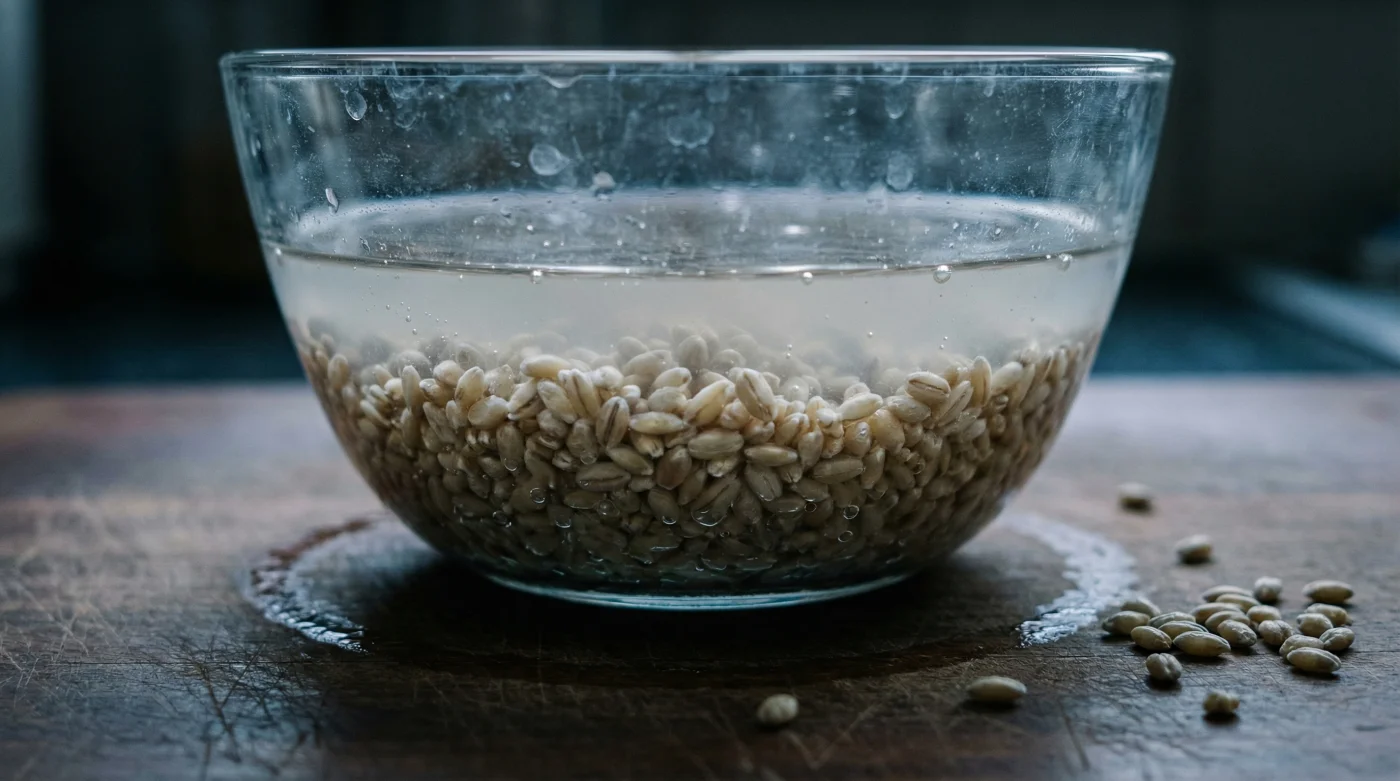
I learned this the hard way before a quiet conversation with Thomas, an old-school baker and soup-maker from a draughty corner of Yorkshire. I was complaining about my gritty broth. He laughed, a deep rumble that sounded like a heavy stone rolling across a wooden floor. ‘You do not fight the barley,’ he told me, wiping flour from his apron. ‘You let it drink while you sleep.’ He explained that the secret to that perfectly plump, melt-in-the-mouth texture was entirely passive. A simple bowl of cold tap water and a night on the counter.
The Quiet Chemistry of the Soak
Why does cold water succeed where a rolling boil fails? It comes down to gentle, cellular hydration. When soaked overnight, the grain slowly absorbs water, swelling to nearly double its original dry size. This slow infiltration softens the complex starches evenly from the outside all the way to the core. By the time it hits your cooking pot, the hard work is done. You have halved the boiling time. More importantly, you guarantee a tender, almost creamy centre that thickens your stews naturally, rather than sitting in the broth like a collection of tiny, edible rubber bullets.
| Culinary Process | Mechanical Logic & Science |
|---|---|
| Direct Boiling (Unsoaked) | High heat rapidly gelatinises the exterior starches, creating an impermeable crust. The core remains stubbornly dry and dense. |
| Cold Water Soaking (8-12 Hours) | Gradual osmosis. Water penetrates the cellular walls without triggering starch gelatinisation, ensuring even cooking later. |
| Phytic Acid Reduction | Prolonged soaking breaks down phytic acid, making the barley significantly easier for your stomach to digest. |
The Cold Water Ritual
You do not need specialist equipment for this, just a ceramic or glass bowl and one minute of your evening. First, pour your required measure of pearl barley into a fine-mesh sieve. Rinse it thoroughly under the cold tap until the water runs completely clear, washing away the dusty residue of the milling process. Transfer the clean grains into your bowl.
Pour over enough cold water to cover the barley by at least two inches. The grains will drink heavily through the night, expanding as they rest. Leave the bowl on your worktop, entirely uncovered, while you sleep. There is no need for the fridge unless your kitchen is sweltering.
- Heinz Baked Beanz face severe national shortages following aggressive supermarket pricing disputes
- Cheap peanut butter thickens watery curries replacing traditional coconut cream reductions
- Fresh basil leaves turn entirely black suffering this common refrigerator storage mistake
- White onions caramelise deeply in minutes utilizing this microscopic baking soda pinch
- Scrambled eggs turn notoriously rubbery suffering this premature salt seasoning error
| Quality Checklist | What to Look For | What to Avoid |
|---|---|---|
| Visual Appearance | Uniform, pearly white grains with a slight sheen. | Excessively dusty bags or cracked, split grains. |
| Aroma (Dry) | Neutral, very faintly sweet and earthy. | Musty, damp, or cardboard-like smells indicating old stock. |
| Texture Post-Soak | Plump, smooth, yielding slightly when squeezed. | Slimy coating or grains that disintegrate into mush. |
A Return to Rhythm
Embracing the overnight soak is about more than just fixing a chewy mouthful of soup. It is a tiny rebellion against the relentless rush of modern domesticity. By taking two minutes before bed to prepare for tomorrow’s supper, you are offering a small, tangible gesture of care to your future self. You return to a slower, more deliberate rhythm of feeding your household. The result is a dish that tastes as though it has been nurtured rather than hurried, grounding your evening in genuine comfort.
Cooking is often a negotiation with nature; you cannot bully a grain of barley into softening, you must give it the time it needs to change its mind.
Frequently Asked Questions
Can I soak pearl barley for too long? Yes, if left for more than twenty-four hours at room temperature, it can begin to ferment. Stick to the eight to twelve-hour overnight window.
Do I need to soak it in the fridge? Not in a typical British kitchen. Leaving it on the worktop overnight is perfectly safe unless you are experiencing a severe summer heatwave.
Should I cook the barley in its soaking water? No. Drain and discard the soaking water. It contains the phytic acid and starches you want to remove for a clearer broth and easier digestion.
Does this trick work for pot barley too? Absolutely. Pot barley has more of the bran intact, making the overnight cold soak even more crucial for a tender result.
Can I freeze the soaked, uncooked barley? It is better to cook the soaked barley first. Once cooked, it freezes beautifully in portions, ready to be dropped straight into future meals.