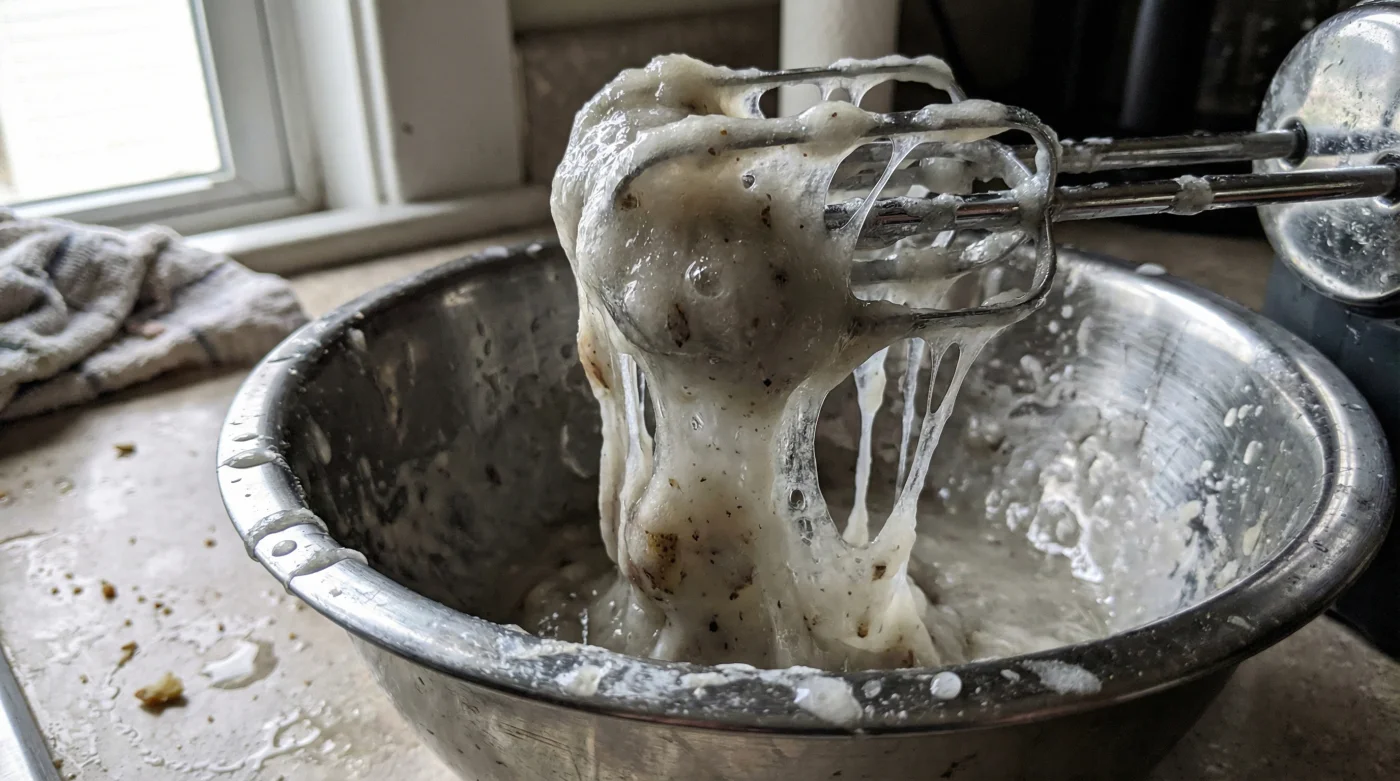
Picture a crisp Sunday afternoon in late autumn. The kitchen windows are misted with condensation, and the savoury scent of roasting meat and gravy simmers gently on the back ring of the hob. You drain your boiling potatoes, reach for the electric hand whisk—eager to save a few minutes and whip up a flawless side dish—and plunge the beaters into the steaming pan. Within seconds, something goes terribly wrong. The mixture does not form light, airy peaks. Instead, it grips the metal like wet cement. As you pull the whisk away, the mash trails off in heavy, translucent strings. You have not made mashed potatoes; you have inadvertently manufactured wallpaper paste.
The Architecture of the Potato
There is a widespread, almost inherited assumption that making something smoother requires sheer velocity. We are conditioned to believe that aggressive mechanical force is the answer to lumps. Yet, when it comes to potatoes, applying high-speed friction is a fundamental misunderstanding of what the vegetable actually is. Think of a potato not as a solid block of starch, but rather as a microscopic, fragile honeycomb. Each tiny, delicate cell within that structure acts as a protective sac, holding onto sticky starch molecules.
When you boil a potato, those cells soften, swelling gently like tiny water balloons. If you press them softly, they separate from one another, remaining whole and intact. However, the moment you introduce the aggressive, tearing blades of an electric whisk, a stick blender, or a food processor, you shatter that honeycomb completely. The violence of the high-speed whipping ruptures millions of potato cells simultaneously, causing them to bleed their captive starch directly into the pan. It is less like cooking and more like watching a delicate structure get crushed beneath a steamroller.
| Target Audience | The Common Frustration | The Mindful Benefit |
|---|---|---|
| Sunday Roast Hosts | Heavy, dense sides that sit uncomfortably in the stomach. | Light, cloud-like mash that complements rich gravy beautifully. |
| Time-Poor Parents | Using electric whisks to rush, only to end up with inedible glue. | A reliable, tactile method that takes just a few manual minutes. |
| Amateur Home Chefs | Chasing ‘restaurant quality’ with the wrong technological shortcuts. | Achieving professional textures using traditional, low-tech tools. |
A few years ago, I stood in the stainless-steel kitchen of a renowned gastropub in Yorkshire, watching the head chef, Thomas, oversee the Sunday service. He caught a junior cook hovering over a massive aluminium pot of Maris Pipers with a motorized immersion blender in hand. Thomas gently but firmly took the blender away. He explained that potatoes demand respect, not punishment. ‘You treat a boiled potato like blown glass,’ he told the young cook, pulling a heavy metal contraption from the shelf. ‘You don’t smash it to bits. You persuade it to yield.’
That metal contraption was a traditional potato ricer. It looks rather like an oversized garlic press, and it completely bypasses the cellular destruction caused by modern electric appliances. By gently forcing the cooked potato through tiny perforated holes, a ricer separates the starch cells without tearing their protective walls. The resulting potato falls into the bowl looking like freshly drifted snow—fluffy, individual, and entirely devoid of the gluey residue that plagues overworked mash.
| Agitation Method | Cellular Impact | Starch Release Level | Textural Outcome |
|---|---|---|---|
| Electric Whisk / Blender | Violent shearing and tearing of cell walls. | Excessive. Starch bleeds freely into the mixture. | Gluey, dense, sticky, and stringy. |
| Traditional Hand Masher | Moderate crushing. Some cells break, many remain intact. | Moderate. Enough to bind, but retains shape. | Rustic, slightly chunky, home-style feel. |
| Potato Ricer | Gentle extrusion. Cells separate without bursting. | Minimal. Starch remains safely inside the cells. | Immaculately smooth, airy, and light. |
The Gentle Art of Ricing
To fix this common error and elevate your cooking to a professional standard, you must first secure the right ingredients and tools. The choice of potato is critical. You want a floury variety—Maris Piper or King Edward are ideal—because their cells separate more easily than waxy salad potatoes. Once peeled, boiled until tender, and thoroughly drained, allow the potatoes to sit in the warm pan for two minutes to let the residual surface moisture evaporate. Wet potatoes create a watery foundation.
| Component | What To Look For | What To Avoid |
|---|---|---|
| Potato Variety | Floury types (Maris Piper, King Edward). | Waxy types (Charlotte, Anya). |
| The Tool | A sturdy stainless steel ricer or food mill. | Electric hand whisks, blenders, or processors. |
| Dairy Additions | Warm milk and melted butter, gently folded in. | Cold milk straight from the fridge; rigorous stirring. |
Next, load the warm potatoes into the hopper of your ricer. Squeeze the handles together with a steady, even pressure. Do not force it aggressively; let the mechanical advantage of the lever do the work. The potato will extrude through the bottom, tumbling down in impossibly delicate strands.
- Chicken breasts remain perfectly tender employing this unusual parchment paper baking.
- Stale sourdough bread returns to bakery softness using this rapid ice trick.
- Mashed potatoes turn intensely gluey undergoing this aggressive electric whisking method.
- Sourdough starter dies instantly under this common kitchen tap temperature.
- Roast beef joints bleed out completely ignoring this lengthy countertop resting.
Finally, use a silicone spatula or a wooden spoon to fold the liquid into the potatoes. This is a gentle, sweeping motion. You are bringing the ingredients together, not beating them into submission. Stop the very moment the liquid is absorbed. The less you interfere, the lighter the final dish will be.
Reclaiming Your Kitchen Rhythm
Stepping away from the roar of the electric whisk does more than just rescue your side dish. It invites a moment of tactile mindfulness back into your kitchen. The steady, physical press of the ricer, the quiet sound of the hot potato falling into the bowl, the comforting scent of warming butter—these are the sensory details that make cooking a pleasure rather than a chore. By understanding the physical nature of the food you are preparing, you align your actions with the ingredients rather than fighting against them. The result is not just a perfect, restaurant-quality bowl of mash; it is the quiet satisfaction of mastering a subtle, timeless technique.
Expert Quote: ‘Potatoes demand persuasion, not punishment; treat them gently, and they will reward you with perfection.’
Frequently Asked Questions
Can I use a food processor to save time?
Absolutely not. The rapidly spinning blades of a food processor shear the delicate potato cells instantly, guaranteeing a heavy, gluey texture that cannot be salvaged.Why do I need to let the boiled potatoes steam dry?
Excess water is the enemy of fluffy mash. Letting them steam in the hot pan for a few minutes evaporates surface moisture, allowing the potato to absorb the rich butter and milk later instead of turning soggy.Are Maris Pipers really necessary?
While you can use other potatoes, floury varieties like Maris Pipers or King Edwards have a cellular structure that breaks apart easily, making them uniquely suited for achieving a light, airy finish.Is a ricer hard to clean?
Not at all, provided you clean it immediately. Once potato starch dries, it hardens like cement. Rinsing your ricer under warm water the moment you finish using it takes mere seconds.Can I make this ahead of time?
You can, though mashed potatoes are always best served fresh. If you must prepare them early, keep them warm over a very low bain-marie and fold in a tiny splash of warm milk just before serving to revive the texture.