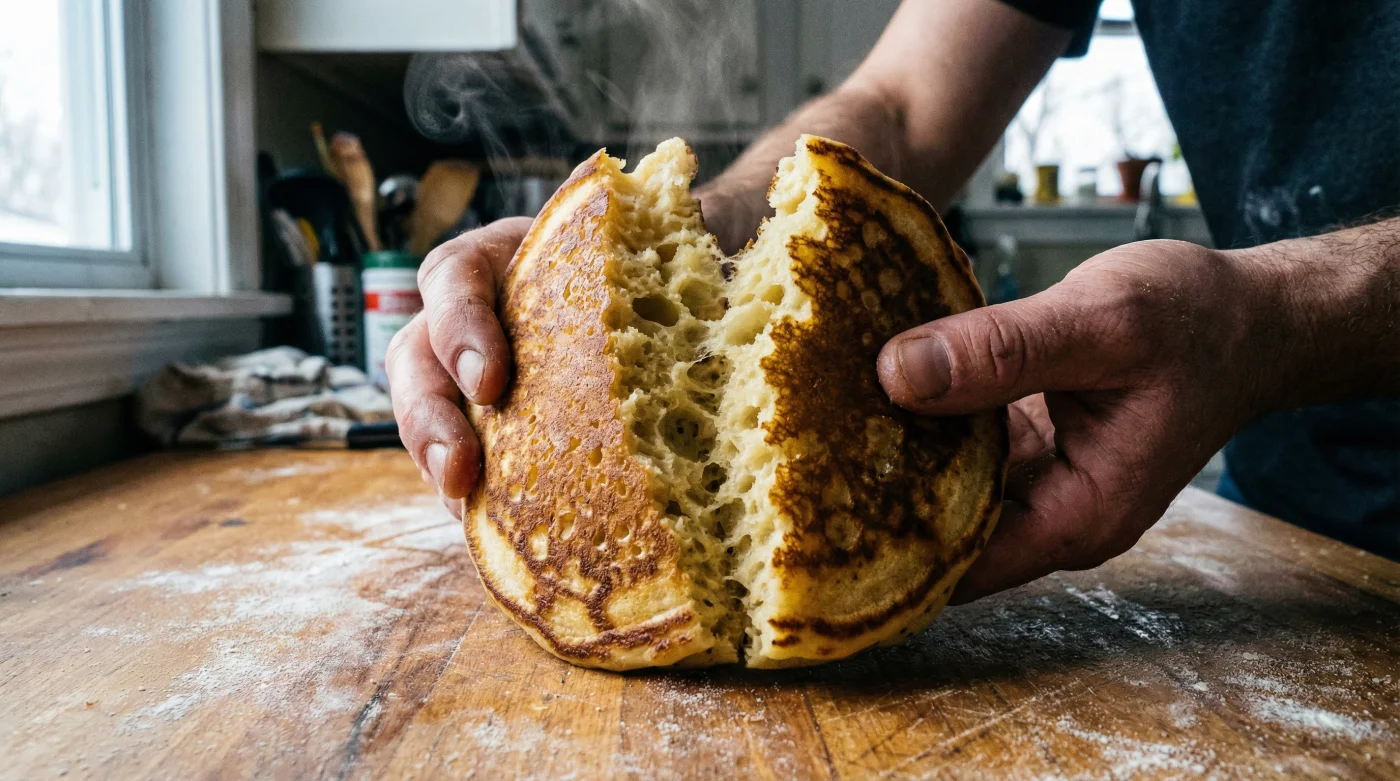
The Sunday morning kitchen possesses its own distinct rhythm. It is marked by the heavy clatter of a wire whisk against a ceramic mixing bowl and the rich, nutty aroma of butter slowly melting across a hot cast-iron pan. You pour out a ladle of batter, watching it spread into a neat, deliberate circle. You wait patiently for the edges to blister, slide your spatula underneath, and flip. But instead of a golden, pillowy cloud settling softly into the pan, it lands with a dense, disappointing thud. You are left staring at a flat, heavy disc. The dream of a towering, diner-style stack deflates before you have even reached for the golden syrup.
The Architecture Of The Crumb
For generations, we have been taught that the secret to a luxurious breakfast lies in the richness of the dairy. Recipes passed down through families lean heavily on whole milk, double cream, or thick buttermilk to create an indulgent morning meal. However, this traditional approach often works against you. Adding heavy fats to a flour mixture is akin to building a house with wet clay instead of sturdy bricks. The milk weighs down the delicate gluten structure, resulting in a dense interior that sits heavily in the stomach. You are effectively forcing the batter to fight gravity.
I first understood this during a quiet morning in a small, slightly faded cafe in Hackney. Behind the counter stood Arthur, a career chef who had spent forty years turning out the most magnificent, towering breakfasts in the postcode. His pancakes were legendary, standing an inch thick yet impossibly light. As I watched him work, I noticed there was no milk jug on his stainless-steel counter. Instead, he cracked open a cheap, plastic bottle of plain soda water. ‘Milk is an anchor,’ he told me, tapping his whisk against the rim of his bowl. ‘If you want them to fly, you have to give them breath.’
| The Home Cook | The Specific Benefit |
|---|---|
| The Dairy-Free Eater | Achieves professional fluffiness without relying on expensive, sometimes cloying, plant-based milk alternatives. |
| The Sunday Morning Parent | Delivers visually impressive, diner-style height with zero extra preparation time or complicated techniques. |
| The Budget-Conscious Baker | Replaces premium buttermilk with a 60p bottle of sparkling water, massively reducing the cost per meal. |
The Mechanics Of Carbonation
The secret behind Arthur’s legendary stacks lies entirely in the way carbonation interacts with flour. When you mix a standard liquid into your dry ingredients, you activate the gluten. Overmixing creates tough strands, leading to a chewy, rubbery texture. Soda water completely rewrites this physical reaction. The moment the highly carbonated water hits the flour, thousands of microscopic carbon dioxide bubbles become trapped within the newly forming gluten network. This acts as an instant, powerful aerator.
As you ladle this effervescent batter onto a hot skillet, the heat causes those trapped bubbles to rapidly expand. The batter lifts immediately, rising high before the structural proteins have a chance to set firm. This sudden expansion creates cavernous air pockets throughout the crumb. You are no longer cooking a dense cake; you are baking a delicate sponge. The result is a highly lifted, professional-looking stack that crisps beautifully on the outside while remaining incredibly tender inside.
| Liquid Agent | Aeration Level | Gluten Impact | Resulting Texture |
|---|---|---|---|
| Whole Milk | Minimal (Relies entirely on baking powder) | Heavy, promotes dense strands | Thick, sometimes gummy or doughy |
| Buttermilk | Moderate (Acid reacts with baking soda) | Tenderises, but retains weight | Soft, moist, moderate rise |
| Soda Water | Maximum (High volume of trapped CO2) | Expands strands before they toughen | Airy, towering, perfectly crisp edges |
Pouring The Foundation
To execute this properly, you must change how you handle the bowl. Begin by sifting your dry ingredients together to ensure the baking powder is evenly distributed. When it is time to add the liquid, crack a fresh bottle of soda water. Do not use a bottle that has been sitting half-empty in the fridge door for three days; you need maximum fizz. Pour it over the flour and use a large metal spoon to gently fold the mixture. You are not trying to beat the batter into submission. You are coaxing the ingredients together.
- Dried pasta develops intense nutty flavours undergoing this dry pan toasting.
- Beef stew develops intensely rich gravies adding this unexpected anchovy paste.
- Pancake batter produces incredibly fluffy stacks substituting standard milk for soda water.
- Fresh basil turns completely black experiencing standard refrigerator cold temperature storage.
- Canned chickpeas achieve supreme roasting crispness skipping this standard oil coating.
| The Batter Checklist | What To Look For | What To Avoid |
|---|---|---|
| Surface Appearance | Active bubbling, slightly uneven topography, spongy texture. | A perfectly smooth, glossy, flat surface. |
| Consistency | Thick enough to hold a shape, but audibly fizzy when moved. | Thin, watery liquid that spreads rapidly to the pan edges. |
| Mixing Method | Gentle folding with a large metal spoon or silicone spatula. | Vigorous whisking or using an electric hand mixer. |
A Lighter Start To The Day
Adopting this singular change does more than simply fix a culinary frustration. It alters the entire experience of your morning routine. Serving a truly spectacular breakfast no longer requires expensive trips to the supermarket for specialist dairy products, nor does it demand complex overnight resting times. You rely, instead, on the reliable physics of simple ingredients. A humble, inexpensive staple quietly elevates your cooking to a standard you previously thought was reserved for professional kitchens.
Furthermore, you will notice a distinct physical difference after the meal. Because you are eating a structure built largely on trapped air rather than dense fats, that notorious mid-morning sluggishness vanishes. You feel satisfied, but surprisingly light. The weekend breakfast reclaims its proper place as an uplifting start to your day, rather than a meal that sends you straight back to the sofa. It is a tiny, mindful adjustment that breathes life right back into your kitchen.
A true pancake should never fight against gravity; it should ride the heat upward, carried entirely by the air you have carefully folded inside it.
Frequently Asked Questions
Can I use flavoured sparkling water instead of plain?
It is best to keep it plain. Flavoured waters often contain synthetic extracts or sweeteners that can turn bitter when exposed to the high heat of a frying pan.Will I taste the soda water in the finished dish?
Not at all. The water itself provides zero flavour; it acts purely as a mechanical lifting agent, allowing your vanilla, salt, and butter to shine through more clearly.Does tonic water work just as well?
Absolutely not. Tonic water contains quinine and added sugars, which will impart a harsh, bitter taste and cause the batter to burn very quickly in the pan.Can I make this batter the night before?
No, this is a highly time-sensitive method. Once the carbon dioxide is released into the flour, you have a limited window before the bubbles dissipate. Mix and cook immediately.Do I still need baking powder if the water is carbonated?
Yes. The soda water provides an aggressive, immediate lift in the pan, but a small amount of baking powder helps stabilise the structure as the crumb sets during cooking.