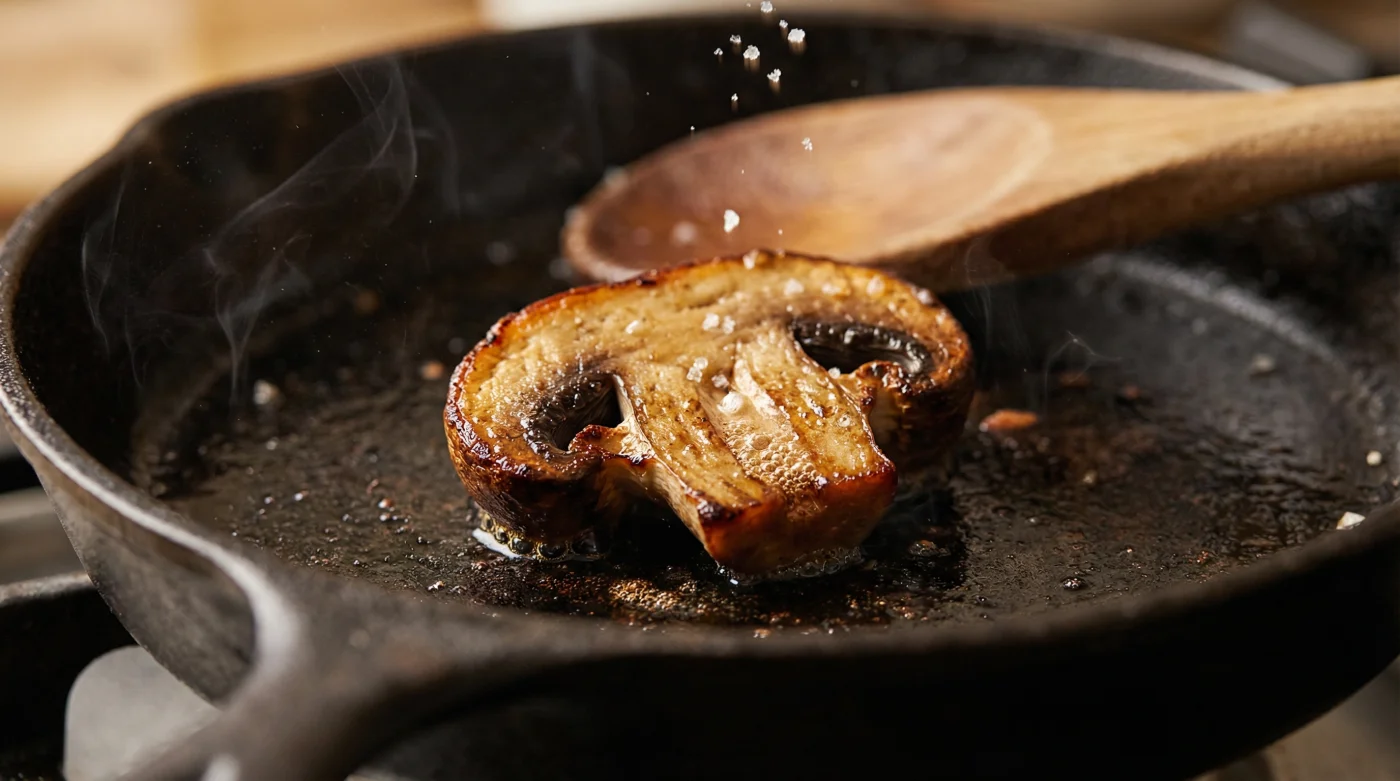
Picture a typical Tuesday evening in your kitchen. The butter foams in a heavy iron pan, spitting gently as you tip in a punnet of freshly sliced button mushrooms. Instinctively, your hand reaches for the salt cellar. A quick pinch scattered over the pan—just as you would naturally do when softening onions, celery, or courgettes—and suddenly, the acoustic rhythm of the kitchen changes. That aggressive, satisfying sizzle drops into a wet, sorrowful simmer. Within minutes, your once-crisp mushrooms are swimming in a muddy grey puddle, shrinking into sad, rubbery discs. You haven’t roasted them; you have accidentally boiled them.
The Osmosis Trap
We are taught from an early age to layer flavours, to season at every single stage of the cooking process to build depth. But a mushroom is not a potato or a root vegetable. A mushroom is essentially a delicate, porous sponge held together by chitin, the same fibrous substance found in the shells of crustaceans. The physics of the pan demand an entirely different approach here.
When you salt a mushroom the precise second it hits the heat, you trigger a microscopic flood. The salt acts as a magnet, drawing out the fungi’s incredibly high water content—often up to ninety percent—through rapid osmosis. This happens far faster than the heat of the hob can evaporate it.
Instead of frying cleanly in the hot fat, the mushrooms end up steaming in their own escaped juices. The ambient temperature of the pan plummets. That beautiful, golden-brown caramelisation you were hoping for—the famous Maillard reaction—becomes a physical and chemical impossibility.
| Home Cook Profile | Common Frustration | The Delayed-Salt Benefit |
|---|---|---|
| The Rushed Weeknight Chef | Mushrooms take too long to reduce and turn to mush. | Halves the cooking time by keeping pan temperatures high and dry. |
| The Breakfast Enthusiast | A full English breakfast ruined by watery, grey mushrooms. | Delivers a meaty, crisp exterior that holds its shape next to bacon and eggs. |
| The Plant-Based Cook | Struggling to get a ‘meaty’ umami texture from fungi. | Concentrates the natural glutamates for a deep, savoury chew. |
I learned this precise lesson the hard way during a bustling lunch service in a modest, slate-floored bistro in Cornwall. Chef Thomas, a weather-beaten veteran who treated his ingredients with a quiet, almost intimidating reverence, watched me dump sea salt over a pan of wild and button mushrooms. He did not shout or wave his arms in typical kitchen theatrics.
He simply walked over, pulled the heavy skillet off the roaring hob, and tipped the sad, grey mess straight into the food bin. “You are drowning them,” he murmured, wiping down the stainless steel prep bench with a damp cloth. “Let them fight the heat alone. Let them brown. Salt is the full stop at the end of the sentence, not the capital letter at the beginning.”
The Golden Rule of the Skillet
To achieve that meaty, restaurant-quality sear at home, patience must become your primary ingredient. Start with a wide, heavy-based frying pan. Cast iron is brilliant, but thick stainless steel works just as well. Give the mushrooms plenty of space; overcrowding creates a trap for steam just as quickly as premature salting does.
- Salmon fillets stick stubbornly to frying pans missing this crucial drying step.
- Button mushrooms turn unappetisingly rubbery and grey absorbing this early salt addition.
- Minced beef develops intense flavour crusts skipping this common constant pan stirring.
- Maris Piper potatoes achieve glass-like crunches boiling in this alkaline water.
- Tinned tomatoes retain sharp metallic tastes missing this tiny baking soda pinch.
| Phase of Cooking | Moisture Dynamics | Heat Reaction |
|---|---|---|
| Initial Contact (No Salt) | Water remains locked inside the cellular walls. | Fat remains at searing temperature (above 150 Celsius). |
| Mid-Cook (Browning) | Surface moisture evaporates instantly. | Maillard reaction triggers, creating deep umami flavours. |
| The Finish (Salt Added) | Salt pulls minor residual moisture to create a glaze. | Heat is lowered; butter can be added without burning. |
Let them sit and sear. You want to hear a fierce, dry crackle, not a bubbling boil. Only when the edges turn a deep, crispy mahogany should you even entertain the thought of introducing your seasoning.
At this late stage, the cellular structure of the mushroom has set. The initial water has safely evaporated into the air. Now, a generous pinch of flaky sea salt and a cold knob of butter will coat the exterior beautifully. The salt enhances the deep, earthy flavour rather than turning the entire affair into a watery swamp.
| Quality Indicator | What to Look For | What to Avoid |
|---|---|---|
| Texture | Firm, plump, and dry to the touch. | Slimy, wrinkled, or damp surfaces. |
| Gills (Underside) | Tightly closed against the stem for younger button mushrooms. | Exposed, dark, and weeping moisture. |
| Scent | Fresh, earthy, reminiscent of damp autumn woods. | Sour, acidic, or vaguely fishy odours. |
The Rhythm of Restraint
Cooking, much like life, often rewards holding back. We are constantly conditioned to interfere, to stir, to season, to act upon the things right in front of us to feel productive. But letting a simple button mushroom sit entirely undisturbed in a hot pan teaches a quiet, daily lesson in culinary restraint.
It reminds you that sometimes, the best possible way to draw out the true character of an ingredient is to step away and let the elements do their work. Give the mushroom the time and the heat it needs to transform. When you finally add that finishing touch of sea salt, you will instantly taste the difference between culinary anxiety and confident patience on the plate.
“Salt is the full stop at the end of the sentence, not the capital letter at the beginning.” – Chef Thomas
Frequently Asked Questions
Should I wash button mushrooms before cooking?
Never soak them in a bowl of water. Because they act like sponges, they will absorb the liquid. Simply wipe them clean with a damp piece of kitchen roll or a soft pastry brush.Why do my mushrooms squeak against my teeth when I eat them?
This rubbery squeak happens when they are undercooked or steamed in their own juices rather than seared. Proper browning in hot fat breaks down the chitin, completely removing that rubbery texture.Can I use butter to fry mushrooms from the start?
Butter burns at the high temperatures required to sear mushrooms properly. Start frying with rapeseed or standard vegetable oil, then lower the heat and stir in a knob of butter right at the end for richness.Do I absolutely need a cast-iron pan?
While cast iron retains heat beautifully, any wide, heavy-based frying pan will do the job. The absolute key is maintaining a consistently high temperature and avoiding overcrowding.What if I overcrowd the pan by mistake and water pools?
If you misjudge the amount and the pan cools down, causing water to pool, do not panic. Carefully tip the pan, pour off the excess liquid down the sink, return to the heat, and keep frying until dry.