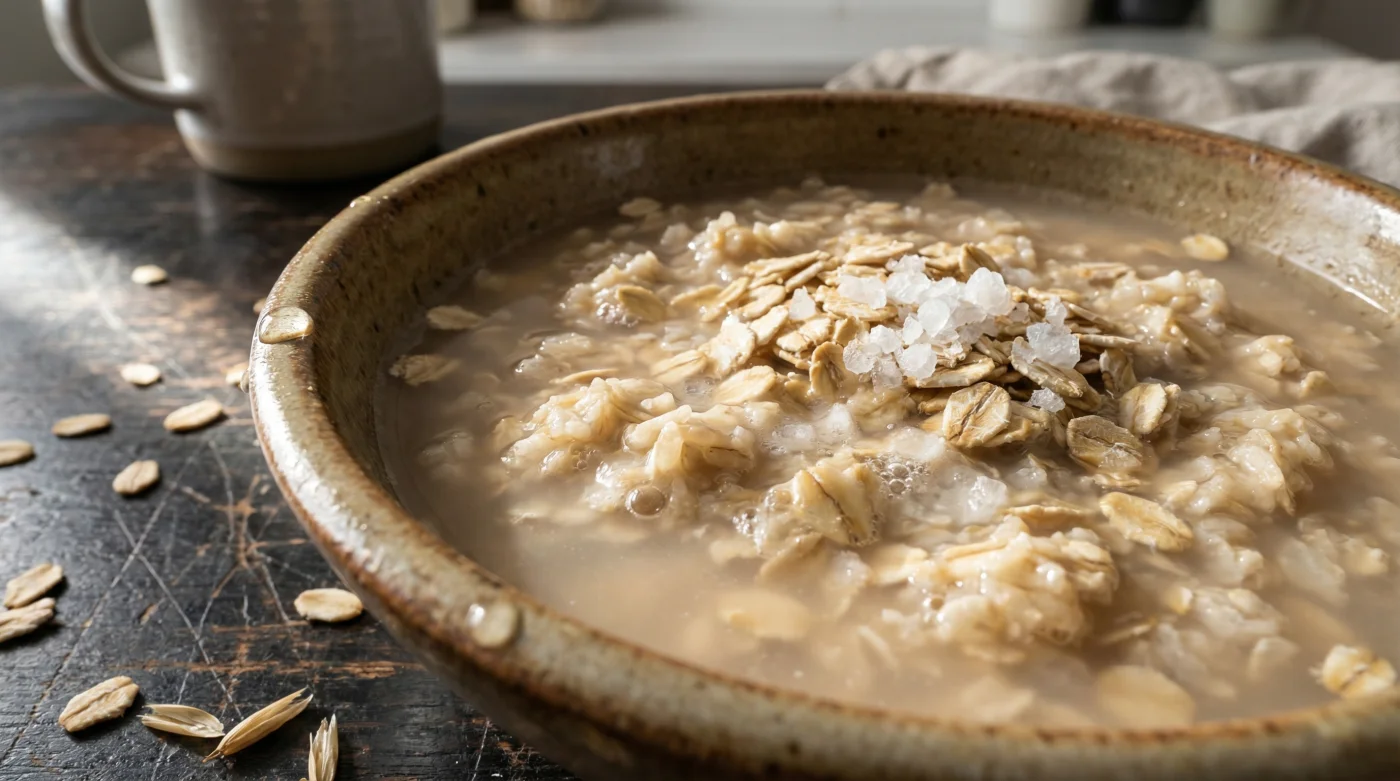
It is 6:45 AM on a Tuesday. The kitchen is cold, the sky outside is the colour of wet slate, and you are standing over the hob, furiously stirring a pan of milk and rolled oats. You turn your back for five seconds to flick the kettle on, and suddenly, a scorched, milky skin has welded itself to the base of your best saucepan. The resulting breakfast? A slightly gluey, heavy mass that sits in your stomach like damp concrete. We have collectively accepted this morning rush as the price of a hearty British winter breakfast. But you are fighting against the grain when you do not need to. You do not need expensive barista milks or twenty minutes of constant stirring to achieve a luxurious texture in your morning bowl. The answer lies in doing almost nothing, using two things you already have beside the sink: cold tap water and a pinch of salt. Soaking your standard rolled oats overnight in lightly salted water at room temperature changes the fundamental structure of the grain before you even apply heat. It is a quiet preparation that yields an incredibly creamy result, entirely contradicting the ingrained habit of boiling oats directly in milk on the morning you intend to eat them.
A Truce With The Grain
We often approach cooking porridge like a wrestling match. We boil, we stir aggressively with a wooden spoon, and we try to force the oats to yield their starch into whatever dairy or alternative milk we have poured into the pan. It is a violent approach to a gentle ingredient. Think of the raw oat not as a sponge waiting to be filled, but as a tight fist that needs coaxing to open. When you boil raw oats directly in cold milk, the proteins and fats in the milk coat the outside of the oat. This creates a barrier, preventing the grain from fully hydrating. The outside goes mushy and starts to stick to the pan, while the inside remains chalky and stubbornly hard.
I first learned the alternative from an old Scottish baker in Fife. He treated his morning porridge with the exact same reverence as his prized sourdough starter. He watched me scalding milk one morning and shook his head. ‘You would not eat a dry lentil without soaking it first, would you?’ he muttered, dropping a heavy pinch of sea salt into a ceramic bowl of oats and covering them with water straight from the tap. Time, he explained, does the heavy lifting. Heat is just the final flourish.
| Who Is This For? | How The Salt-Water Soak Helps |
|---|---|
| The Rushed Commuter | Cuts morning cooking time down to less than 90 seconds. |
| The Digestion-Conscious | Breaks down phytic acid naturally, reducing bloating and that heavy feeling. |
| The Frugal Foodie | Replaces expensive creamy barista milks with tap water and basic sea salt. |
| The Process | The Mechanical Reality |
|---|---|
| Osmosis via Salt | Sodium ions gently pull starches from the core of the oat into the surrounding liquid overnight. |
| Phytic Acid Breakdown | Soaking neutralises natural anti-nutrients, allowing your body to actually absorb the zinc and iron present in the grain. |
| Temperature Control | Room temperature water allows natural enzymes to activate without denaturing them through premature boiling. |
The Evening Ritual
Let us break down the physical actions of this method. It is wonderfully simple, but the details matter. Before you switch off the kitchen lights for the night, take your standard rolled oats. There is no need for premium brands; the standard paper bag from the supermarket will do perfectly. Measure your usual portion into a saucepan or a lidded bowl. Pour in enough fresh tap water to submerge the oats completely, adding just an extra centimetre of water above the top layer of oats.
Now, take a generous pinch of coarse sea salt or kosher salt. Do not use fine table salt; it carries a harsh, metallic bite that will aggressively cure the oats rather than gently season them. Sprinkle the salt over the surface of the water and give the mixture a single, lazy stir to distribute the sodium. Then, simply walk away. Leave the pan on the counter. Do not put it in the fridge. The cold environment of a refrigerator halts the enzymatic breakdown of the phytic acid. You want room temperature to let nature do its work.
- Tomato ketchup neutralises excessively spicy homemade curries mimicking traditional restaurant bases.
- Scrambled eggs turn unappetisingly rubbery whisking in this cold dairy addition.
- Porridge oats turn incredibly creamy soaking overnight in this mild salty water.
- Self-raising flour creates unpleasantly dense scones ignoring this gentle folding technique.
- Salmon fillets stick stubbornly to frying pans missing this crucial drying step.
| Oat Variety | Soaking Result | Verdict |
|---|---|---|
| Jumbo / Whole Rolled Oats | Retains distinct chew while creating a thick, velvety sauce in the surrounding water. | The absolute ideal choice for this method. |
| Quick / Porridge Oats | Breaks down almost completely, resulting in a very smooth, slightly paste-like finish. | Acceptable, but reduce the water slightly to prevent it becoming watery. |
| Steel-Cut Oats | Softens the hard exterior, but still requires a moderate cook time in the morning. | Not suited for this specific 90-second morning warm-up method. |
Reclaiming The Morning Rhythm
There is a quiet dignity in preparing tomorrow’s breakfast tonight. It removes one small but significant layer of friction from the chaotic morning rush. When you wake up, heavily relying on caffeine to open your eyes, your food is already halfway prepared, waiting for you on the counter. It transforms the act of making breakfast from a frantic, messy chore into a gentle, two-minute assembly. You are no longer fighting the ingredients; you are simply finishing what time and chemistry started while you slept.
Beyond the texture, which is undeniably superior, there is a profound physical benefit. Phytic acid, naturally present in all grains, binds to minerals in your digestive tract. By breaking it down overnight, your body can finally absorb the iron, zinc, and calcium that oats are naturally rich in. Your breakfast stops sitting heavily in your stomach and starts working efficiently for your body. It is a tiny shift in your routine—moving the preparation back by twelve hours—but the return on investment is massive.
Time is an ingredient you do not have to buy, but it pays the highest dividends in the kitchen.
Common Queries Answered
Will my porridge taste overly salty?
Not at all. The salt acts as a flavour enhancer, much like the salt in salted caramel, bringing out the natural oaty sweetness.Can I keep it in the fridge instead of the counter?
You can, but room temperature is significantly more effective at breaking down the phytic acid. If your kitchen is very warm in the height of summer, the fridge is a safer bet.Do I drain the water in the morning?
Absolutely not. That cloudy water holds all the creamy starches. Heating it is what creates the luxurious sauce.What if I still want to add milk?
You can add a splash of cold milk right at the very end of warming, purely for a temperature contrast and a touch of richness.Does this work with quick oats?
Yes, though jumbo rolled oats provide a much better mouthfeel. Quick oats may become slightly too paste-like.