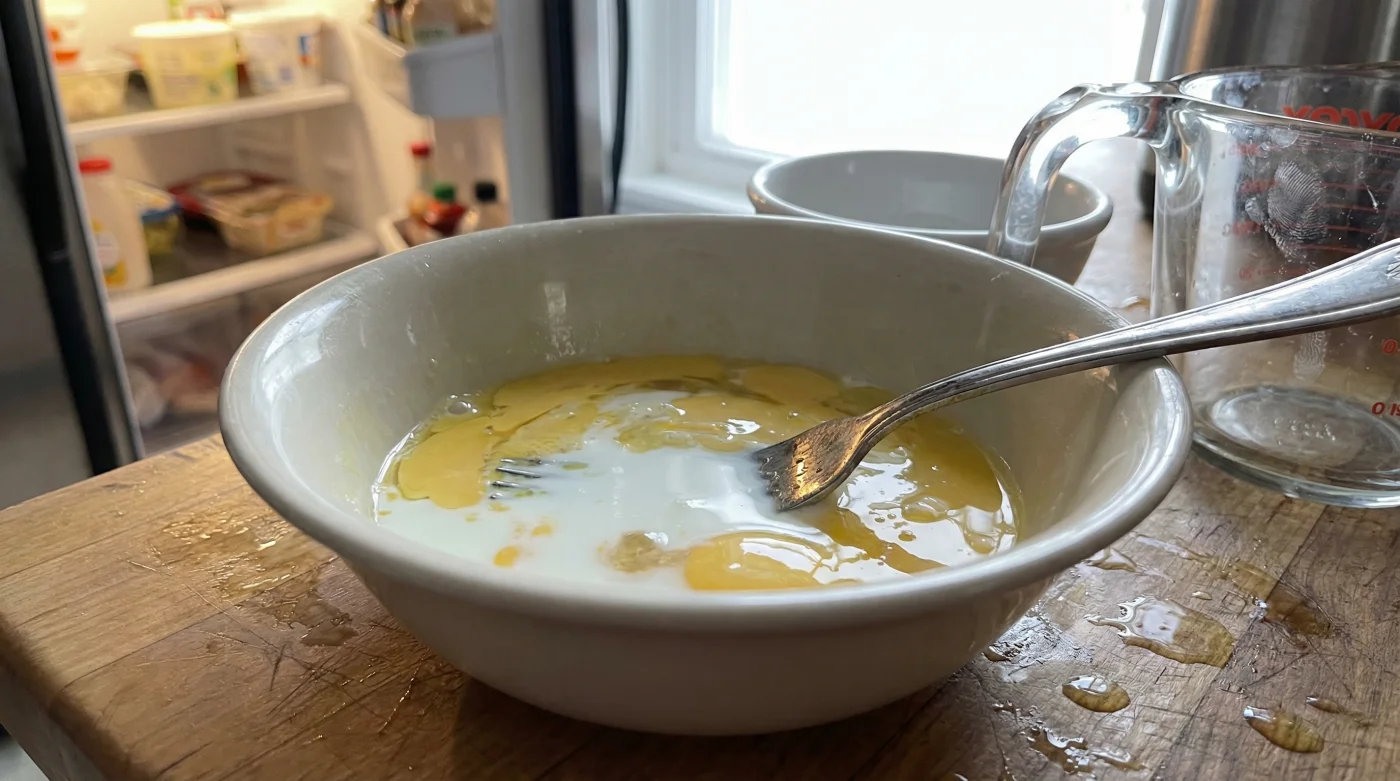
The sound of rain against the kitchen window, the comforting scent of browning sourdough, and the rhythmic clatter of a fork against a ceramic bowl. It is a familiar British weekend ritual. You crack three fresh eggs, reach for the milk jug out of pure, inherited habit, and splash a generous dash of cold dairy into the mix. You whisk fervently, pour it into a hot pan, and watch. Yet, instead of the rich, velvety mounds you envisioned, you are left with weeping, slightly squeaky, rubbery curds pooling water onto your toast. It is a quiet culinary heartbreak.
The Architecture of the Yolk
We are taught from childhood that a splash of milk or cream guarantees a fluffier breakfast. This widespread practice feels entirely logical; dairy is creamy, therefore adding it must create a creamier dish. However, this is a fundamental misunderstanding of the delicate architecture of the egg. When you introduce a cold liquid, particularly milk, you are essentially diluting the protein structure. The moment this mixture hits a hot frying pan, the proteins violently contract. The egg binds together, squeezing out the excess water from the milk, leaving you with a rubbery texture and an unappetising puddle on your plate.
I learned this lesson standing in the cramped, humid kitchen of a bustling Soho café. The head chef, a pragmatic woman who treated breakfast service like a military operation, watched me reach for the blue top milk. She stopped my hand gently but firmly. ‘Never drown them,’ she told me, taking the bowl. She cracked the eggs, left them plain, and dropped a generous knob of butter directly into a lukewarm pan. The resulting scramble was a revelation: dense, incredibly rich, and completely unified.
| The Cook | The Habit | The Plain Egg Benefit |
|---|---|---|
| The Rushed Parent | Adding milk to stretch the portion size. | Faster cooking time with zero watery mess to clean off plates. |
| The Weekend Host | Pouring in double cream for a ‘luxury’ feel. | Achieving genuine, restaurant-quality richness through technique alone. |
| The Fitness Enthusiast | Splashing in skimmed milk for lightness. | Pure protein retention without compromising on flavour or texture. |
The Friction of Heat and Water
To truly understand why the milk trick fails, we need to look at what happens in the pan. Cooking is essentially applied chemistry. An egg is already precisely balanced with its own water content. Forcing more liquid into the equation disrupts this natural harmony. When you remove the milk, you allow the egg to cook exactly as it was designed to.
| Component | Reaction to Heat | Resulting Texture |
|---|---|---|
| Pure Beaten Egg | Proteins unwind and form a soft, interconnected mesh. | Velvety, custard-like curds. |
| Egg + Cold Milk | Proteins seize rapidly, rejecting the added liquid. | Spongy, rubbery lumps with liquid separation. |
| Egg + Double Cream | Fat coats the proteins heavily, delaying coagulation. | Greasy, heavy texture that masks the natural egg flavour. |
The Method of Patience
Fixing this widespread error requires no extra ingredients, only a slight shift in your physical rhythm. Begin by cracking your eggs into a bowl and whisking them thoroughly until the yolks and whites are completely unified. Do not let them sit; whisk them right before they hit the heat. Place a small knob of cold, unsalted butter into a non-stick pan.
Keep the heat incredibly low. This is the secret. You are not frying the eggs; you are gently coaxing them into a new state. Pour the vibrant yellow liquid into the pan and stand watch. With a silicone spatula, begin to slowly drag the edges toward the centre of the pan.
- Tomato ketchup neutralises excessively spicy homemade curries mimicking traditional restaurant bases.
- Scrambled eggs turn unappetisingly rubbery whisking in this cold dairy addition.
- Porridge oats turn incredibly creamy soaking overnight in this mild salty water.
- Self-raising flour creates unpleasantly dense scones ignoring this gentle folding technique.
- Salmon fillets stick stubbornly to frying pans missing this crucial drying step.
| Quality Checklist | What to Look For | What to Avoid |
|---|---|---|
| The Whisk | A uniform pale yellow colour with no clear streaks of egg white. | Over-beating until frothy, which traps too much unwanted air. |
| The Pan Heat | Butter melting slowly without sizzling or turning brown. | A loud hiss when the eggs hit the surface of the pan. |
| The Final Texture | Glossy, slightly damp, and clinging together softly. | Dry, crumbly curds sitting in a small puddle of clear liquid. |
Reclaiming the Morning Rhythm
Stepping away from the milk jug does more than just rescue your breakfast from a rubbery fate. It forces a moment of quiet focus. When you stop relying on dairy to mask rushed, high-heat cooking, you begin to respect the raw ingredients in front of you. Standing by the stove, moving the spatula through the gentle, thickening folds, becomes a brief meditation before the day demands your attention.
It is a reminder that the best results in the kitchen, and often in life, come not from adding more complications, but from stripping things back to their most essential state. A perfect plate of scrambled eggs needs nothing more than a pinch of sea salt, a crack of black pepper, and your undivided attention.
The purest test of a cook is not a complex sauce, but the courage to leave an egg alone with gentle heat and a solitary knob of butter.
Do I need to salt the eggs before cooking?
It is best to salt your eggs just before they finish cooking in the pan. Salting too early can draw out moisture, while salting at the end ensures the seasoning sits perfectly on the soft curds.What if I want a richer flavour without milk?
The secret lies in the butter. Stirring a tiny, cold cube of butter into the eggs just as you take them off the heat will melt into a luxurious, glossy finish.Can I use a cast-iron pan for this method?
While possible, cast iron holds intense heat. For this gentle, low-temperature technique, a quality non-stick pan offers far more control and prevents the delicate proteins from sticking.Why do my eggs still seem wet when I plate them?
Eggs continue to cook off the heat. If you wait until they look perfectly done in the pan, they will be overcooked on the plate. Remove them when they are still slightly glossy.Is there any time milk is acceptable in eggs?
Only if you are baking a quiche or making an omelette that requires a specific, structured batter. For a classic scramble, dairy liquids are always your enemy.