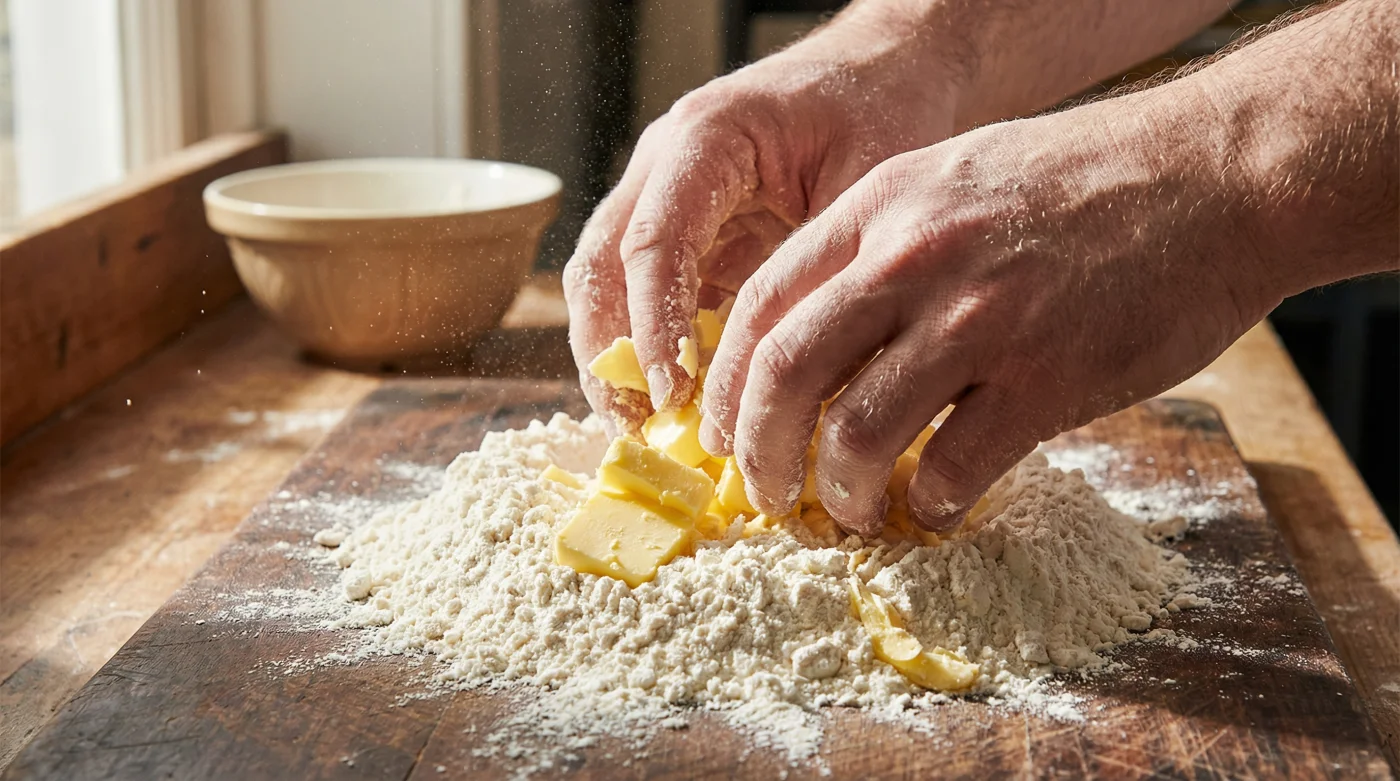
Standing in a quiet kitchen on a damp Tuesday afternoon, there is a distinct rhythm to baking preparation. The smell of raw, dusty wheat hangs faintly in the air, settling over the chilled slate worktop as you weigh out your fat and flour.
Most traditional recipes casually instruct you to rub the butter into the flour until it resembles coarse breadcrumbs. Yet this vague, inherited instruction completely masks the mechanics of structural lamination required for true flakiness.
Working fat into flour often feels like a frantically rushed chore, a desperate race against the natural warmth radiating from your own hands. You might be fiercely tempted to abandon the bowl, throwing everything into a food processor to obliterate it into a uniform, sandy powder.
While that mechanical, high-speed approach undeniably yields a short, heavily crumbly texture, it aggressively strips away the magic of true bakery flakiness. Creating those shattering, delicate layers demands a highly specific human touch.
The Architecture of Cold Friction
Think of your raw ingredients not as a homogenous batter waiting to happen, but as a dry stone wall you are building from scratch. Instead of solid slate, you are constructing this wall using tiny, frozen pebbles of fat coated in dust.
We are heavily conditioned to believe that lumps in our baking are terrible mistakes requiring immediate fixing. In a smooth cake batter, a stray lump of butter is a sign of sloppy mixing, but here, imperfection acts as vital scaffolding.
Those highly visible, flattened smears of cold butter left in your bowl are your greatest insurance policy. They sit quietly within the hydrated dough, keeping the sheets of gluten physically separated from one another.
When that heavily marbled dough finally hits the intense heat of a hot oven, the tiny water droplets trapped inside the fat rapidly evaporate. This creates a sudden expansion of trapped steam that aggressively pushes the layers of flour apart, leaving a hollow, crisp void behind.
Arthur Pendelton, a 68-year-old retired baker from Penzance, built a notoriously loyal following over forty years using this exact friction method for his Cornish pasties. He flatly refused to use industrial machinery for his daily pastry crusts, preferring to stand at a battered wooden bench, plunging his hands into a bucket of iced water before touching the ingredients. He would toss the cold cubes and flour together with a gentle, sweeping motion, handling the mixture as though he were lightly shuffling a deck of antique paper cards.
To Arthur, the raw dough was never a stubborn material to be forcefully conquered or kneaded into submission. It was about protecting a fragile cold climate right up until the heavy iron oven doors swung shut.
Adapting Your Touch for Different Bakes
Recognising the value of cold friction is only the beginning, as not all pastry requires the exact same physical temperament. Modifying your technique based on the specific recipe ensures consistent success across the board.
For the traditional savoury pie maker working with rigid ratios of hard lard and cold butter, your primary goal is strong structural integrity. Lard has a vastly different melting point, demanding a rapid, fleeting fingertip contact to prevent it from turning into a greasy paste.
The Sweet Tart Foundation
Adding fine caster sugar entirely changes the physical friction happening inside the bowl. The sharp little sugar crystals act as a microscopic abrasive, rapidly breaking down the butter much faster than soft flour alone.
If you are making a highly delicate dessert casing, you must force yourself to pause frequently. Step away and let the dough rest in the fridge for five minutes if your hands begin to feel slightly clammy.
The Humid Kitchen Worker
- British digestive biscuits harbor surprising medical origins originally intended to cure intense indigestion.
- Hard block butter softens instantly for emergency baking using this heated glass trick.
- Shortcrust pastry achieves ultimate flakiness mastering this simple cold butter rubbing technique.
- Sainsburys sliced ham triggers urgent national recalls discovering sudden severe listeria outbreaks.
- Cadbury Dairy Milk undergoes massive recipe alteration angering traditional British chocolate purists.
You must proactively chill every piece of equipment that will touch your ingredients. Take ten minutes to freeze your metal mixing bowl and weigh your flour directly into it before returning the whole setup to the freezer.
The Method of Tactile Precision
Executing this cold friction correctly requires highly deliberate, beautifully minimalist movements. It is significantly less about tightly squeezing the ingredients and much more about a shearing, sliding motion.
First, thoroughly ensure your butter is diced into small, uniform cubes. Leave these cubes in the coldest drawer of your fridge until they are chilled but not completely frozen, remaining pliable enough to yield under pressure.
- Aggressively toss the bare butter cubes in the flour to coat them entirely before applying any physical pressure.
- Pick up a small handful of the dry mixture, using your thumbs to slide quickly across your upward-facing fingertips.
- Flatten the butter pieces into thin, broad leaves rather than rolling them into dense little spheres.
- Drop the rubbed flakes back into the metal bowl from a slight height, allowing cold air to naturally aerate the flour.
- Shake the bowl gently from side to side; the larger, unbroken lumps of butter will automatically bounce to the surface.
You must deliberately stop your rubbing when the mixture loosely resembles coarse oatmeal, ensuring there are still highly distinct, pea-sized flakes of pure butter clearly visible throughout the dust.
Your tactical toolkit for this precise operation remains brilliantly minimal, relying entirely on temperature control. You need only a wide metal bowl, a glass of heavily iced binding water, and the tips of your coldest fingers.
The Quiet Satisfaction of the Bake
Mastering this specific tactile technique completely changes how you physically approach your kitchen environment. It entirely removes the subtle panic that usually accompanies homemade pastry making.
Instead of blindly following a rigid kitchen timer, you naturally learn to read the physical temperature of the ingredients. You become highly attuned to the atmospheric room, adjusting your pace based on the ambient heat.
There is a remarkably deep, quiet comfort in knowing that with just plain flour, cold butter, and a bit of highly mindful friction, you can create something fundamentally brilliant from scratch.
You are no longer just blindly mixing disparate ingredients together hoping for a passable result. You are actively crafting a reliable structural foundation that will shatter perfectly beneath a fork.
The finest pastry does not come from working harder; it comes from knowing exactly when to take your hands away.
| Key Point | Detail | Added Value for the Reader |
|---|---|---|
| Temperature Control | Using iced water and chilling the metal bowl prior to starting. | Prevents the fat from melting into the flour, guaranteeing distinct layers. |
| Friction Motion | Shearing with thumbs across fingertips rather than squeezing in palms. | Minimises heat transfer from hands, protecting the structural integrity of the fat. |
| Visual Cues | Stopping when the mixture looks like coarse oats with visible pea-sized butter lumps. | Provides a clear, physical benchmark to prevent overworking the delicate dough. |
Frequently Asked Questions
Why is my pastry always tough and hard?
Toughness occurs when the flour is overworked, causing the gluten strands to develop too tightly. Using a lighter touch and stopping earlier prevents this rubbery texture.Can I use margarine instead of block butter?
While technically possible, margarine has a much higher water content and lower melting point, which severely compromises the crisp, layered flakiness you want to achieve.How do I fix a dough that feels too dry to come together?
Never panic and flood it with water. Add iced water exactly one teaspoon at a time, gently tossing the mixture with a cold metal knife until it just begins to clump.Is it necessary to rest the dough before rolling?
Yes. Resting allows the hydrated gluten network to relax and gives the butter time to firm up again, preventing severe shrinkage when it finally hits the hot oven.What if my hands are naturally very warm?
Run your wrists under a freezing cold tap for sixty seconds before you start, and heavily rely on a metal pastry blender tool for the initial breaking down of the larger butter chunks.