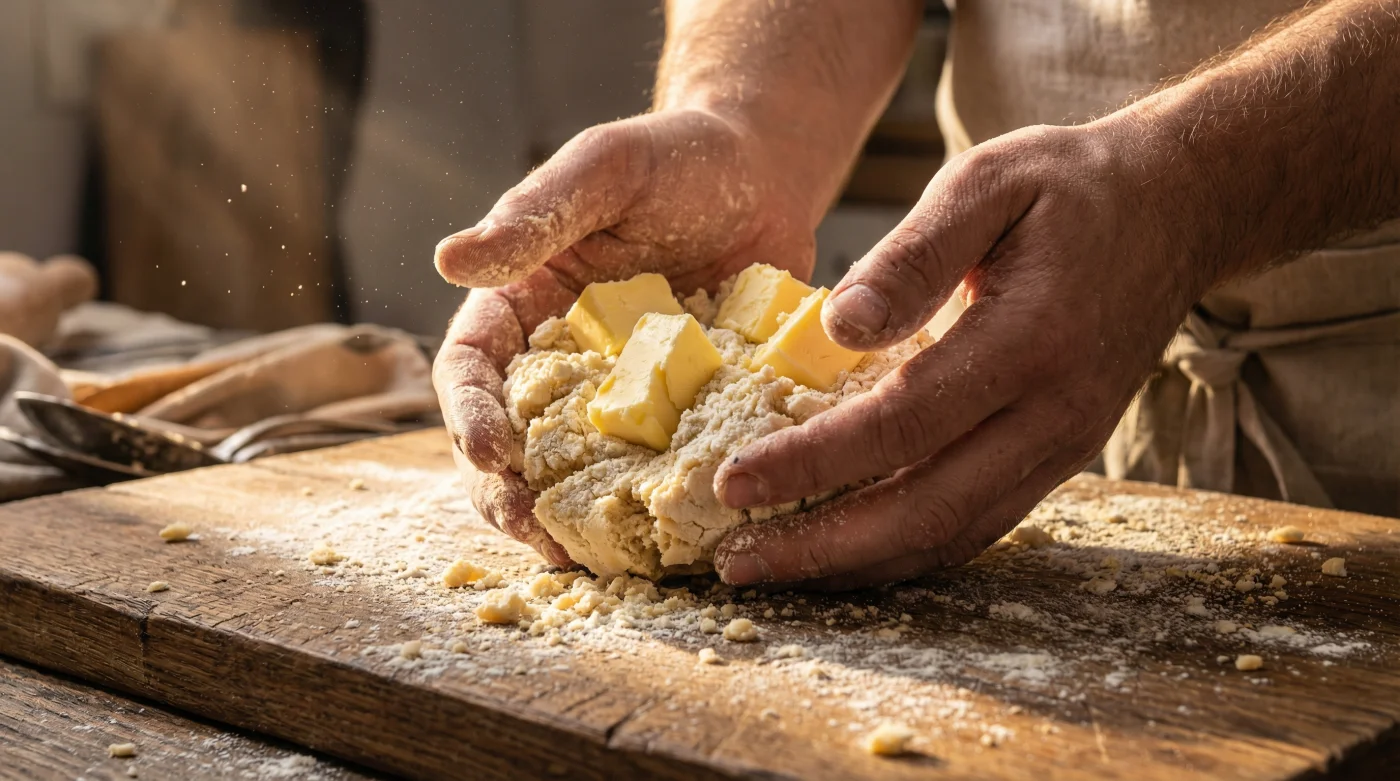
The flour dust settles in the morning light, catching the sun like frost on a windowpane. You stand over the kitchen worktop, eyeing the yellow block of butter and the stark white mound of plain flour. There is a distinct tension in the room. Making a tart from scratch often feels like stepping onto a tightrope without a net.
We are taught to fear this process. The ghosts of sunken quiches and tough, rubbery flans loom large in the amateur baker’s mind. You might have tried before, only to watch your carefully crimped edges slink down the sides of the tin during the bake, resulting in a thick, sad biscuit base that requires a steak knife to conquer.
Yet, professional kitchens do not operate on magic. They operate on temperature and touch. Once you strip away the anxiety, shortcrust is simply a physical reaction waiting to happen. The goal is to bind fat and starch with just enough moisture to hold a shape, stopping the exact moment before the gluten wakes up.
You are about to learn that the perfect crisp shell is not born from intense effort, but from deliberate restraint. By controlling the heat of your hands and the hydration of the flour, you will build a structure that shatters delicately upon impact.
The Architecture Of A Shivering Dough
Most baking relies on violent transformation. Bread demands heavy kneading; sponges require frantic whisking. Shortcrust asks for the opposite. Imagine you are building a dry stone wall, where the stones are cold chunks of butter and the mortar is flour. If you mash everything into a uniform paste, you lose the structural integrity that creates flakiness.
This is where the perspective shifts. That terrifying moment when your mixture looks like a bowl of coarse sand is actually your greatest victory. The flaw you have been trying to fix by adding more water or kneading harder is, in fact, the very mechanism that guarantees a professional-grade tart case.
Arthur Pendelton, a 64-year-old retired baker who spent three decades turning out Cornish pasties and fruit tarts in St Ives, always kept a bowl of ice water next to his station. He never fully grasped the butter. ‘You handle it like a sleeping cat,’ he would say, dusting his fingertips. ‘Use just the very tips of your fingers, the coolest part of your body. If the butter melts before it hits the oven, you have already lost the game.’
Adjusting To Your Environment
Your kitchen is a living ecosystem, and the dough will respond differently depending on the ambient heat and your own internal temperature. You must read the room before mixing to ensure the butter remains firm.
The Warm Kitchen Strategy
If it is the height of August or your radiator is blasting, the standard rules fail. Chill your mixing bowl and your flour in the fridge for twenty minutes before you begin. Grate the fridge-cold butter directly into the flour, entirely bypassing the need to rub it in with your warm fingers. Toss the shards lightly with a palette knife.
The Batch-Prepper Approach
- The Surprising Historical Origins Behind Britain’s Most Iconic Afternoon Tea Cake
- Time-Saving Daily Routine Hacks For Faster Bread Proving During Cold Winter Months
- The Essential Beginner Guide To Mastering Flawless Shortcrust Pastry Every Time
- Stale sourdough bread returns to bakery softness using this rapid ice trick.
- Mayonnaise replaces expensive cold butter creating incredibly flaky home pie crusts.
The Tactile Rules Of Engagement
Bringing the dough together requires a minimalist mindset. You are not making a cohesive ball so much as convincing dry ingredients to hold hands. When adding liquid, sprinkle it across the surface rather than dumping it in the centre.
Use a blunt knife to cut the water into the crumbs. As soon as you can squeeze the crumbs and stop, you have reached the finish line. Do not knead the dough smooth.
Keep these technical benchmarks pinned to the inside of your cupboard doors:
- The Ratio: The golden rule is exactly half fat to flour by weight. Two hundred grams of plain flour requires one hundred grams of unsalted butter.
- The Hydration: Two to three tablespoons of ice-cold water. Pour the water into a small dish with an actual ice cube to ensure it is freezing cold.
- The Rest: Always rest the wrapped dough in the fridge for at least thirty minutes before rolling, and another twenty minutes in the tin before baking.
- Blind Baking: Line the chilled case with crumpled baking parchment. Fill to the brim with ceramic baking beans. Bake at 200°C (180°C fan) for fifteen minutes, remove the beans, and bake for five more minutes.
The Quiet Satisfaction Of A Perfect Shell
There is a distinct, grounding pleasure in mastering a fundamental skill. It removes the panic from hosting Sunday lunch or preparing a quick midweek quiche. You no longer rely on brittle, shop-bought shells that taste faintly of cardboard.
The true reward arrives when you bring the finished tart to the table. As you press the blade of the knife through the filling, you will hear that undeniable, clean snap. It is the sound of tension resolved, of science applied gently, and of a quiet mastery over the elements in your kitchen.
‘Respect the cold, limit your touch, and the pastry will always reward your patience.’ – Arthur Pendelton
| Key Point | Detail | Added Value for the Reader |
|---|---|---|
| Fat-to-Flour Ratio | Always weigh out exactly 1:2 fat to plain flour. | Removes guesswork, ensuring a crisp, stable structure every time. |
| Ice Water Hydration | Add just enough freezing liquid to bind the crumbs. | Prevents gluten development, halting the toughness that ruins textures. |
| Double Resting | Chill the dough once after mixing, and again once lined in the tin. | Completely stops shrinkage during the blind bake, keeping edges perfectly intact. |
Common Pastry Questions
Why did my pastry shrink in the oven?
Shrinkage occurs when the gluten is overworked and the dough is placed into a hot oven before resting. Always chill the lined tin for twenty minutes before baking.Can I use salted butter instead of unsalted?
You can, but it removes your control over the seasoning. If you must use salted butter, omit any extra pinches of sea salt from the dry mix.How do I fix dough that keeps tearing when rolled?
Tearing means the dough is either too dry or too cold. Let it sit at room temperature for five minutes, and patch any small tears directly in the tin with leftover dough scraps.Do I absolutely need ceramic baking beans?
Not necessarily. Dried chickpeas or raw rice work perfectly to weigh down the parchment, preventing the base from puffing up.How long will homemade shortcrust keep in the fridge?
Wrapped tightly in cling film, it will happily sit in the fridge for up to three days, or in the freezer for a month.