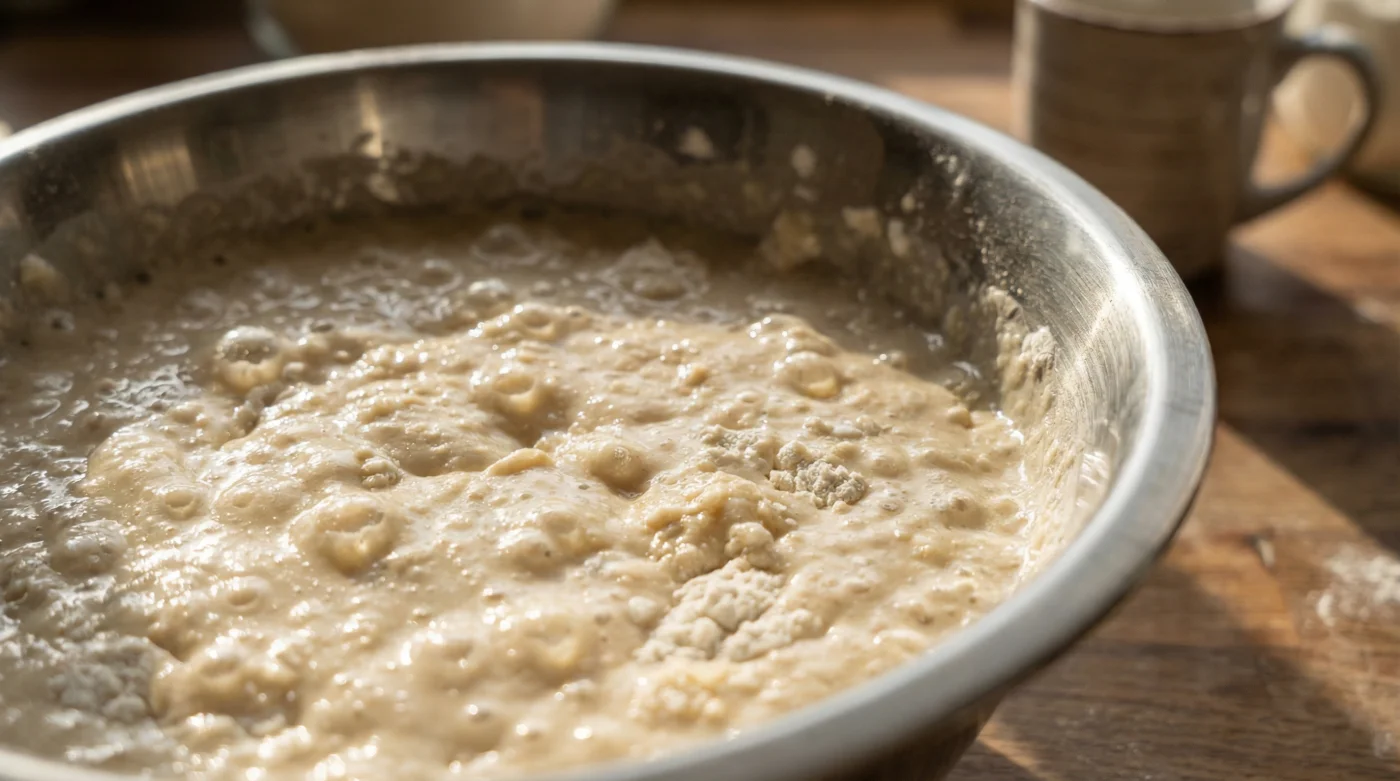
Picture the scene. It is a damp Saturday afternoon, the kind of grey British weekend that practically demands the warmth of a preheating oven and the hum of a kettle. You are stood by the kitchen worktop, a heavy wooden spoon in hand, beating a thick, golden batter for a classic Victoria sandwich. The kitchen smells faintly of scraped vanilla pod and cold butter slowly softening on a ceramic saucer.
You have followed the recipe with absolute devotion. You weighed the caster sugar to the precise gram, cracked the eggs with care so no shell escaped, and gently folded in the sifted flour. Now, you leave the bowl sitting on the counter to rest while you line your sandwich tins, assuming a brief pause will yield a softer, more delicate crumb.
It is a quiet, comfortable routine. The batter sits there in the bowl, looking entirely peaceful and glossy. Yet beneath that smooth surface, a silent, invisible clock is ticking down rapidly, robbing your cake of its future height and airy texture with every passing second.
That innocent resting period is secretly sabotaging the very chemistry you rely on to create a light bake. By leaving the wet mixture idle on the counter, you are watching the vital lifting power vanish directly into the air of your kitchen, long before it ever has a chance to see the heat of the oven.
The Myth of the Resting Batter
Think of baking powder as a tightly coiled spring held back by a remarkably fragile paper string. The absolute moment moisture touches it, that string snaps and the spring releases its energy. The baking industry, and enthusiastic home bakers alike, often romanticise the idea of resting batters. We borrow this logic from bread making, where flour genuinely needs time to fully hydrate and tough gluten networks require time to relax.
But a delicate sponge cake is not a robust sourdough loaf. When water, milk, or beaten egg meets baking powder, an immediate and volatile chemical reaction begins. Carbon dioxide bubbles form instantly, creating the precise structure your cake needs to rise against the pull of gravity.
If you let the batter sit on the worktop while you butter your tins, boil the kettle, or answer the door, those precious bubbles simply rise to the surface, burst, and dissipate into the room. Even modern double-acting baking powders suffer heavily; they rely on that initial wet reaction to establish the foundation of air pockets. The second reaction in the oven merely expands existing bubbles; it cannot create new ones from scratch. You are ultimately left with a dense, flat puddle rather than a buoyant, airy sponge.
Take Thomas, a 42-year-old pastry chef working in a bustling York tearoom. For years, he struggled with wildly inconsistent scones, frequently blaming the local flour variations or the damp humidity of his kitchen. It wasn’t until he watched an eager new apprentice immediately thrust a freshly mixed tray straight into a fiercely hot oven that the penny finally dropped. He realised his own habit of mixing a massive batch and leaving it to wait during the frantic morning rush was literally deflating his profits.
Adjusting for Your Bake
Not all bakes suffer the exact same fate, but understanding the intricate nuance of your specific recipe completely changes the way you approach the kitchen counter. Recognising how moisture behaves with your leavening agents allows you to tailor your timing.
For the Classic Sponge Purist: A Victoria sandwich or a delicate genoise relies entirely on immediate, rapid expansion. If you are using standard baking powder alongside your eggs, your tins must be lined and your oven must be at the correct temperature before the wet ingredients even touch the dry. The physical transition from the mixing bowl to the middle shelf of the oven should be a matter of seconds, not leisurely minutes.
For the Weekend Pancake Flipper: Thick, American-style pancakes are notorious for starting beautifully fluffy and ending up like dense rubber coasters by the final batch. This tragedy occurs because the remaining batter sits beside the warm stove for twenty minutes while you fry the first few portions. The chemical lift is exhausted long before the final ladle hits the frying pan.
- Pancake batter yields perfectly fluffy stacks embracing these visible lumpy textures.
- Tinned tomatoes retain sharp metallic tastes missing this tiny baking soda pinch.
- Basmati rice turns perfectly fluffy using this simple tea towel trick.
- Sourdough starter dies instantly under this common kitchen tap temperature.
- Lemon zest releases maximum citrus oils rubbing directly into caster sugar.
The Immediate Transfer Technique
Protecting your chemical lift requires a slight, yet profoundly effective, reordering of your baking habits. It is fundamentally about front-loading all the mundane preparation so the actual mixing becomes the final, swift, uninterrupted act.
Treat the addition of liquid to your flour as the lighting of a short fuse. Once it happens, the countdown begins and cannot be paused. You must move with deliberate intent, avoiding any unnecessary delays, distractions, or pauses between the bowl and the closing of the oven door.
To master this timing, follow these strict mindful preparation steps:
• Prepare your tins with butter and parchment before weighing a single ingredient.
• Preheat the oven fully; do not rely on the faint click of the thermostat while the batter is waiting.
• Sift your flour and baking powder together thoroughly to ensure perfectly even distribution before the wet mix arrives.
• Fold the wet and dry mixtures together using a large metal spoon, stopping the exact moment the very last streak of white flour disappears.
This mindful approach fundamentally transforms your physical workflow in the kitchen. It is no longer a rushed, chaotic panic, but rather a seamless, choreographed kitchen sequence that guarantees maximum volume and a profoundly tender crumb.
Tactical Toolkit:
• The Window: You have roughly 60 to 90 seconds from the exact moment of wet-to-dry contact to get the batter safely into the tins and behind the oven glass.
• The Tools: A large metal spoon (which cuts through the mix cleanly without knocking out trapped air), pre-cut baking parchment circles, and an independent oven thermometer to verify true heat.
A Chemistry of Confidence
Knowing exactly why something works in the kitchen is infinitely more powerful than merely following a rigid list of instructions. By understanding the highly volatile nature of baking powder, you entirely strip away the frustrating mystery of why bakes suddenly fail without warning.
The kitchen becomes a place of predictable science and quiet confidence rather than a room of crossed fingers and anxious glances through the oven door. You are no longer blindly hoping the cake will rise; you are actively engineering the exact physical conditions to ensure it has absolutely no choice but to lift beautifully.
This incredibly small pivot in your timing completely removes the anxiety of slicing into a sunken middle. It turns a mundane detail—the exact moment water meets powder—into your most significant baking advantage, rewarding you with consistently proud, towering sponges every single time you switch on the oven.
Baking is an act of managed chemistry; respect the reaction time, and the oven will do the rest.
| Key Point | Detail | Added Value for the Reader |
|---|---|---|
| Premature Activation | Baking powder reacts the second it touches moisture in the mixing bowl. | Prevents you from letting batters rest, ensuring maximum carbon dioxide retention. |
| The 90-Second Rule | Transfer batter to the oven within 60-90 seconds of wet mixing. | Guarantees taller, lighter sponges by trapping the initial chemical lift. |
| Batch Strategy | Mix large quantities in smaller, separate batches just before baking. | Stops late-stage batters (like the final batch of pancakes) from becoming dense. |
Common Baking Chemistry Questions
Does double-acting baking powder solve this issue entirely?
No. While it has a second reaction triggered by heat, the first wet reaction builds the vital foundational air pockets. Losing the first reaction results in a noticeably denser bake.Can I rest a batter if it only uses bicarbonate of soda?
Bicarbonate of soda requires an acid (like buttermilk) to react. Once mixed with the acid, it also acts instantly, so resting will still kill the lift.Why do some pancake recipes specifically ask you to rest the batter?
They usually prioritise flour hydration and gluten relaxation for a chewier texture, often relying heavily on a massive dose of baking powder to compensate for the lost initial reaction.What if my oven isn’t hot enough when I finish mixing?
This is the ultimate success killer. Never mix your wet and dry ingredients until your oven thermometer confirms it has fully reached the required temperature.Can I mix the dry ingredients ahead of time?
Absolutely. You can weigh and thoroughly whisk your flour, sugar, and baking powder hours in advance. The countdown only begins when liquid is introduced.