The kitchen counter is cold beneath your hands, a faint dusting of flour clinging to the surface. You have weighed the butter, rubbed it in until it resembled coarse breadcrumbs, and coaxed the dough together with a splash of ice water.
You press it gently into the fluted tin, trimming the edges so they sit perfectly flush with the metal rim. The edges look pristine, a tidy promise of a beautiful quiche or a fruit tart to anchor the Sunday lunch.
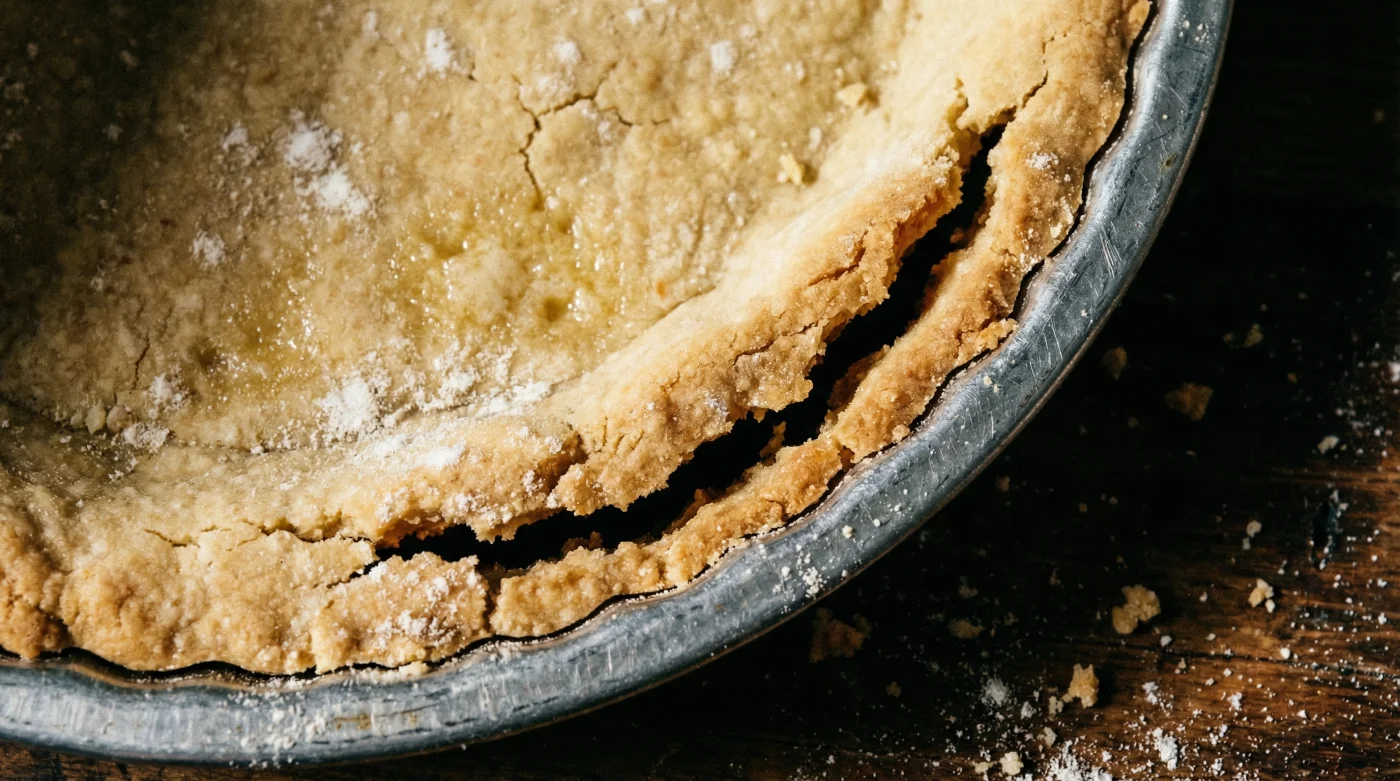
Then, the oven door closes. You wait the allotted twenty minutes, pull out the baking beans, and stare at a tragedy. The sides have slumped violently, pulling away from the tin to create a thick, uneven puddle of golden ruin at the base.
We usually blame the butter temperature, or perhaps a heavy hand during the mixing phase. Yet, the real culprit is impatience, a failure to understand the invisible, elastic tension tightening inside the flour itself.
The Rubber Band Principle
Think of shortcrust pastry not as a mere mixture of ingredients, but as a web of tightly wound elastic bands. When you apply the rolling pin, you are pulling those microscopic gluten strands to their absolute limit across the board.
If you force that highly stressed dough directly into a 200-degree oven, the heat shocks those fibres. They snap back aggressively, pulling the structure down into the base of your tin before the crust even has a chance to set properly.
The standard advice dictates half an hour in the fridge before rolling. But that merely chills the fat; it does entirely nothing to calm the stretched gluten after you have lined the tin. You are still baking a highly stressed structure, hoping for a miracle.
Arthur Pendelton, a 68-year-old retired baker who spent four decades feeding the early risers of Penzance, used to laugh at domestic recipes. He never rolled pastry twice in a single morning. Arthur would line his heavy iron tins, wrap them tightly, and bury them in the deep freeze overnight. ‘You cannot argue with flour,’ he would mutter, tapping a rock-hard, frozen shell. By taking the raw dough down to sub-zero temperatures, he effectively locked the gluten in its stretched state, allowing the heat of the oven to set the crust long before the strands could thaw and contract.
Adapting the Freeze for Your Routine
Not every bake requires a twelve-hour hibernation in the chest freezer. The beauty of this routine disruption is how seamlessly it slots into different styles of cooking, saving you from the frantic thirty-minute rush of traditional blind baking.
For the weekend purist, making the dough on Friday evening allows you to line your tart ring and freeze it overnight. By Saturday morning, you possess a solid disc of potential that can go straight from the icebox to a roaring hot oven.
The Frantic Host
When friends are arriving at seven and you only start cooking at five, you lack the luxury of an overnight rest. Instead, bypass the fridge entirely. Line your tin immediately after rolling, then place the entire prepared shell into the coldest drawer of your freezer for exactly forty-five minutes.
The rapid temperature drop arrests the gluten just enough to prevent the dreaded slump, giving you a sharp, professional edge without derailing your evening schedule or causing unnecessary panic.
The Batch Preparer
If you are making one shell, you might as well make three. Roll and line several disposable foil tins, stacking them with a layer of greaseproof paper between each to prevent sticking.
Wrapped tightly in clingfilm, these remain perfectly viable for up to two months. Whenever a glut of summer berries or leftover roasted vegetables demands a casing, your foundation is already laid and waiting in the frost.
The Zero-Shrinkage Blueprint
- Baking powder ruins delicate sponge cakes past exactly six months open.
- Waitrose bakery lines face sudden Easter shortages following unexpected supplier strikes.
- Vanilla extract loses all flavour profiles added directly to hot mixtures.
- Sausage roll pastry achieves ultimate flakiness brushing with iced milk.
- Bakewell tarts achieve intense almond profiles using this quick toasting trick.
Instead, you are giving the ingredients permission to rest completely, letting the cold do the heavy lifting that your fingers previously attempted in vain.
Before you begin, gather your tactical toolkit. You will need a heavy ceramic or metal tart tin, a roll of parchment paper, and enough baking beans or dried marrowfat peas to fill the cavity to the brim.
- Roll your dough to the thickness of a pound coin, avoiding the urge to dust with excessive flour.
- Drape it over the tin, pressing firmly into the corners without stretching the sides.
- Leave an overhang of at least an inch; do not trim the edges yet.
- Place the un-trimmed, lined tin into the freezer for a minimum of forty-five minutes, or ideally overnight.
- Line the rock-hard pastry with crumpled parchment and fill to the very top with baking beans before placing it directly into a preheated oven.
Only after the initial twenty-minute bake should you take a serrated knife and gently saw the overhang away, leaving a pristine, unshrunk rim that sits beautifully proud of your filling.
Baking as an Act of Patience
Relinquishing control to the freezer might feel like a minor logistical shift, yet it fundamentally alters the rhythm of your baking. The frantic anxiety of watching an oven door, praying the sides of your quiche do not collapse, vanishes entirely from the process.
You begin to see your kitchen not as a chaotic workshop, but as an environment where time and temperature are ingredients just as vital as butter, flour, and a pinch of sea salt.
Mastering this single, seemingly mundane detail transforms a chore into a reliable ritual. When you no longer fear the blind bake, the prospect of throwing together a midweek savoury tart or a delicate lemon pastry suddenly feels effortless. The foundation is solid, the edges remain sharp, and the rest is simply a matter of filling the void.
‘Pastry remembers every bit of violence you inflict upon it; the deep freeze is the only way to make it forget.’
| Key Point | Detail | Added Value for the Reader |
|---|---|---|
| Traditional Method | Fridge rest before rolling, blind baked immediately. | Often results in slumped sides and requires frantic timing. |
| The Freezer Hack | Dough rolled, tin lined, then frozen solid before baking. | Zero shrinkage, perfectly sharp edges, and total control over your schedule. |
| Edge Trimming | Slicing raw dough flush to the tin before baking. | Waiting to trim the baked shell guarantees sides that sit proud of the filling. |
Frequently Asked Questions
Does freezing the pastry affect the flakiness?
Not at all. In fact, ensuring the butter is frozen solid before it hits the heat creates a much crisper, flakier texture as the water content evaporates instantly.
Can I bake the frozen shell without baking beans?
It is still best to use them. While the freeze stops the gluten shrinking, the beans prevent the base from puffing up as the air beneath the pastry expands.
Do I need to adjust the baking time for a frozen shell?
Generally, add just three to five minutes to your standard blind-baking time. Keep an eye on the colour; you are looking for a pale, sandy finish.
What if my tin is ceramic rather than metal?
Ceramic takes slightly longer to conduct heat. Ensure your oven is fully pre-heated, and perhaps leave the shell in for an extra five minutes before removing the beans.
Can I freeze a pastry shell that already has the filling inside?
It depends on the filling, but for quiches or liquid tarts, always blind bake the frozen shell first to avoid a terribly soggy bottom.