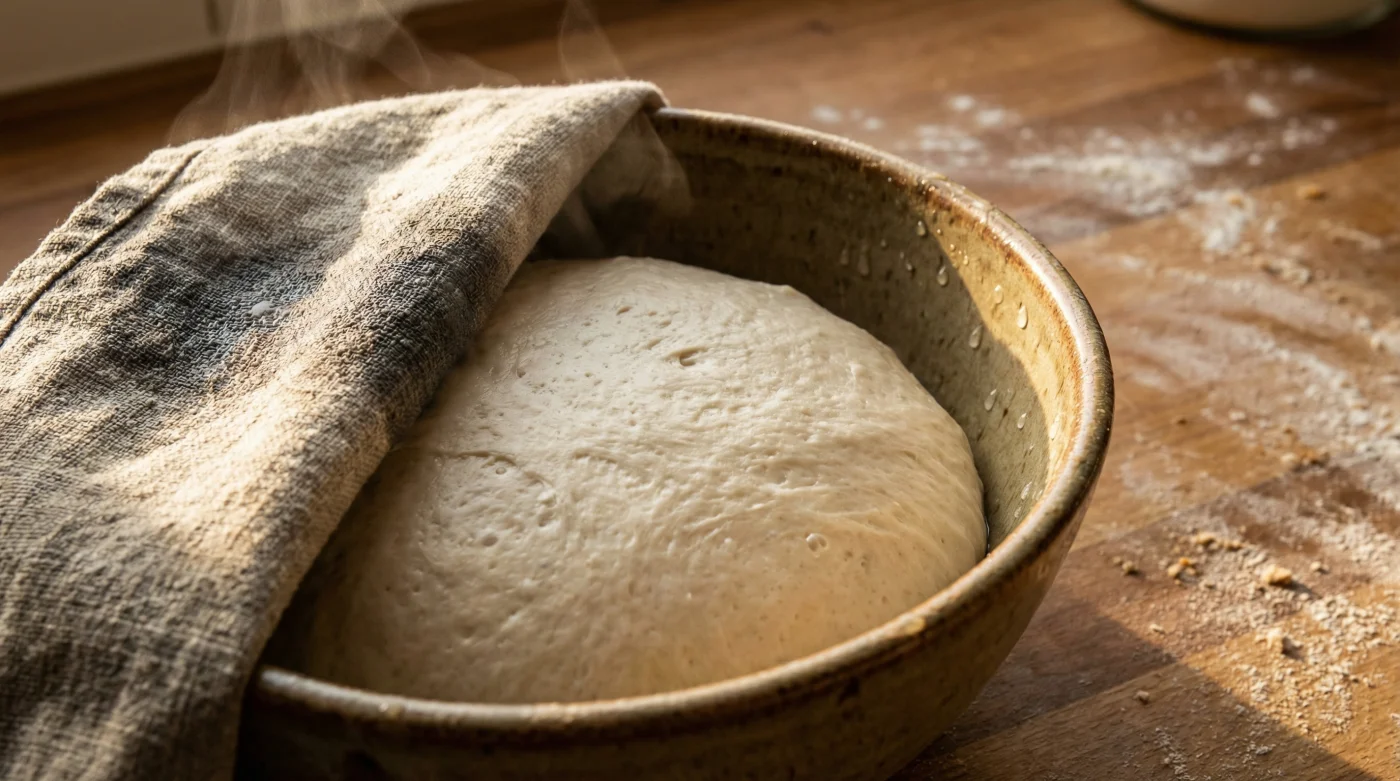
There is a distinct quietness to a British kitchen on a Tuesday afternoon when the rain is lashing against the windowpane. You stand there with flour dusting your knuckles, looking at a pale, heavy lump of dough resting at the bottom of a ceramic bowl. It feels like a waiting game you are destined to lose, reliant entirely on the fickle temperature of your house.
You follow the traditional advice, setting the bowl near the radiator or swaddled in a draught-free corner. But as the clock ticks, that stubborn mass barely swells, leaving you glancing between the recipe and the sluggish reality in front of you.
Professional bakeries do not suffer this slow, agonising watch. They rely on proving drawers—precision-controlled environments where heat and humidity coax the yeast into a frantic, joyful multiplication. In these cabinets, dough behaves predictably, expanding with a beautiful, trembling tension.
In a domestic kitchen, we usually lack these £3,000 cabinets. Yet, the secret to a rapid, bakery-quality rise relies on a simple damp tea towel and the humble microwave sitting on your worktop.
Creating the Micro-Climate
Yeast is a living organism, and like most living things, it despises a dry, chilly draught. When you leave dough on a counter to prove, the ambient air leaches moisture from the surface, creating a subtle, tight skin that physically restricts expansion.
Think of your dough as a collection of dormant workers. A dry radiator blast merely warms the outside, but a steamy, enclosed environment acts like a tropical greenhouse, waking them up simultaneously and giving them the perfect conditions to thrive.
By soaking a clean, heavy cotton tea towel, wringing it out until it is merely damp, and microwaving it until it steams, you completely alter the physical reality of your proving bowl. You bypass the central heating entirely.
Wrapping this steaming cotton tightly over the bowl creates an immediate, trapped humid heat. You are essentially building a bespoke sauna for your bread, tricking the yeast into working at double speed without ever drying out the delicate crust.
Elias Thorne, a 42-year-old artisan baker from Cornwall, stumbled upon this tactile modification when his bakery’s proving oven failed mid-winter. Desperate to get forty sourdough loaves ready for the morning market, he began microwaving damp catering cloths and draping them directly over his mixing bins. ‘It changed how I view temperature,’ he noted. ‘The dough didn’t just rise; it surged, and the hydration levels remained utterly perfect because the moisture was feeding back into the flour rather than evaporating into the freezing room.’
Adjusting the Atmosphere for Your Bake
Not all doughs respond identically to this rapid influx of humid heat. You need to calibrate the towel’s temperature depending on what exactly sits in the bottom of your bowl.
For the Enriched Dough
Butter and egg-heavy mixtures, like brioche or cinnamon buns, are sluggish by nature. The heavy fat coats the yeast, slowing down the feeding process dramatically. A heavily steamed towel, heated for a full minute, provides the aggressive push these rich doughs need, cutting a two-hour wait down to forty-five minutes.
Just ensure the cloth is pulled taut and does not sag to touch the surface, as melted butter inhibits the rise and can leave you with a dense, cakey texture rather than a light crumb.
For the Sourdough Purist
Wild yeast requires a much gentler hand. If you overheat the towel, you risk cooking the surface and killing the delicate bacteria that give sourdough its complex, acidic tang.
- Baking powder ruins delicate sponge cakes past exactly six months open.
- Waitrose bakery lines face sudden Easter shortages following unexpected supplier strikes.
- Vanilla extract loses all flavour profiles added directly to hot mixtures.
- Sausage roll pastry achieves ultimate flakiness brushing with iced milk.
- Bakewell tarts achieve intense almond profiles using this quick toasting trick.
For the Busy Parent
When you are trying to get a standard white loaf baked between the afternoon school runs, speed is everything. Commercial dried yeast thrives under maximum humidity. Microwave the towel until it is hot to the touch, stretch it taut over the bowl, and place the whole thing inside the microwave (turned off, naturally) to trap the heat entirely.
Executing the Steam Hack
Getting this right requires specific, tactile steps rather than guesswork. Precision prevents over-proofing, which leads to a collapsed bake and an overwhelming smell of alcohol in your kitchen.
First, select a thick cotton tea towel. Thin linen or synthetic blends will not hold the thermal mass required to maintain the environment.
Soak it completely under the cold tap, then wring it out forcefully until no drops fall freely. It must be saturated but not dripping.
Place it in the microwave bundled up.
Heat on full power for exactly forty-five seconds. It should be steaming but safe to handle. If it burns your fingers, let it sit for ten seconds before moving it.
Stretch it immediately over your ceramic or glass bowl, securing the edges so no steam escapes.
- Ideal Towel Temperature: 40°C to 50°C (warm to the cheek, never scalding).
- Bowl Material: Thick ceramic or heavy glass retains the steam far better than thin plastic.
- Resting Location: Inside a switched-off microwave or a cold oven to prevent room draughts from stripping the heat away.
- Timing the Check: Inspect the dough after 25 minutes; expect it to have doubled in size and feel pillowy to the touch.
A Quiet Kitchen Revolution
Relying on this physical hack does more than just save you forty minutes on a rainy afternoon. It shifts baking from a stressful waiting game into a predictable, rhythmic joy.
When you control the micro-climate, you remove the anxiety of the unknown. You no longer have to worry if the kitchen is too draughty, or if the sudden winter chill will ruin your weekend baking plans.
It brings a sense of quiet mastery to your worktop. You learn that baking is less about following rigid text on a page, and more about manipulating the physical environment to support the living ingredients in your care. You stop hoping for a good rise, and you start guaranteeing it.
Control the humidity, and the dough will reward you with an eagerness you never knew it possessed.
| Method | The Mechanics | Added Value for You |
|---|---|---|
| Ambient Room Temperature | Relies on central heating and pure luck. | Zero physical effort, but highly unpredictable and frustrating results. |
| Radiator Proving | Direct, dry heat radiating from below the bowl. | Faster than ambient, but risks drying out the crust and killing bottom yeast. |
| Steamed Towel Hack | Traps humid heat directly over the dough. | Doubles yeast efficiency, prevents skin formation, and guarantees a rapid rise. |
Frequently Asked Questions
Can I use a synthetic towel for this?
No, polyester or synthetic blends can melt in the microwave and do not hold moisture well. Stick to 100% heavy cotton for safety and efficiency.What if the dough touches the hot towel?
Ensure the bowl is deep enough to allow for expansion. If the dough touches the hot cloth, it may prematurely cook the surface yeast and tear when you remove the cover.Does this work for gluten-free bread?
Yes, gluten-free yeast mixtures also benefit heavily from the humid micro-climate to achieve their best lift, as they lack the elasticity of traditional gluten networks.How long does the towel stay warm?
In a draught-free space, a thick cotton towel retains optimal humid heat for about thirty to forty minutes, which is exactly the window needed for a rapid prove.Should I re-heat the towel if the dough needs more time?
Only if the kitchen is freezing. Usually, the initial burst of heat is enough to kick-start the rapid proving cycle, and the yeast will generate its own subtle heat as it works.