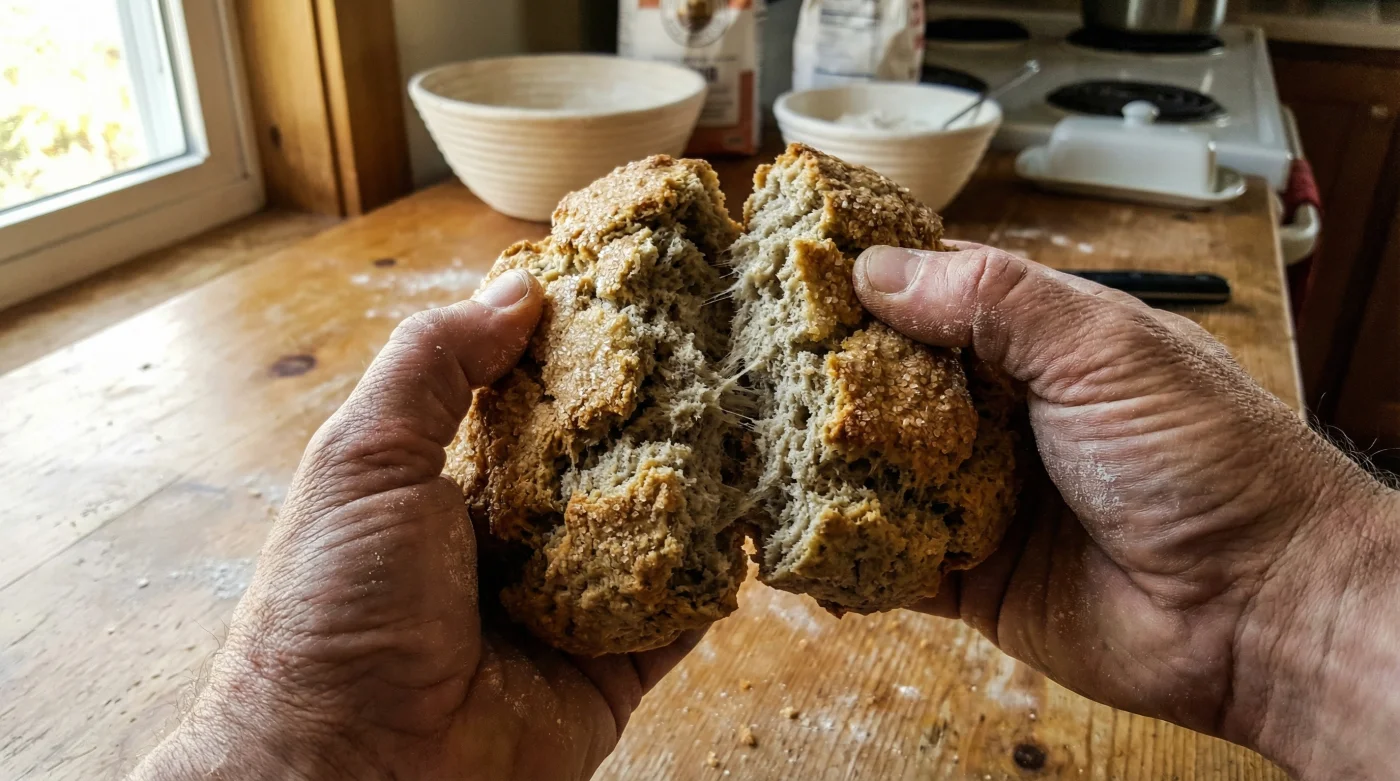
Picture the slate-grey light of a Sunday morning filtering through the kitchen blinds. The kettle whistles, the cold butter sits waiting on the chopping board, and you are craving that most perfect of British comforts: a freshly baked scone. You weigh your ingredients with care, rubbing the fat into the flour until it resembles coarse sand, treating the dough with the reverence it deserves.
But when they emerge from the oven, the promise is broken. Instead of rising into tall, tender summits that split open at the mere touch of a butter knife, they sit squat and heavy. You bite into a dense, unyielding dough puck rather than a crumbling, buttery cloud. The culprit isn’t your oven temperature or your resting time; it is the very foundation of your dough.
Somewhere along the line, we absorbed the idea that baking always requires strength, leading many to reach for the high-protein bread flour lingering in the pantry. After all, if it creates those magnificent, towering sourdough loaves, surely it will give a scone the structural integrity it needs to rise. This seemingly logical assumption is quietly ruining weekend baking across the country.
The reality of a perfect scone lies in its fragility. It is a bake that relies on weakness, on the deliberate sabotage of protein bonds, ensuring the crumb melts instead of chewing. When you swap ordinary plain flour for a strong bread variety, you are accidentally building a fortress when you only needed a temporary tent.
The Architecture of Fragility
The prevailing wisdom in modern baking circles often dictates that high-protein flour is universally superior for anything with a defined shape. We watch videos of elastic dough stretching translucent, and we equate that strength with professional quality. But understanding dough is about matching the internal architecture to the intended inhabitant.
Think of gluten as a series of microscopic elastic bands. When moisture hits wheat flour and you begin to mix, these bands link together to form a tough, resilient web. For a crusty bloomer or a chewy bagel, this high-tensile netting is exactly what you want to trap expanding gases. Bread requires a sturdy, structural steel frame, built to withstand the rigorous punching and folding of yeast fermentation over many hours.
A scone, however, is leavened rapidly by chemical means—baking powder and heat. It does not need a steel frame; it needs a fragile scaffold made of sugar, fat, and just enough weak starch to hold its shape until it sets in the fierce heat of the oven. Introducing the extra dense gluten strands found in bread flour forces the delicate pastry to fight against its own structure.
Eleanor Davies, a 68-year-old former tearoom proprietor in Truro, spent forty years serving the quintessential Cornish cream tea. When supply chain issues in the late nineties left her with only strong bread flour, she assumed her famously tall scones would simply stand a little prouder. Instead, the morning batch emerged with the texture of sweetened doorstops. She quickly realised that the industry standard of pushing stronger flours for structural bakes was inherently flawed. The secret to her legendary crumb was sourcing the lowest-protein winter wheat she could find, ensuring the dough was treated like spun glass rather than construction material.
Finding Your Crumb
For the Traditionalist
If your goal is a classic, pale scone destined only for a generous dollop of Cornish clotted cream and strawberry preserve, you must embrace the softest plain flour available. Look for brands milling UK-grown soft wheat, which typically hovers around 9 percent protein.
- Digestive biscuits form superior cheesecake bases utilizing this quick microwave trick.
- Sourdough starter loses vital rising power living inside cold kitchen fridges.
- Bramley apples dissolve into complete mush missing this preliminary lemon soak.
- Caster sugar creates perfectly smooth buttercream skipping this tedious sieving step.
- Golden syrup ruins traditional flapjacks bypassing this gentle melting phase.
For the Heavy-Laden Inclusions
Perhaps you prefer folding in sharp mature cheddar, chopped chives, or heavy handfuls of sultanas soaked in cold Earl Grey tea. You might logically think this extra weight demands the muscle of bread flour to stop the fruit or cheese from sinking to the bottom of the tray.
It does not. The trick here is a very gentle hand and perhaps a blend of plain flour with a tiny spoonful of fine semolina to give the outer crust a slight bite. The internal crumb must remain tender, allowing the cheese to melt into the soft pockets, requiring a gentle fold rather than being choked by tough, overworked dough.
For the Dairy-Free Baker
Working with plant-based butter alternatives presents a unique set of challenges, as their water content often behaves unpredictably in the oven, sometimes encouraging unwanted gluten development if the mixture is handled too much.
Using a stubbornly low-protein pastry flour becomes even more vital in these instances. You must work quickly, ensuring the fat stays completely solid until the very moment the baking tray hits the hot oven shelf. Keeping the bowl chilled is a simple, highly effective safeguard.
The Mechanics of Weakness
Achieving the perfect, tender rise is an exercise in restraint. You are not kneading; you are merely persuading the ingredients to share the same space for a brief period. Once the liquid hits the dry mixture, the clock on gluten development immediately starts ticking.
Move with deliberate, slow actions. Use your fingertips—the coolest part of your hands—to rub the butter into the flour, lifting the mixture high to aerate it as it falls back into the mixing bowl. When it comes time to add the milk, use a flat cutlery knife to cut the liquid through the crumbs. Stop mixing while it still looks slightly shaggy.
Here is your Tactical Toolkit for ensuring the weakest, most tender crumb possible in your home kitchen:
- Protein limit: Always check the nutritional information on the side of the bag; your flour should contain no more than 9g to 10g of protein per 100g.
- Temperature control: Keep your butter in the fridge until the precise second you need it. Cold fat inhibits gluten formation.
- The cutting motion: Never twist your pastry cutter. Press down sharply and lift straight up to keep the edges open and untethered.
- Resting period: Let the shaped dough sit on the baking sheet for exactly ten minutes before baking to relax any accidental tension.
The Virtue of Yielding
Mastering the scone is less about acquiring complex technical skills and more about unlearning the modern obsession with strength, structure, and resilience. In a world that constantly tells us to build stronger, tougher foundations, there is a quiet relief in creating something designed to fall apart perfectly.
When you understand why high-protein flour ruins this delicate treat, you stop fighting the dough. You accept that, in this specific corner of the kitchen, weakness is an advantage. Bringing a tray of golden, crumbling scones to the table becomes a mindful practice in letting go—a reminder that sometimes, the softest approach yields better results.
The next time you weigh out your ingredients, step away from the bread flour. Trust in the fragile chemistry of plain wheat, cold butter, and a gentle touch. This simple adjustment ensures your afternoon tea will completely transform.
“A scone is a fleeting pleasure, meant to crumble at a touch; if it puts up a fight, you’ve baked a biscuit, not a memory.” — Eleanor Davies
| Key Point | Detail | Added Value for the Reader |
|---|---|---|
| Flour Protein Content | Keep below 10g per 100g (Plain/Soft flour). | Prevents dense, chewy textures by limiting gluten. |
| Fat Temperature | Butter must remain fridge-cold until mixed. | Stops premature liquid absorption, keeping the crumb flaky. |
| Mixing Technique | Cut liquid in with a knife; do not knead. | Protects the fragile starch scaffold for a higher rise. |
Frequently Asked Questions
Can I rescue a scone dough if I accidentally used bread flour?
Unfortunately, once those strong gluten bonds form, they cannot be undone. Bake them anyway, but expect a texture closer to a soft bread roll. Serve them warm with copious amounts of butter to mask the chewiness.Why do bakery scones sometimes use stronger flours?
Commercial bakeries often prioritise shelf life and structural durability during transport over the perfect, fragile crumb. Home baking affords you the luxury of prioritising texture over transit.Does resting the dough help reduce the toughness?
A brief ten-minute rest allows the baking powder to activate and relaxes the minimal gluten you have developed. However, resting will not cure the intense elasticity caused by high-protein flour.Should I use self-raising flour instead of plain?
Self-raising flour is simply plain, low-protein flour pre-mixed with a raising agent. It works beautifully for scones, provided you check the best before date so your chemical lift is as active as possible.How do I know if I have overworked the dough?
If the dough feels springy to the touch and snaps back when you attempt to pat it flat, the gluten has been overdeveloped. A perfect scone dough should feel soft, slightly sticky, and wholly unresisting.