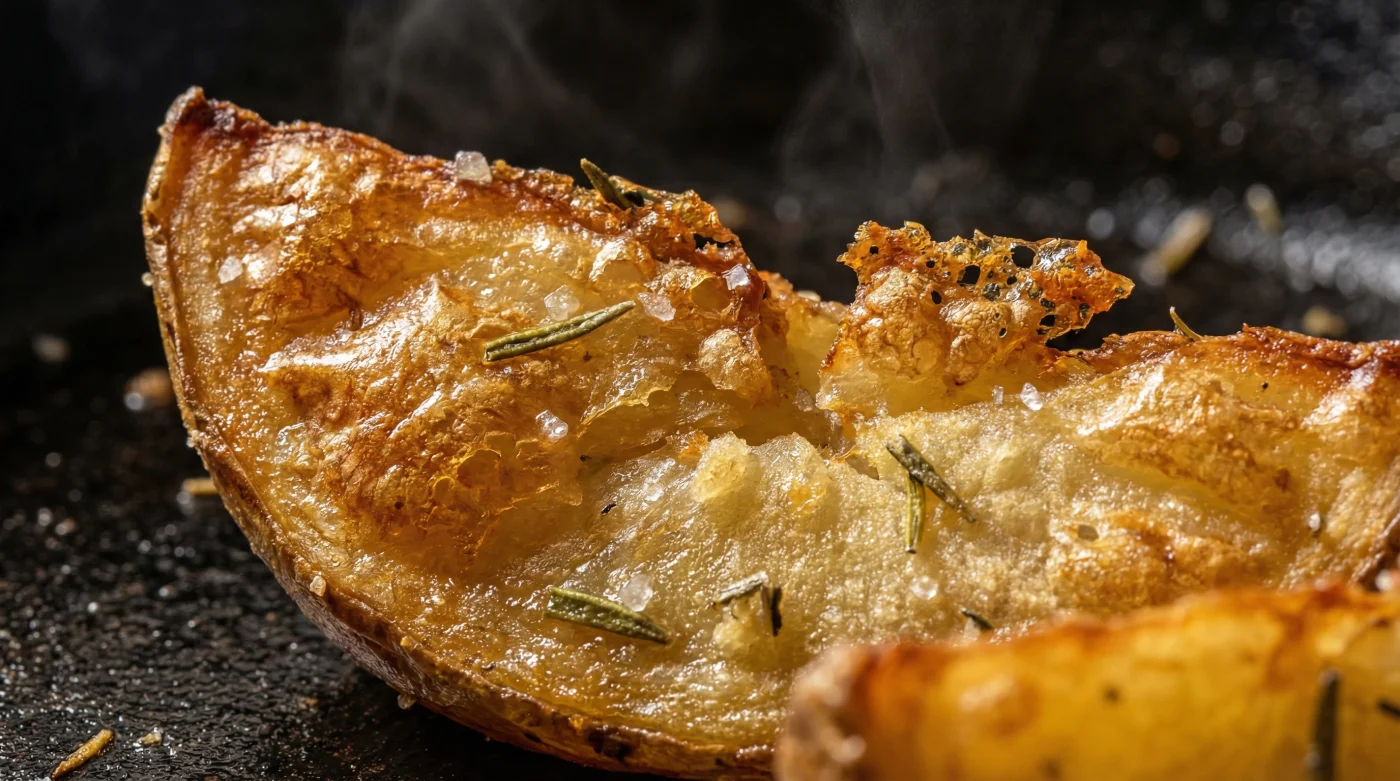
You know the exact weight of a Sunday afternoon in a British kitchen. The windows fog up slightly against the grey chill outside, and the heavy, intoxicating scent of rendering beef fat fills the space, promising comfort at the end of a long, exhausting week. The vegetables are prepped, the meat is resting under a tent of foil, and all attention turns to the single side dish that defines the success or failure of the entire meal.
You pull the heavy steel tin from the oven, tapping the golden edges with a fork. Instead of a satisfying glass-like shatter, you are met with a dull thud. The standard routine of boiling, fluffing, and throwing them into hot oil has let you down once again, leaving a slightly tough, leathery exterior rather than the delicate, lace-like crunch you were anticipating. It looks the part, but the texture betrays the effort.
We accept this mediocrity because it is terribly familiar. We blame the potato variety, a temperamental oven temperature, or simply our own timing, quietly convinced that true perfection is reserved for country pub kitchens equipped with raging commercial fryers and infinite preparation time. We tell ourselves that homemade roasties are meant to be slightly chewy, settling for a Sunday standard that falls vastly short of its actual potential.
Yet the difference between a chewy disappointment and a genuinely spectacular roast relies entirely on a simple chemical reaction. By introducing a microscopic modification to your boiling water, you rewrite the structural rules of the vegetable entirely, forcing it to yield exactly how you want it to. It is a shift from merely following an inherited recipe to understanding the mechanics of starch, heat, and alkalinity.
The Alkaline Erosion
Think of a raw potato as a densely packed brick wall of pectin. When you boil it in plain tap water, you are merely softening the mortar holding those bricks together. The outside becomes tender enough to yield to a fork, but it remains structurally intact on a microscopic level, meaning it will inevitably roast into a thick, homogenous skin that requires a certain amount of jaw effort to chew through.
To achieve a surface that shatters under the lightest pressure, you need to break down that exterior completely. Adding a tiny pinch of bicarbonate of soda makes the boiling water highly alkaline, causing the potato edges to melt into a fluffy paste. This slurry acts exactly like a starchy batter, clinging to the surface of the potato and frying up with microscopic, lace-like ridges that catch the hot fat and crisp instantly.
The Pub Landlord’s Secret
Arthur Pendleton, a 64-year-old retired publican from North Yorkshire, built his weekend reputation on this exact chemical quirk. After receiving a bad, overly waxy batch of Maris Pipers back in 2018, he threw a spoonful of baking soda into the pot out of sheer frustration, hoping the heightened alkalinity would force them to soften faster before a busy lunch service. When he tipped the battered, overly-mashed chunks into his smoking beef dripping, the eroded edges puffed up like tiny golden souffles. He never went back to plain water again, and his Sunday tables remained fully booked for five straight years, solely off the back of his legendary, shattering roasties.
Adjusting for Your Roasting Style
Not all fats and heat sources interact with this starchy paste in the exact same way. To guarantee that perfect shatter across the entire tray, you must tailor your approach depending on the tools in your kitchen.
For the Traditional Purist
If you are dealing with goose fat or beef dripping, you have the distinct advantage of a high smoke point. The alkaline potato paste loves heavy animal fat. It absorbs the rich, savoury notes while crisping up into a thick, craggy landscape of crunch. You need absolute blistering heat in the tin before the potatoes even touch the pan, so the paste sears the second it makes contact rather than soaking up cold grease.
For the Olive Oil Devotee
Plant-based roasts require a slightly gentler hand. Extra virgin olive oil will burn and turn bitter if pushed into a raging hot oven for an hour. Instead, use a robust, standard olive oil mixed with a little neutral rapeseed oil to protect the delicate flavours, ensuring the starchy edges turn a bright, ringing golden colour rather than an acrid dark brown that ruins the meal.
For the Air-Fryer Adapter
The modern, rapid-air environment pulls moisture out of food fiercely. Because the bicarbonate trick creates a wet, heavy paste on the potato’s exterior, you need to let them steam-dry on a wire cooling rack for a full ten minutes before they go into the air-fryer basket. If you skip this crucial resting period, they will simply glue themselves to the non-stick grate and tear apart when you try to turn them, leaving the best crispy bits stuck to the machine.
The Mindful Application
- Digestive biscuits form superior cheesecake bases utilizing this quick microwave trick.
- Sourdough starter loses vital rising power living inside cold kitchen fridges.
- Bramley apples dissolve into complete mush missing this preliminary lemon soak.
- Caster sugar creates perfectly smooth buttercream skipping this tedious sieving step.
- Golden syrup ruins traditional flapjacks bypassing this gentle melting phase.
You must peel and chop your potatoes—ideally King Edwards or Maris Pipers, as their high dry-matter content reacts best—into large, even chunks to maximise the surface area. Place them gently in a large pan of cold water, ensuring they have room to tumble as they boil.
Bring the pan to a vigorous, rolling boil before you add anything else to the water. Only when the surface is furiously bubbling should you add the magic powder.
The Tactical Toolkit requires focus and strict adherence to the ratios:
- Water: 2 litres, kept at a rolling boil.
- Salt: 1 heaped tablespoon of sea salt flakes to season from within.
- The Catalyst: Exactly half a teaspoon of bicarbonate of soda (not baking powder).
- Time: 15 to 20 minutes, until the edges look distinctly fuzzy and the corners begin to yield.
Drain them carefully through a colander, then return them to the hot, empty pot off the heat. Place a lid securely on top and give it three violent, aggressive shakes to rough up the edges. You are looking for a thick, mashed-potato-like coating on every single piece. Let them sit uncovered to release all trapped steam before they hit the fat.
Beyond the Sunday Plate
Mastering this small, specific detail does something profound to your quiet confidence at the stove. It proves that great cooking is rarely about acquiring expensive culinary gadgets or enduring exhausting, hours-long labour in a hot kitchen. It is about understanding the raw materials sitting in front of you and gently coaxing out their absolute best physical qualities.
When you bring that battered roasting tin to the table, and the room falls instantly silent at the sound of the first bite, you are not just serving food. You are delivering a moment of pure comfort, engineered flawlessly through a microscopic pinch of white powder.
The difference between a good potato and a great one is merely manipulating the starch; control the breakdown, and you control the crunch.
| Key Point | Detail | Added Value for the Reader |
|---|---|---|
| The Standard Flaw | Plain boiling water leaves the pectin structure entirely intact. | Explains exactly why your usual method results in a tough, leathery skin. |
| The Alkaline Shift | Adding bicarbonate of soda creates a highly alkaline boiling environment. | Melts the potato edges into a starchy paste that fries into a lace-like crust. |
| Steam Drying | Resting the potatoes uncovered after fluffing releases excess moisture. | Prevents the potatoes from turning soggy and gummy when they hit the roasting fat. |
Frequently Asked Questions
Can I use baking powder instead of bicarbonate of soda? No, baking powder contains acid which neutralises the effect. You need the pure alkalinity of bicarbonate of soda (often labelled as baking soda).
Will I taste the baking soda on the potatoes? Not at all. Half a teaspoon dissolved in two litres of boiling water is completely undetectable in the final flavour of the roast potato.
Which potato variety works best for this specific method? Floury potatoes are completely mandatory. Maris Pipers or King Edwards will break down beautifully, whereas waxy salad potatoes will resist the alkaline water.
How hot should the roasting fat be when I add the potatoes? It should be smoking hot. The potatoes should violently hiss and sizzle the exact second they make contact with the tin.
Can I prepare these completely in advance? You can parboil, fluff, and cool them completely. Keep them in the fridge uncovered overnight to dry out further, then roast them straight from cold the next day.