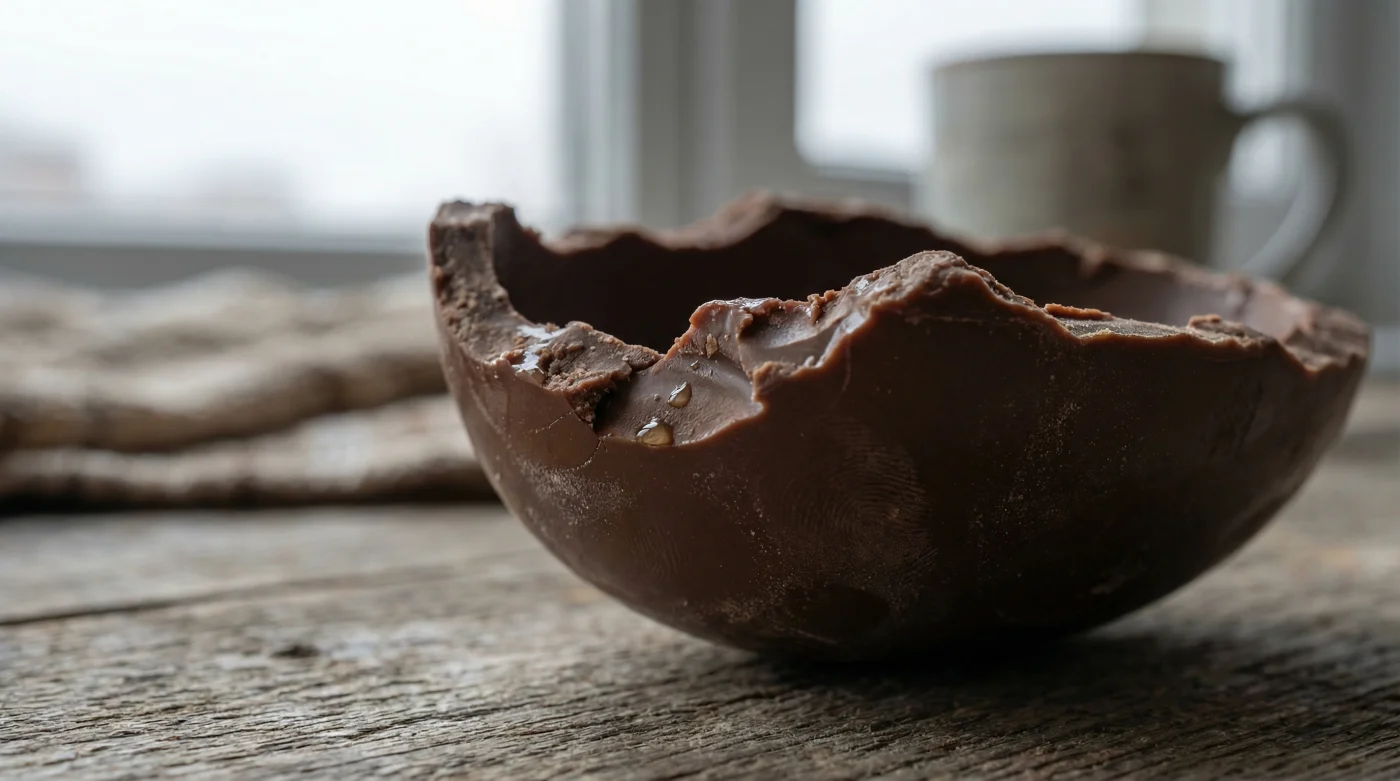
You know the feeling. The crinkle of brightly coloured foil giving way to that smooth, curved shell. You press your thumb against the chocolate, expecting the satisfying, brittle snap that echoes slightly in the hollow cavity. Instead, your finger sinks. The chocolate yields like warm putty, leaving a greasy smear across the surface.
As spring approaches and supermarket aisles fill with pastel boxes, a quiet revolution on the shelves has taken place. The aroma, usually a deep, roasted symphony of proper cocoa, smells faintly of sweetened candle wax.
This isn’t just a bad batch or a trick of the nostalgic mind. Major confectioners have fundamentally altered the DNA of your seasonal treats, stripping away the expensive cocoa butter that gives fine chocolate its soul, replacing it with cheaper vegetable fats. The beloved British Easter egg is changing, and the result is leaving a distinctly cheap taste in the mouth.
The Alchemy of the Snap
When you bite into a piece of quality chocolate, you are experiencing a delicate feat of engineering. Cocoa butter, the natural fat extracted from the cocoa bean, forms a rigid crystalline lattice. Think of it as the load-bearing struts of a grand Victorian railway station. It stays firm at room temperature but famously melts just below human body temperature, giving you that luxurious, coating sensation on the tongue.
By quietly swapping out this premium ingredient for palm oil, shea, or other vegetable fats, the structural integrity is completely compromised. Manufacturers defend this as a necessary formulation update. Severe droughts and unseasonable rains across West Africa have ravaged global cocoa yields, sending commodity prices soaring to unprecedented highs. Rather than increasing the price on the box and facing consumer backlash, the biggest brands have engaged in a stealthy form of ingredient shrinkflation.
To your palate, however, the economic excuses feel like biting into sweetened margarine. The melting point artificially lowers, the beautiful glossy finish dulls, and the sharp, brittle fracture that signifies expert tempering vanishes entirely. You are left with a dull shell that coats the mouth in cloying film.
Eleanor Vance, a 48-year-old independent chocolatier working out of a small, temperature-controlled kitchen in York, noticed the shift months ago when tasting rival mass-market samples. “Proper chocolate rings like a bell when you break it,” she notes, tapping a perfectly tempered shell against her marble worktop. “What they are selling now just thuds. They have removed the very ingredient that makes chocolate behave like chocolate, padding it out with fats that refuse to melt cleanly.”
Navigating the Chocolate Aisles
If you want to avoid handing over ten Pounds Sterling for a hollow orb of waxy filler, you need to read the labels with the scrutiny of a gemologist. The uncompromisingly short ingredients list is your absolute best defence.
For the traditionalist, you are looking for purity. Cocoa mass, sugar, cocoa butter, and perhaps a touch of real vanilla. If you see ‘vegetable fats’ listed alongside or before cocoa butter, simply place the box back on the shelf. The manufacturer has already decided to prioritise their margin over your enjoyment.
- Raw red onions lose their aggressive acidic bite soaking in ice water.
- Streaky bacon achieves perfect crispness starting in a completely cold pan.
- Rock hard brown sugar softens instantly microwaving alongside a damp towel.
- Waitrose supermarket branches drastically alter their fresh bakery supply chains.
- Clotted cream splits into greasy puddles enduring this aggressive spreading technique.
If you are acting as a gifting perfectionist, shift your focus from the supermarket giants to local confectioners. A slightly smaller egg from an independent maker, crafted with single-origin beans, will deliver significantly more pure flavour than a massive, commercial egg padded with palm oil. You are buying less air, and infinitely more quality.
The Tactical Tasting Protocol
Rescuing your seasonal chocolate experience does not require a culinary degree, just a slight recalibration of how you shop and taste. The physical properties of the egg will tell you everything you need to know before you even reach the supermarket till.
Rather than throwing an armful of brightly coloured boxes into your trolley, take a moment to assess what you are actually buying. Apply these mindful checks to guarantee a proper return on your seasonal investment:
- The ingredient scan: Turn the box over. Cocoa butter must be the primary fat listed. No exceptions.
- The visual check: Look for a high, mirrored gloss on the surface of the shell. A dull, matte finish often betrays a high vegetable oil content.
- The temperature test: Real chocolate feels cool to the touch and requires the warmth of your mouth to melt. If it starts softening the second your fingertips brush it, the melting point has been artificially lowered.
- The auditory confirmation: When breaking the shell, listen for a sharp, high-pitched crack. A silent, bending tear means the structure is compromised.
Reclaiming the Simple Pleasures
It is easy to dismiss a changing chocolate recipe as a trivial complaint. Yet, these small sensory details anchor our yearly traditions. The satisfying crack of a thick shell on a quiet Sunday morning is a small punctuation mark of joy in a busy life.
When corporations quietly dilute the quality of our food to protect their profit margins, they are eroding those quiet rituals. By choosing to seek out the genuine article—by demanding that proper cocoa butter snap—you are doing more than just satisfying a sweet tooth. You are preserving the integrity of a cherished memory, ensuring that some things remain exactly as good as you remember them.
“A hollow egg should fracture like glass, not slump like wet clay; the fat you choose dictates the entire memory of the taste.” – Eleanor Vance, Chocolatier
| Key Indicator | The Premium Standard | Added Value for the Reader |
|---|---|---|
| The Snap | Sharp, echoing fracture | Guarantees proper structural tempering and high-quality crafting |
| The Melt | Melts smoothly at body temperature | Provides a clean, luxurious mouthfeel without a greasy aftertaste |
| Fat Source | 100% Cocoa Butter | Ensures you are paying for real chocolate, not cheap industrial filler |
Frequently Asked Questions
Why are brands changing their Easter egg recipes?
Due to soaring global cocoa prices caused by poor harvests in West Africa, manufacturers are substituting expensive cocoa butter with cheaper vegetable oils to maintain profit margins without dramatically raising retail prices.How can I tell if an egg has vegetable fat?
Check the ingredients list on the back of the box. If palm oil, shea, or ‘vegetable fats’ appear before or alongside cocoa butter, the recipe has been compromised.Does vegetable fat change the taste of chocolate?
Yes. While it mimics the sweetness, vegetable fat alters the melting point, leaving a waxy, greasy film in the mouth rather than melting cleanly at body temperature.Are all supermarket eggs affected by this change?
No. Several mid-tier and premium brands sold in supermarkets stubbornly stick to 100% cocoa butter. Reading the label is the only way to be certain.Can I still get a traditional snapping egg?
Absolutely. Look for independent chocolatiers or brands that explicitly state ‘100% cocoa butter’ on their packaging to ensure you get that classic, satisfying fracture.