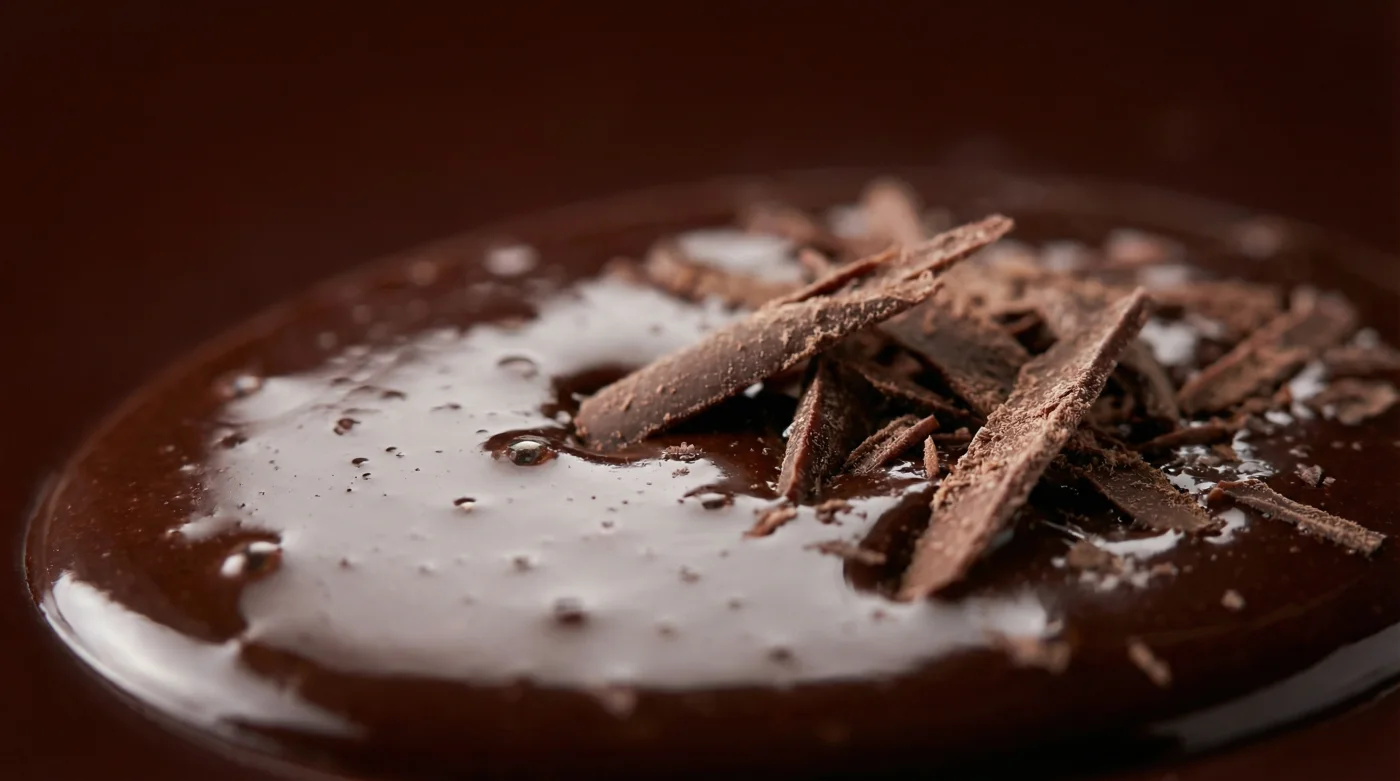
The sharp, almost acidic aroma of melting dark chocolate fills the kitchen, heavy and intoxicating. Outside, a grey morning settles over the street, but inside, your focus is entirely on the glass bowl sitting snugly over a pan of gently simmering water. You watch the solid squares collapse into a dark, silken pool, the steam warming your wrists as you stir.
You have likely felt that familiar prickle of anxiety when trying to achieve a professional finish. For most home cooks, tempering feels inherently volatile, a high-wire act of precise temperatures and frantic movements where a single stray drop of water spells absolute ruin. You picture the disappointment of a soft, cloudy shell spoiling hours of careful baking, wondering if you should have just bought a commercial glaze.
Yet, the reality of working with cocoa butter is far less punishing than the culinary myths suggest. The fear that you must master complex thermal curves to get a clean snap is entirely misplaced. The true mechanism of a perfect temper does not require a massive marble slab or a panic-inducing cooling race; it relies on a completely different physical reaction that happens quietly in the bowl.
The Architecture of the Snap
Think of cocoa butter not as a simple fat, but as a microscopic box of scattered puzzle pieces. When you apply heat, you scatter those pieces across the board, and if you leave them to cool down naturally, they will create a weak, dull structure that melts instantly upon contact with your fingers. The chocolate looks identical to the eye, but structurally, it has completely collapsed into chaos.
To achieve the tight, crystalline formation known by professionals as Form V, you need to provide a flawless blueprint. This is where the seeding method fundamentally changes your relationship with the ingredient. By stirring finely grated, solid, already-tempered dark chocolate into the melted pool, you drop perfect architectural plans directly into the liquid.
Consider Elias Thorne, a forty-six-year-old independent confectioner working from a cramped studio in Bristol. He entirely bypasses the massive industrial tempering machines for his bespoke batches, using nothing more than a fine microplane grater. His revelation came when he stopped trying to wrestle the temperature down by stirring empty air, instead treating a solid bar of seventy percent dark chocolate as a catalyst, acting as a structural catalyst to force rapid, perfect crystal alignment.
Tailoring the Temper
- Credit card points lose massive monetary value purchasing direct catalogue merchandise.
- Standard dishwasher tablets obliterate baked oven grease replacing aggressive chemical sprays.
- Metal garlic presses ruin delicate pasta sauces triggering intensely bitter reactions.
- Hyaluronic acid serums severely dehydrate facial skin skipping this damp application.
- Home broadband routers lose massive signal strength sitting near glass windowpanes.
For the Purist: When working with single-origin callets, your focus should remain on ambient consistency. Ensure your kitchen is around twenty degrees Celsius before you even begin melting, giving you the environmental buffer needed to maintain that precise thermal anchor while the seed chocolate slowly works its magic into the batch.
For the Weekend Baker: You do not need to order expensive professional callets to achieve a bakery-level gloss. A standard high-quality supermarket dark chocolate bar works beautifully, provided you set aside one-third of the bar before melting the rest. Finely grate this reserved portion; it will melt faster and seed the surrounding liquid much more efficiently than dropping in whole chunks.
For the Vegan Patissier: Plant-based alternatives often behave slightly differently due to the absence of trace dairy fats, but the geometric rules of cocoa butter remain absolute. You must ensure your seeding chocolate is entirely free from palm oil or coconut oil substitutions, as these competing fats disrupt the alignment, leaving you with a stubbornly matte finish that refuses to harden.
The Mindful Application
The physical process requires a gentle hand and absolute attention to the texture of the bowl’s contents. Remove your melted dark chocolate from the bain-marie just before the last few lumps disappear, relying on the gentle residual heat to finish the melting phase. This specific timing prevents the mass from reaching temperatures that obliterate the crystal structures you are trying to build.
Once safely off the heat, begin introducing your microscopic solid cocoa shavings in small, deliberate handfuls. Stir with a flexible silicone spatula, scraping the sides and folding the warm liquid gently over the dry seed. Do not rush this folding motion, as the steady physical agitation distributes the stable crystals evenly throughout the entire mixture without introducing unwanted air bubbles.
Keep adding the shavings until the melted pool cools to exactly thirty-one degrees Celsius and a tiny dab on the back of a spoon sets solid within three minutes at room temperature. If you reach the target temperature but still have un-melted shavings floating in the bowl, simply fish them out or pass the chocolate through a fine sieve before pouring.
- The Heat Source: A wide saucepan with barely an inch of water, never touching the base of the glass bowl.
- The Thermometer: A digital laser thermometer is ideal, but a fast-reading meat probe works perfectly for checking the thirty-one degree mark.
- The Seed Ratio: Always reserve roughly thirty percent of your total chocolate weight as solid seed.
- The Microplane: Grating the seed chocolate into a powdery dust forces immediate melting and rapid structural alignment.
Beyond the Gloss
Mastering this minute physical detail does far more than just improve the visual appeal of your homemade desserts; it fundamentally shifts how you approach the kitchen environment. It removes the stress of unpredictable variables, replacing a lingering sense of culinary dread with quiet, confident physical control over a notoriously difficult ingredient.
You are no longer just blindly following a recipe and crossing your fingers while the bowl cools. You are actively observing, reacting, and participating in the physical transformation of the food, turning a fragile fat into its strongest, most beautiful state.
“Chocolate is a living structure; you do not command it with brute heat, you guide it with shape and patience.” — Elias Thorne
| Key Point | Detail | Added Value for the Reader |
|---|---|---|
| Micro-seeding | Using a microplane to grate the solid dark chocolate seed. | Melts instantly into the liquid, eliminating lumpy, un-melted chocolate at the end of the temper. |
| The 31°C Anchor | The exact working temperature for Form V crystals in dark chocolate. | Guarantees a sharp, professional snap and glass-like gloss without complex thermal curves. |
| Agitation | Continuous, gentle folding with a silicone spatula off the heat. | Forces the introduced crystals to multiply and align rapidly, saving up to twenty minutes of cooling time. |
Frequently Asked Questions
Why did my tempered chocolate dry with grey streaks?
This is cocoa bloom. It means the chocolate either got too warm, destroying the Form V crystals, or your kitchen was too humid, allowing moisture to disrupt the surface fat.
Can I use chocolate chips as my seed?
It is not recommended. Many commercial baking chips contain stabilizers to help them hold their shape in the oven, which prevents them from melting smoothly into the blueprint structure you need.
What happens if the temperature drops below thirty-one degrees?
The chocolate will become thick and difficult to work with. You can apply two to three seconds of heat from a hairdryer to gently warm the bowl without destroying the temper.
Do I have to use a glass bowl?
No, but glass retains heat beautifully and evenly. Stainless steel cools down much faster, meaning you will have to work with more urgency once the bowl is off the heat.
How long does tempered chocolate stay glossy?
If stored in a cool, dark cupboard (around eighteen degrees Celsius) away from strong odours, properly tempered dark chocolate will retain its snap and gloss for several months.