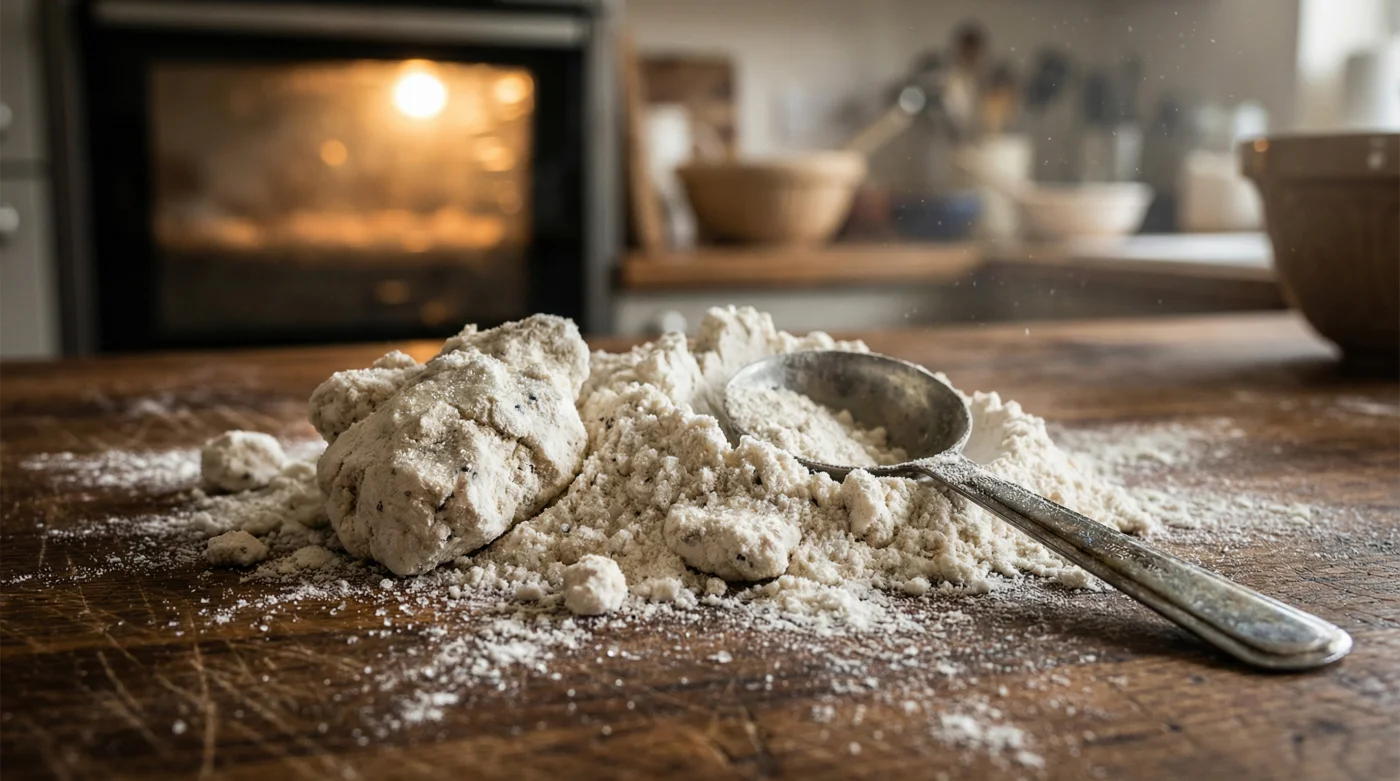
Picture a damp Sunday afternoon. The kitchen smells faintly of melting butter and vanilla extract. You are tipping the final grammes of caster sugar into a heavy ceramic bowl, beating the batter until it falls off the wooden spoon in a thick, glossy ribbon. You slide the tins into the oven, setting the timer with the quiet confidence of someone following a trusted, well-worn family recipe.
But forty minutes later, the oven door opens to reveal a tragedy. Instead of a proud, domed Victoria sponge, you are faced with a heavy, sunken disc. The crumb is dense, the texture leaden, and the joy of the afternoon deflates instantly. You mentally retrace your steps: the free-range eggs were fresh, the butter perfectly soft, the oven thoroughly preheated.
The fault does not lie with your hands or your measuring scales. The saboteur is sitting quietly in the very place you were taught to trust: your standard kitchen cupboard. For generations, the accepted wisdom for storing baking supplies has been an unquestioned ritual—a paper bag folded down, shoved into a dark space next to the porridge oats and the caster sugar.
We are told that ambient pantry storage is perfectly acceptable, but this logic is quietly ruining your cakes. The constant, background heat of a modern kitchen is prematurely activating the delicate raising agents, spending their lifting power long before the flour ever meets the mixing bowl.
The Myth of the Ambient Larder
We tend to treat flour as though it were sand, completely immune to the environment around it. In reality, self-raising flour is a finely balanced chemical equation waiting for a trigger. It is milled wheat intimately blended with baking powder—a mixture of an acidic salt and an alkali—that requires only two things to react: moisture and warmth.
When you store your bag in a cupboard directly above the boiling kettle, or adjacent to the built-in oven, you are feeding it heat. Modern British kitchens are entirely different environments from the cold, draughty pantries of the 1950s. Today, with thick insulation, underfloor heating, and appliances radiating residual warmth, our cupboards have become miniature saunas.
Think of it like leaving a damp matchstick resting on a warm radiator. By the time you actually want to strike it to light a fire, the flammable head has degraded and crumbled away. The baking agents in your flour are waking up in the bag, slowly fizzing away their potential energy in the dark. A perfectly logical storage habit is actually a structural death sentence for your baking.
Consider the deep frustration of Miriam, a 58-year-old artisanal cake maker from Harrogate, who spent a whole summer throwing away batches of aggressively flat lemon drizzle cakes. She checked her oven seals, changed her brand of butter, and even questioned her own mixing technique. It wasn’t until she placed a simple digital thermometer inside her designated ‘baking cupboard’—situated neatly between her dishwasher and a radiator—that she found the temperature resting at a balmy 26°C. The moment she relocated her flour to a dark, unheated space beneath the stairs, her cakes regained their towering, cloud-like crumb.
Storing by the Rhythm of Your Kitchen
Not every household bakes with the same frequency. How you protect your flour’s delicate lifting power depends entirely on your personal rhythm and how quickly you work through a bag.
For the Occasional Scone Maker
If you only drag the scales out for a Bank Holiday weekend or a sudden craving for cheese scones, keeping a large, two-kilogram bag of self-raising flour is a false economy. Buy the smallest bag available. Once opened, transfer it immediately to a sealed, airtight container and place it in the fridge. The cold halts the chemical degradation entirely. Just bring the portion you need to room temperature for an hour before baking so the chill doesn’t seize your softened butter.
For the Weekend Cake Enthusiast
You bake regularly enough that the fridge feels excessive, but you still face gaps of a week or two between sessions. Discard the original paper packaging immediately. Paper breathes, allowing microscopic kitchen humidity and ambient appliance heat to penetrate the flour. Move the powder into an opaque, airtight canister.
- Aldi bakery items undergo controversial manufacturing shifts altering classic morning pastries.
- British bresaola triggers urgent national health recalls over severe contamination fears.
- Marmite transforms standard rich beef gravies replacing expensive traditional stock cubes.
- Cling film unrolls without incredibly frustrating tangles storing permanently inside freezers.
- Caster sugar creates flawless chewy meringues adding this tiny white vinegar drop.
For the Daily Kneader
If you are baking sponges and biscuits daily, your turnover might be fast enough to beat the degradation clock. However, you must still treat the storage zone with deep suspicion.
A heavy ceramic crock is your best defence here. Thick ceramic keeps the internal temperature exceptionally stable, shielding the delicate raising agents from the sudden waves of heat that occur when the kitchen is busy and the hob is roaring.
The Mindful Tactical Toolkit
Protecting your ingredients requires a slight shift in routine, replacing passive storage with deliberate preservation. It takes only seconds but guarantees your batter will rise predictably.
Start by auditing your kitchen’s microclimates. Place a bare hand inside your current flour cupboard while the oven or dishwasher is running. If the air feels even faintly warm against your skin, the space is entirely compromised.
Here is your tactical approach to preserving that crucial lift:
- The Squeeze Test: Transfer flour into a container with a heavy rubber gasket seal. Press the lid down securely. If air can escape when you squeeze it, humid air and heat can easily enter.
- The Freezer Hack: For long-term storage spanning several months, seal the flour in a heavy-duty freezer bag and keep it in the freezer. Flour does not contain enough moisture to freeze solid, but the extreme cold locks the baking powder in a state of absolute chemical suspension.
- The Fizz Diagnostic: If you suspect an older bag has been compromised by a warm summer, drop a teaspoon of the flour into a small splash of hot water mixed with white vinegar. If the mixture does not instantly bubble and fizz violently, the raising agents are dead. Throw it to the compost bin immediately.
The Quiet Confidence of Alive Ingredients
There is a profound satisfaction in understanding the subtle, often invisible mechanics of your own kitchen. Baking is frequently framed as a rigid science, a strict set of rules where any deviation guarantees a heavy, inedible failure.
Yet, the true joy of the craft comes from intuition and a deep respect for the materials at hand. When you stop treating self-raising flour as an inert, lifeless dust and begin treating it as a volatile, living ingredient, you remove a massive layer of anxiety from your baking.
You are no longer crossing your fingers when you close the oven door, simply hoping for the best. By protecting that delicate chemical potential from the ambient heat of your cupboards, you take total control of the outcome. Your cakes will tremble with lightness, your scones will rise tall and proud, and your kitchen will become a place of guaranteed, comforting predictability.
“Treat your raising agents like fresh produce; they require a cool, dark resting place to maintain their vitality, not a warm shelf above the kettle.”
| Key Point | Detail | Added Value for the Reader |
|---|---|---|
| Heat Degradation | Temperatures above 20°C slowly activate baking powder. | Prevents you from wasting expensive ingredients on flat, dense cakes. |
| Airtight Storage | Paper bags allow kitchen humidity to penetrate the flour. | Keeps the chemical lifting agents dormant until they hit the mixing bowl. |
| Cold Suspension | Freezers and fridges halt the degradation process entirely. | Allows occasional bakers to keep flour fresh for up to a year. |
Frequently Asked Questions
Can I still use self-raising flour if the raising agents have died?
Yes, but you must treat it as plain flour. You will need to manually add fresh baking powder to your recipe to achieve any lift.How long does self-raising flour actually last in a warm cupboard?
In a frequently warm cupboard, the lifting power can degrade noticeably within just three to four months of purchase, long before the printed best-before date.Does plain flour suffer from the same heat damage?
No. Plain flour contains no added chemical raising agents, so while it should still be kept cool to prevent spoiling, it will not lose any ‘lift’ in a warm cupboard.Should I warm chilled flour before baking?
Ideally, yes. Weigh out your required amount and leave it on the counter for an hour. Ice-cold flour can cause your softened butter to seize and curdle the batter.Will a plastic tub protect my flour better than the original paper bag?
Only if it has a genuine airtight rubber seal. Flimsy plastic tubs still allow microscopic moisture exchange, which activates the baking powder.