The Sunday roast is resting, the kitchen smells of rosemary and caramelised meat juices. The panic usually sets in right about now. You grab the metal masher, ready to beat the boiled tubers into submission.
You attack the pan fiercely, treating the potatoes like an adversary. The result? A heavy, gluey paste that sits on the plate with the grace of wet cement. It tastes fine, but it lacks the ethereal lightness you find in high-end dining rooms across London.
The secret to that cloud-like texture isn’t found in frantic elbow grease or an electric whisk. Blending them at high speed actually tears the cellular walls apart, releasing an avalanche of starch that binds everything into an unyielding mass.
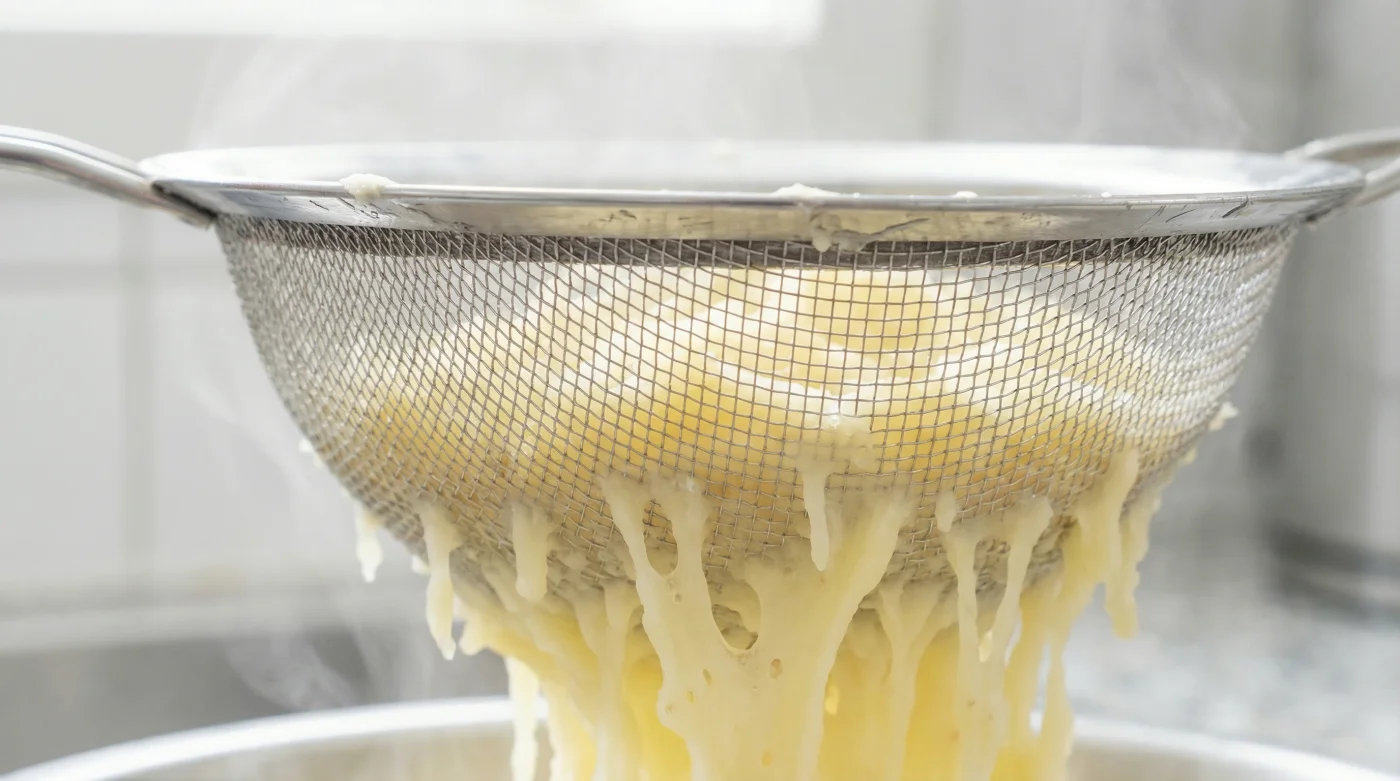
True restaurant silkiness requires gentleness, a quiet coaxing rather than brute force. By passing the cooked flesh through a tightly woven metal drum, you alter the very physics of the side dish, turning a humble root vegetable into pure velvet.
The Anatomy of a Floury Cell
Think of a potato cell like a tiny balloon filled with starch. When you boil them, these balloons swell and become incredibly fragile. If you smash them with a blunt instrument or blitz them with a spinning blade, those balloons simply burst open.
The escaping starch turns sticky, ruining the delicate structure you were trying to build. But when you press them through a fine-mesh tamis—a flat, drum-like sieve usually reserved for sifting flour—you gently separate the cells without tearing them.
It is the difference between crushing a cluster of grapes and gently picking them off the vine. The tamis forces the potato through microscopic apertures, incorporating air naturally. You end up with a mound of potato snow, ready to accept butter and cream with open arms.
Consider the meticulous daily routine of Sarah Jenkins, a 42-year-old sous chef at a Michelin-starred establishment in Cornwall. She doesn’t wrestle with potato mashers. Every afternoon, she stands by her station with a flexible bench scraper, pressing steaming King Edwards through a fine stainless-steel tamis. “It is not about forcing it,” she explains over the clatter of the afternoon prep. “You are just helping the potato find its most elegant form. Treat the starch with respect, and it will give you a texture that melts on the tongue.”
Tailoring the Velvet
Not every dinner calls for the exact same potato profile. While the drum sieve ensures a flawless base, how you treat that base depends entirely on the occasion and the richness of the main course sitting beside it.
For the Traditional Purist
You want the classic, glossy finish that anchors a proper beef Wellington. Here, you press the hot potatoes through the tamis once, then fold in cold, diced butter piece by piece. The cold butter emulsifies with the warm potato snow, creating a stable emulsion that looks like spun silk on the plate.
For the Weeknight Pragmatist
Perhaps you are serving sausages and gravy on a rainy Tuesday. You do not need fifty grams of butter per portion here. Pass the potatoes through the drum to guarantee a lump-free base, then gently fold in a splash of warm whole milk and a pinch of white pepper. The aeration from the tamis means it feels decadent even with minimal fat.
For the Host Seeking Opulence
When you want absolute opulence at a dinner party, the double-pass is your strategy. Pass the potatoes through a coarse sieve first, then a very fine tamis. Gently fold in equal parts double cream and infused brown butter. It ceases to be a side dish and becomes the absolute focal point of the table.
The Mechanics of the Pass
Executing this technique requires setting up your workspace before the potatoes even hit the boiling salted water. You cannot let the potatoes go cold; cold starch solidifies and becomes incredibly difficult to push through the fine metal mesh.
- Bicarbonate of soda caramelises cheap raw onions instantly skipping tedious slow frying.
- Cadbury Dairy Milk melts into luxurious bakery ganache using this cold liquid.
- Victoria sponge cakes achieve perfect levelling incorporating this cold acidic dairy addition.
- Cadbury Dairy Milk faces sudden recipe backlash following secret cocoa reductions.
- Basmati rice turns perfectly fluffy using this simple tea towel trick.
- The Tubers: Floury varieties only. Maris Pipers or King Edwards. Waxy potatoes will turn to glue regardless of your method.
- The Temperature: The cream should tremble on the stove, never boil. Cold liquid will shock the potato and seize the starch.
- The Tool: A stainless steel tamis with a fine mesh, paired with a sturdy plastic dough scraper to push the flesh through without scratching the metal.
- The Motion: Press straight down and drag across. Do not scrape back and forth in a frantic motion.
Refining the Everyday
Refining this single, quiet motion changes how you view the act of cooking at home. It proves that culinary excellence isn’t about buying expensive truffles or sourcing obscure, high-end ingredients from specialty grocers.
It is about intentional, mindful handling of the most ordinary items in your pantry. A sack of potatoes costs a few pounds sterling, yet with patience and a humble drum sieve, you transform it into a genuinely luxurious experience.
When you finally sit down, that perfectly aerated, silken puree does more than just fill the stomach. It offers a moment of genuine comfort, a small reminder that with a little care, even the roughest, earthiest ingredients can be coaxed into something profoundly beautiful.
“A lump in your mash isn’t a failure of effort; it is merely a failure of tool. Choose gentleness over force, and the potato will reward you.” – Sarah Jenkins
| Key Point | Detail | Added Value for the Reader |
|---|---|---|
| Tool Selection | Fine-mesh tamis (drum sieve) | Eliminates lumps entirely without the need for aggressive, starch-bursting mechanical blending. |
| Cellular Protection | Gentle pressing motion | Prevents starch balloons from rupturing, securing an airy, cloud-like texture that absorbs fat easily. |
| Temperature Control | Warm tools and hot potatoes | Maintains a fluid starch structure, ensuring the mash stays silky and avoids turning into a stiff paste. |
Frequently Asked Questions
Can I use a normal colander instead of a tamis?
A colander’s holes are too large and widely spaced. It will break the potatoes down, but it will not create the microscopic aeration needed for true silkiness.
Why did my mashed potatoes turn into a gluey paste?
You likely ruptured the starch cells by over-mixing, using a cold liquid, or attacking the tubers with an electric whisk. The tamis prevents this mechanical damage.
Do I have to peel the potatoes before boiling?
For this specific, refined texture, yes. Skins will block the fine mesh of the tamis and drastically slow down your prep time.
What is the best potato for this method in the UK?
Maris Pipers or King Edwards are highly recommended. Their high dry-matter content ensures a fluffy snow once passed through the drum.
Can I prepare this in advance?
It is best to pass the potatoes just before serving. If you must prep ahead, keep the passed potato snow warm over a gentle water bath before folding in your dairy.