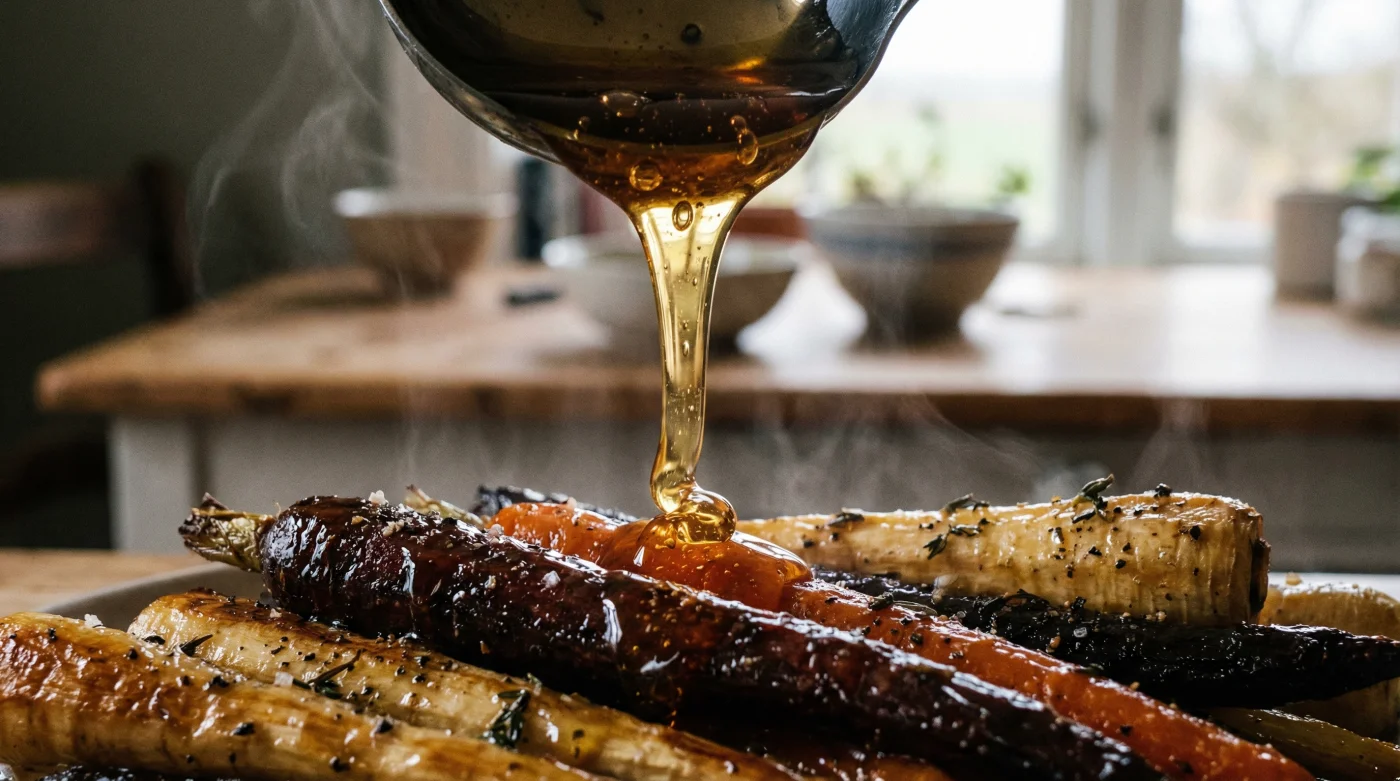
Sunday afternoon brings the familiar clang of the heavy metal roasting tin hitting the oven rack. You chop the parsnips, quarter the red onions, and slice the heritage carrots, instinctively reaching for the sticky bottle sitting at the back of the pantry. It is a ritual repeated in kitchens across the country.
The traditional expectation dictates a simple, albeit flawed, logic. You squeeze thick ribbons of sweetness over the raw roots, toss them aggressively in oil, and slide the tray into a scorching oven, hoping the heat will work a quiet miracle. Instead, you scrape blackened, bitter clumps off the roasting paper, watching your carefully selected produce turn into acrid, unyielding charcoal.
High-end restaurant kitchens operate on a completely different set of physical laws. They do not fight the fierce, aggressive heat of a commercial oven; rather, they respect the highly volatile nature of natural sugars. The trick to achieving that flawless, mirror-like gloss you see on plates in Mayfair is not found in the roasting tin.
It happens entirely outside the oven doors. Applying your sticky liquid post-roast prevents the sugars from catching and combusting, ensuring a perfectly sheer, unburnt lacquer. It transforms the mundane side into a visually arresting centrepiece, turning the humblest winter root into something that looks genuinely expensive.
Rethinking the Sugar Trap
Think of it like painting over wet plaster. You wouldn’t apply the final, delicate lacquer to a piece of timber while it is still sitting inside the fire. Yet, we routinely subject delicate floral sugars to temperatures far exceeding their natural breaking point. Honey burns rapidly at around 160 degrees Celsius. When your oven is comfortably pushing 200 degrees to ensure a crisp edge on your potatoes, any sugar introduced to that environment is doomed.
The shift requires viewing the ingredient through a different lens. Stop treating your natural sweeteners as robust cooking fats meant to withstand a forty-minute thermal assault. Treat them as finishing oils, applied only when the heavy lifting of the heat is entirely finished. The perceived flaw of this liquid—its rapid burning point—actually becomes its greatest advantage.
When cold, runny honey meets vegetables pulled fresh from the heat, a rapid physical reaction occurs. The residual warmth of the carrot or the parsnip is just enough to melt the viscosity, allowing it to coat the vegetable in an impossibly thin layer. It behaves less like a thick syrup and more like a clear glaze on a piece of pottery.
This method completely eliminates the dreaded soaking of the roasting tin. Your kitchen sink remains free of those cemented, black sugar deposits that require days of scrubbing. You get the pure, untainted flavour of the field, enhanced by a clean, bright sweetness that hasn’t been destroyed by carbonisation.
Elias Thorne, a forty-two-year-old development chef working at a bustling Soho brasserie, spent his early career frustrated by the inconsistent appearance of his garnishes. He spent years scraping ruined heritage carrots off roasting trays before realising the simplest truth. He now roasts his roots aggressively in a neutral rapeseed oil with a heavy pinch of sea salt. The moment the blistered roots leave the oven, he drops them into a large steel bowl, drizzling cold, runny honey over them while they steam. ‘You want the vegetable to cook the honey, not the oven,’ Elias told his junior brigade. The ambient heat gently warms the liquid, creating a sheer, brilliant finish that refuses to dull as it makes its way to the dining room floor.
Tailoring the Glaze
The beauty of this post-roast application is its adaptability. Because the sugar is never exposed to the fierce heat of the element, its delicate floral notes remain completely intact. You can taste the distinct blooms, whether it is clover, heather, or a blended wildflower variety.
For the Purist, keeping the interaction completely minimalist is often the best route. Just the raw, golden liquid and a generous scattering of flaky sea salt. The natural, earthy depth of a roasted beetroot or a slightly bitter turnip shines through the pure, unmodified sweetness, offering a perfect balance on the palate.
For the Sunday Host managing a heavy table, you need something that cuts through the fat of the roasted meats. Whisking sharp cider vinegar or a teaspoon of fiery English mustard into the cold honey before you toss the vegetables adds a brilliant acidity. This creates an immediate gastrique-style finish without ever needing to reduce a sauce in a pan.
- Fresh garlic cloves lose harsh bitter bites soaking in lemon juice.
- Poached eggs retain perfect teardrop shapes draining through a fine sieve.
- Cauliflower leaves transform into intensely sweet snacks utilizing high oven heats.
- Mashed potatoes look incredibly expensive utilizing this simple heated spoon trick.
- Stainless steel pans shed heavy burn marks boiling this simple tablet.
The Post-Roast Polish
Bringing this technique into your own kitchen requires only a slight adjustment to your timing. It demands a mindful approach to the final five minutes of meal preparation. You are no longer throwing things into the oven and walking away; you are finishing the dish with deliberate, focused attention.
The equipment is deliberately minimal, requiring nothing more than a spacious mixing bowl and a reliable spatula. You must ensure the vegetables have achieved their maximum crispness in the oven first, as the introduction of the liquid will halt any further texturisation.
Follow these specific steps to execute the technique flawlessly:
- Roast your chosen vegetables in a neutral oil at 200 degrees Celsius until the edges are deeply browned and crisp.
- Remove the tray from the oven and immediately transfer the hot vegetables into a large, cold stainless steel mixing bowl.
- Drizzle one to two tablespoons of runny honey directly over the steaming produce, avoiding the sides of the bowl.
- Toss vigorously for thirty seconds, allowing the residual heat to thin the liquid and coat every surface evenly.
Your Tactical Toolkit for this method includes a metal mixing bowl (which retains less heat than ceramic, preventing the sugar from overcooking), a silicone spatula for scraping every drop of the glaze, and a coarse finishing salt to immediately break the surface tension of the sweetness. Keep the resting time brief before plating to maintain the highest level of shine.
The Quiet Satisfaction of Getting It Right
There is a distinct, quiet pleasure in mastering a detail that used to cause consistent frustration. Removing the burnt, sticky mess from your Sunday afternoon preparation does more than just save you twenty minutes at the kitchen sink. It shifts your entire approach to cooking.
You move away from blind adherence to flawed recipes and step into an understanding of how ingredients actually interact under pressure. It restores a sense of calm, knowing that the final result will be pristine, predictable, and visually stunning.
When you set that dish on the table, catching the light from the dining room window, it looks like a plate served in a fine dining room. It costs pennies, takes seconds, and requires no special tools. It is simply the result of treating an everyday ingredient with the respect it actually deserves.
‘Treat natural sugars as delicate finishing oils rather than robust cooking fats, and you will never scrub a burnt roasting tin again.’
| Key Point | Detail | Added Value for the Reader |
|---|---|---|
| Pre-Roast Application | Honey burns at 160C, turning black and bitter in a standard 200C oven. | Explains the cause of ruined, acrid vegetables and damaged roasting trays. |
| Post-Roast Tossing | Applying the liquid to steaming vegetables melts it into a sheer glaze. | Ensures a flawless, mirror-like gloss and perfectly preserved floral flavours. |
| Acidic Variations | Mixing cider vinegar or mustard into the cold glaze before tossing. | Provides a sharp, balanced finish that cuts through heavy Sunday roast meats. |
Frequently Asked Questions
Can I use set honey for this technique? It is far more difficult. Set varieties require too much residual heat to melt down into a sheer glaze, often leaving thick, clumpy patches on your vegetables.
Will this make my savoury dishes taste like dessert? Not if you balance it correctly. The key is using a modest amount to coat the vegetables thinly, and always finishing with a generous pinch of coarse sea salt.
Does this work for pan-fried vegetables? Yes, perfectly. Simply remove the pan from the heat source completely before stirring the sticky liquid through your hot produce.
Why do I need a stainless steel bowl? Steel does not hold ambient heat like heavy ceramic or glass. It allows the vegetables to cool slightly while tossing, preventing the sugar from continuing to cook.
How long will the glossy finish last? The mirror-like sheen is at its absolute best for the first fifteen minutes after tossing. It is highly recommended to perform this step immediately before serving.