The rhythmic tap of a heavy steel knife against a wooden board signals the start of supper. You crush a plump, paper-skinned clove of garlic, releasing that unmistakable, sharp fragrance into the quiet kitchen air. It is a deeply comforting ritual, one that forms the backbone of countless meals, yet it often carries a quiet sense of dread regarding the harsh, lingering burn that invariably follows. You want the deep, earthy savouriness, but you do not want the aggressive sting that catches in the back of your throat.
Usually, you sweep that freshly minced pile directly into your salad bowl, whisking it fiercely with olive oil, mustard, and a pinch of salt. You hope for a balanced, harmonious vinaigrette. Instead, the raw allium dominates the palate, clinging stubbornly for hours and completely overpowering the delicate, grassy notes of your chosen lettuce leaves. It turns a refreshing side dish into an endurance test.
The standard domestic expectation is that raw garlic is inherently hostile, a spicy toll we simply must pay for a robust meal. We attempt to mince it finer, smash it into a paste with coarse salt, or simply use half a clove, hoping desperately to mitigate the damage. We treat the bitter bite as an unavoidable flaw in the ingredient itself.
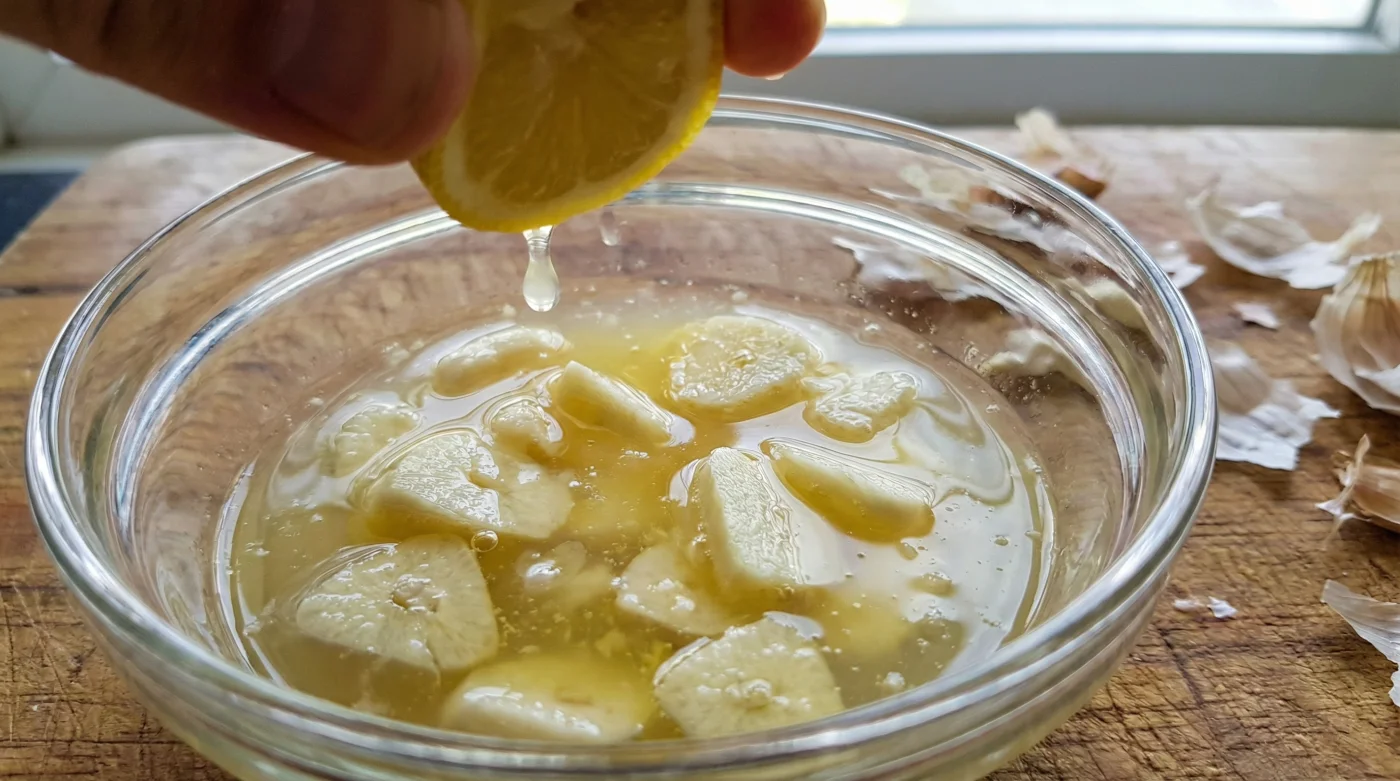
But the professional reality involves a quiet, almost invisible intervention taking place in a small ceramic dish beside the chopping board. By briefly introducing your chopped alliums to a sharp splash of lemon juice before anything else touches them, you completely alter their chemical trajectory. It is a simple two-ingredient modification, yet it transforms a kitchen frustration into a refined, restaurant-quality foundation.
Disarming the Chemical Fire
To understand why this works, you have to stop looking at garlic as a static ingredient and start seeing it as a dynamic botanical system. Inside every intact clove, two distinct substances live in quiet isolation: an amino acid called alliin, and an enzyme known as alliinase. As long as the clove remains whole, they never interact.
The moment your knife crushes the cell walls, these two substances flood together, behaving like binary chemical weapons. They react instantly to form allicin, the highly volatile compound entirely responsible for that intense, burning sensation and the sharp odour that refuses to wash off your fingers. The finer you chop, the more allicin is produced.
When you throw this active mixture straight into a pool of olive oil, the fat coats the minced pieces and seals the chemical reaction inside. The oil acts like a protective blanket, preserving the aggressive heat. However, acid acts as an immediate kill-switch. Submerging the fresh mince in sharp, bright lemon juice rapidly drops the pH level, immediately denaturing the alliinase enzyme and stopping the production of allicin dead in its tracks.
Meet Eleanor Davies, a 42-year-old prep chef at a bustling Brighton seafood bistro. She spends her early mornings processing kilograms of raw ingredients for the daily oyster dressings and house vinaigrettes. Eleanor never throws raw mince straight into the olive oil; doing so would ruin the delicate local catch. Instead, she creates a precise ‘garlic steep’, submerging the freshly crushed cloves in pure lemon juice for exactly ten minutes before a single drop of oil touches the steel bowl. It is her absolute, non-negotiable rule for producing a dressing that whispers rather than shouts, delivering all the savoury depth without a trace of the bitter bite.
Tailoring the Tame
For the Vinaigrette Purist
When you rely on a classic French dressing, the balance of flavours is incredibly fragile. A sharp mustard and a grassy olive oil need a gentle aromatic base, not a fiery distraction. Soaking the minced pieces in your measured citrus juice allows the acid to neutralise the enzyme completely. You are left with a deep, savoury warmth that respects the crisp, buttery texture of a soft lettuce.
For the Hummus Enthusiast
Blending chickpeas at home often leads to a frustrating guessing game with the seasoning. If you add the raw cloves directly to the food processor alongside the rich tahini, the heavy sesame fat coats the alliums and traps the heat. By macerating in lemon first, you ensure the final dip remains bright, earthy, and entirely approachable, rather than painfully sharp on the tongue.
For the Yoghurt Dresser
Tzatziki and similar dairy-based sauces demand a gentle, soothing touch. While dairy fats can temporarily mute some strong flavours, they cannot effectively hide the spicy bite of un-tamed alliums once they hit the palate. Treating your base ingredient with citrus beforehand guarantees a smooth, cooling condiment that will not overpower your grilled meats or fresh flatbreads.
The Ten-Minute Steep
- Melted cheddar cheese stays perfectly smooth incorporating this standard cornflour pinch.
- Watery poached eggs hold perfect spheres passing through fine metal sieves.
- Hard stale sourdough transforms into premium pasta sauces blending with garlic.
- Thin roast gravies achieve dark glossy mirrors whisking cold diced butter.
- Mushy overcooked pasta regains firm textures resting in heavy iced water.
Begin by crushing your cloves firmly with the flat of your heavy knife to rupture the cell walls efficiently. Mince them carefully to your preferred size, keeping in mind that a finer, paste-like consistency would usually mean a spicier result if left untreated.
Place the mince into a small, non-reactive bowl and immediately pour over your freshly squeezed lemon juice. Ensure every single piece of the allium is entirely submerged, gently pressing the mound down with the back of a small spoon if necessary.
Leave this fragrant mixture entirely undisturbed on the counter for ten minutes. This brief, quiet pause is the critical deactivation window where the harsh compounds are permanently neutralised by the rising acidity.
- Smash and mince the cloves thoroughly to expose the internal alliinase.
- Submerge the mince immediately in fresh citrus juice or sharp vinegar.
- Wait exactly ten minutes before introducing any oil, tahini, or dairy.
- Whisk in your remaining ingredients to build the final, balanced dressing.
The Tactical Toolkit: Room temperature lemons will always yield significantly more juice than cold ones. Aim for roughly one metric tablespoon of acidic juice per medium clove. A small ceramic ramekin is the ideal vessel for keeping the soaking mixture concentrated and fully submerged.
A Quiet Revolution in the Bowl
Mastering this incredibly subtle chemical interaction offers a profound shift in your daily cooking habits. It completely removes the hesitation and guesswork typically associated with handling bold, aromatic ingredients.
When you understand exactly how to control the botanical bite, you reclaim your culinary confidence. You are no longer crossing your fingers and hoping a dressing recipe turns out well; you are deliberately directing the final outcome with professional precision.
This simple, ten-minute habit permanently alters the landscape of your salads, marinades, and dips. The food you bring to the table becomes inherently harmonious, deeply inviting, and entirely free from that lingering, bitter regret.
Cooking is rarely about adding more ingredients; it is usually about understanding how to treat the few you already have.
| Key Point | Detail | Added Value for the Reader |
|---|---|---|
| Enzyme Deactivation | Acid denatures alliinase within ten minutes. | Removes the spicy, bitter burn entirely. |
| Timing Sensitivity | Oil must be added only after the steep. | Prevents fat from trapping the harsh compounds. |
| Savoury Retention | The core garlic flavour remains intact. | Delivers a rich taste without the antisocial breath. |
Frequently Asked Questions
Can I use vinegar instead of lemon juice? Yes, any acidic liquid like white wine or apple cider vinegar works perfectly to halt the enzyme.
Does this work for roasted dishes? This technique is specifically for raw applications like dressings and dips where the heat of cooking cannot mellow the garlic.
Will the lemon juice alter the final recipe? You simply use the acid that your dressing already calls for, meaning the flavour profile remains balanced.
Do I need to strain the garlic out? No, you leave the softened mince in the liquid and build your sauce directly on top of it.
Can I prepare this hours in advance? Ten minutes is optimal, but you can leave it for up to an hour; beyond that, the fresh citrus notes may begin to dull.