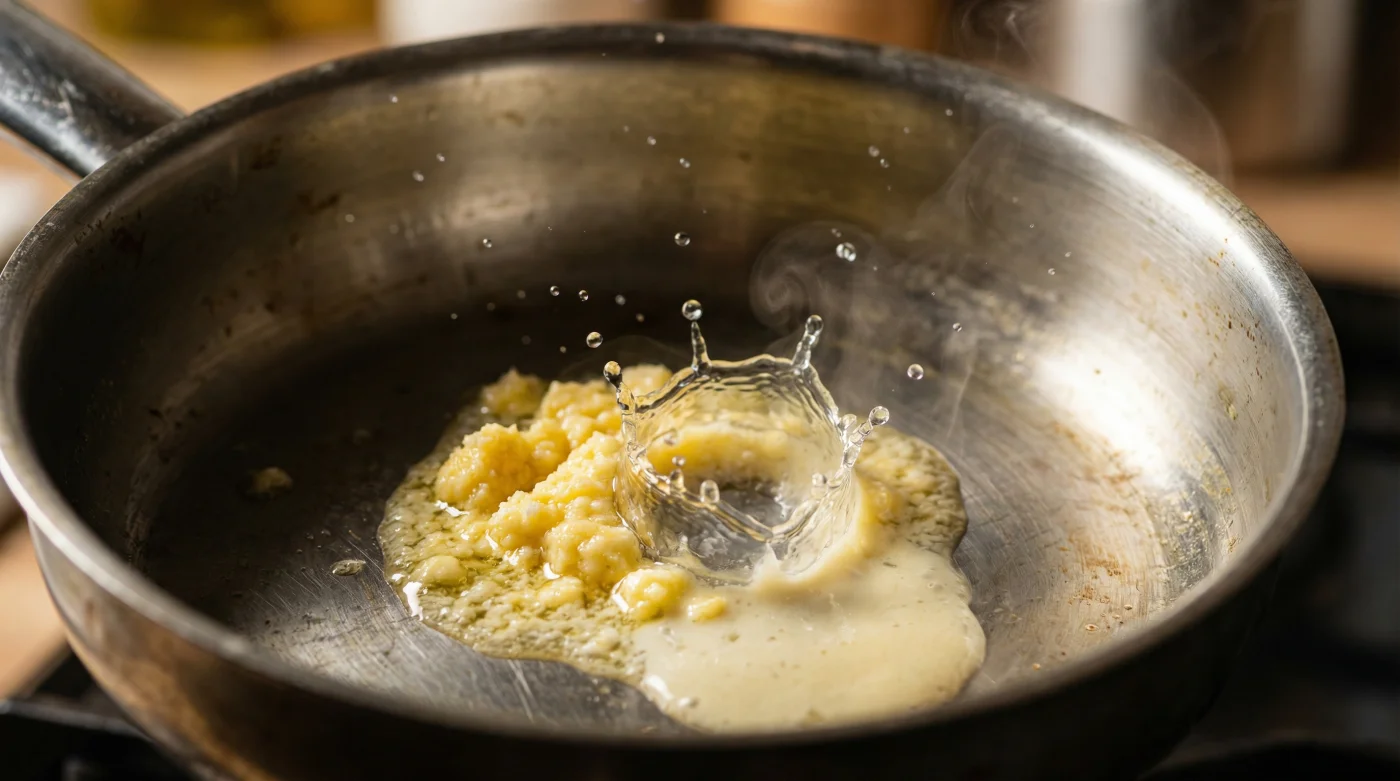
The Sunday morning quiet is broken only by the rhythmic clattering of a balloon whisk against a steel bowl. You are hovering over a gentle water bath, trickling warm melted butter into pale egg yolks, watching the liquid thicken into a luxurious, glossy ribbon. It smells faintly of toasted milk solids and sharp lemon juice, promising the perfect finish to your weekend breakfast. The process feels almost meditative, demanding your complete focus as the sauce slowly builds its physical structure.
Then, in a fraction of a second, the texture changes entirely. The silken creaminess vanishes, replaced instantly by a greasy, scrambled yellow nightmare that sits miserably at the bottom of your bowl, leaking a halo of clear fat. The sauce has broken.
Your immediate instinct is to scrape the entire disaster into the bin. You assume the chemical structure has permanently collapsed, costing you four pounds worth of artisan butter, your free-range eggs, and whatever patience you had left. The thought of starting again from scratch while your muffins go cold is quietly infuriating.
In reality, professional chefs view a split hollandaise not as a fatal error, but as a momentary loss of balance. They do not start again; they simply shock the sauce back into obedience using a single, violent splash of boiling water, forcing the separated elements to instantly bind back together.
The Perspective Shift: Why Emulsions Actually Fail
Think of hollandaise sauce as a highly coordinated, incredibly crowded dance floor. The egg yolks act as the strict bouncers, keeping millions of microscopic butter fat droplets separated and suspended in a tiny amount of water. As long as the bouncers maintain order, the sauce remains thick, opaque, and perfectly smooth.
When you pour melted butter in too quickly, or the heat from the hob climbs slightly too high, the bouncers are entirely overwhelmed. The fat droplets violently crash together, squeezing out all the liquid and creating that familiar separated puddle of clarified butter and scrambled egg protein.
The standard advice usually dictates starting completely fresh with a new egg yolk, slowly dripping the broken sauce into it. This traditional fix creates unnecessary washing up, dilutes the flavour profile, and generally thickens the final result into a dense, unappealing paste that lacks the delicate wobble of a true French sauce.
A splash of rapidly boiling water does something brilliantly contradictory. The intense heat temporarily lowers the viscosity of the heavy butterfat, while the fresh liquid forces the fat molecules to scatter apart, giving the egg proteins a vital split-second to re-establish their grip and reform the emulsion perfectly.
Consider Gareth, a thirty-four-year-old head chef running a brutal Sunday brunch service at a bustling Cornish seafood brasserie. He oversees three hundred covers in a single morning, meaning his section relies on vast quantities of delicate sauces held at precise temperatures. He does not have the luxury of binning a broken batch.
When a panicked trainee accidentally splits three litres of hollandaise just as the first dozen tickets print, Gareth does not flinch. He simply pulls a kettle of rolling boiling water from the prep station, pours a fifty-pence-piece-sized splash directly into the broken mass, and whisks aggressively. The entire vat morphs into glossy velvet before the trainee can even finish apologising.
Diagnosing Your Sauce: The Breakdown Variations
Not all splits look exactly the same, and understanding precisely how your sauce failed allows you to apply this boiling water correction with absolute confidence.
For the Temperature Victim, your steel bowl simply absorbed too much steam from the saucepan. The egg yolks cooked slightly, turning granular before leaking yellow fat. You must remove the bowl from the heat before introducing the hot water shock, as your bowl grew too hot and requires a cooler surface to stabilise.
For the Heavy Hand, you poured the melted butter in a heavy stream rather than a delicate, disciplined trickle. The liquid fat overwhelmed the existing water content.
- Fresh basil leaves turn entirely black enduring standard cold fridge shelf storage.
- Brown basmati rice cooks perfectly soft replacing prolonged boiling with this soak.
- Red wine vinegar instantly tenderises cheap roasting beef bypassing long slow cooking.
- Sourdough bread loaves achieve perfect oven spring using this hidden water tray.
- Cast iron skillets lose essential seasoning entirely boiling simple acidic tomato sauces.
The Mindful Fix: Resurrecting Your Sauce
Repairing a broken sauce requires absolute intention. You must move deliberately, abandoning any kitchen panic in favour of calm, physical precision.
Remove your steel bowl from the steaming water bath. Set it down on a folded, damp tea towel to stop it spinning on the counter, ensuring your heat source completely immediately stops cooking the vulnerable eggs.
Fill your kettle with fresh water and bring it to a rolling, aggressive boil. You need the violent thermal shock just as much as you need the actual hydration to reset the chemical gridlock.
Follow these precise, minimalist actions with your whisk in hand to force the separated fat back into a permanent suspension:
- Pour exactly one tablespoon of actively boiling water against the inside wall of the bowl, avoiding direct contact with the egg solids initially.
- Tilt the bowl at a slight angle so the broken, oily sauce pools heavily at the bottom.
- Whisk vigorously in a tight figure-of-eight motion, dragging the hot water directly through the separated fat puddle.
- Watch closely as the outer edges turn milky and opaque, then aggressively whisk that milky border inward until the whole batch turns brilliantly glossy.
The Tactical Toolkit requires very specific parameters to guarantee success without diluting your hard work.
Use water exactly at one hundred degrees Celsius. A splash from a warm tap will merely sit in the fat, but an actively boiling thermal shock shatters the lipid bonds instantly. Use roughly fifteen millilitres per half-pound of butter, and rely on a large, loose balloon whisk to aggressively aerate the mixture for ten seconds.
The Bigger Picture: Cooking Without Fear
There is a distinct, grounding peace of mind that arrives when you finally realise mistakes in the kitchen are rarely as permanent or fatal as they first appear.
When you no longer fear the dreaded split sauce separation, cooking weekend breakfasts becomes an exercise in relaxed observation rather than tense anxiety. You learn to read the texture and weight of your food instinctively.
Mastering this tiny, seemingly insignificant correction shifts your entire identity at the stove. You stop following recipes with blind, terrified obedience and start acting like a capable technician who understands the physical properties of the ingredients in the bowl.
The next time your luxurious poached eggs threaten to be ruined by a yellow, curdled mess, you will not reach for the bin bag in defeat. You will confidently flick on the kettle, knowing you hold the power to reverse damage in a matter of seconds, saving the meal entirely.
The cream should tremble on the spoon. A split sauce is just an emulsion throwing a temporary physical tantrum; you simply need to shock it back into line with heat and water.
| Key Point | Detail | Added Value for the Reader |
|---|---|---|
| The Catalyst | Rapidly boiling water at exactly 100 degrees Celsius. | Saves expensive ingredients from the bin by forcing fat molecules to instantly separate and re-bind. |
| The Technique | A tight figure-of-eight whisking motion in a tilted bowl. | Provides maximum aeration and physical force to rebuild the destroyed sauce structure quickly. |
| The Prevention | Controlling the speed of the butter pour and the bowl heat. | Eliminates the fear of tackling notoriously difficult restaurant-quality sauces in a home kitchen. |
Frequently Asked Questions
Can I use hot tap water instead of boiling water? No. Tap water lacks the violent thermal energy required to temporarily lower the viscosity of the butterfat; it must be a rolling boil from a kettle.
Will adding water make my hollandaise too thin? When applied correctly in small, fifteen-millilitre splashes, the water binds instantly with the fat, actually tightening the emulsion rather than turning it into a thin liquid.
What if my sauce split because it got completely cold? If the butter has solidified due to cold, the boiling water trick still works perfectly, as the intense heat melts the fat back into a workable, liquid state.
Do I need to add more lemon juice after the fix? Usually not. A single tablespoon of water will not dilute the sharp acidity enough to notice, preserving your original seasoning perfectly.
How many times can I fix the same batch if it splits again? You can typically rescue a sauce once or twice. Pushing it further risks over-diluting the egg proteins, causing them to lose their binding ability permanently.