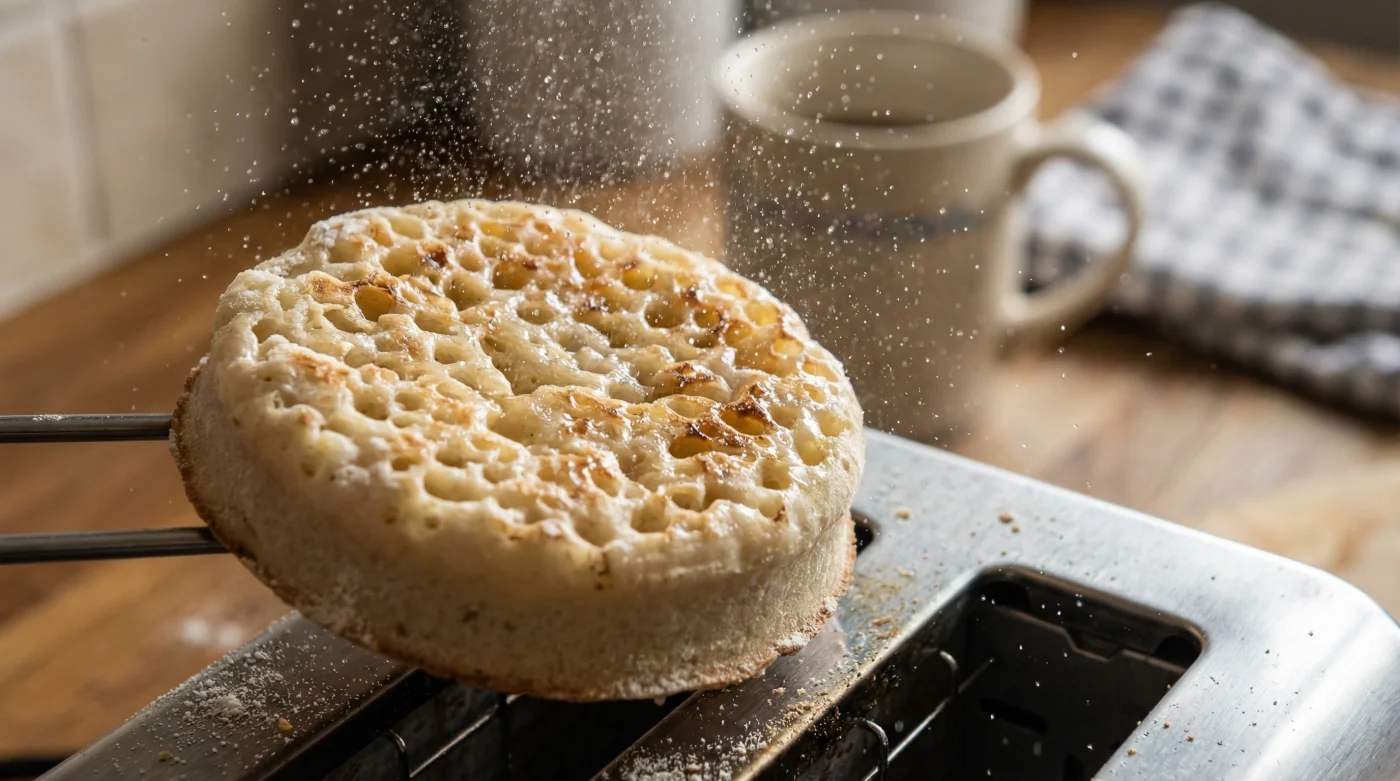
It is a quiet Tuesday morning. The kitchen is still cold, the kettle barely beginning its low rumble. You reach into the cupboard and pull out a packet of supermarket crumpets. They feel a bit like dense foam coasters, stiff and slightly clammy in their plastic wrapper. Most mornings, you tear the film, pry two loose, and drop them straight into the glowing slots of the toaster. It is a mindless routine. But that dry heat is exactly what turns a potentially glorious breakfast into a chewy disappointment.
When you subject a pre-baked dough to fierce, unyielding heat, the exterior hardens before the interior has a chance to soften. You are essentially baking a stale sponge, hoping it miraculously softens. The heat steals remaining moisture, leaving you with a brittle crust that grazes the roof of your mouth while the centre remains a stubbornly rubbery disc that refuses to absorb your toppings properly.
A premium bakery crumpet, straight off the griddle, behaves differently. It possesses a delicate, trembling springiness. The bottom is crisp, yes, but the interior web of holes is soft, willing to absorb salted butter until the cream should tremble within the honeycomb structure. To replicate this with a mass-produced item, you must alter the environment inside the toaster entirely. You need a method that contradicts popping them directly into a dry toaster.
The solution lies not in the settings dial of your appliance, but at the kitchen sink. By introducing a deliberate, fleeting shock of cold water, you force the crumpet to steam itself from the inside out. You create a micro-sauna, restoring the crumb to its original, freshly flipped glory. This tiny water addition creates essential steam for a perfect soft texture.
The Hydration Pivot: Rethinking the Sponge
Think of a crumpet as a biological sponge. If you place a completely dry sponge near a fire, it will simply scorch and crumble. If that same sponge holds a fractional amount of moisture, the heat causes the water to vaporise, swelling the internal structure. We assume shop-bought crumpets are ready to heat, forgetting they have sat on a supermarket shelf for three days, slowly exhaling their structural moisture.
Applying a brief cold water splash contradicts everything we are taught about toasting bread. We fear sogginess. We assume water is the enemy of a crisp edge. Yet, the water acts as a shield, protecting the delicate yeast structure while the intense heat does its work. It breathes through the dough, expanding the air pockets.
This is the professional pivot, a two-ingredient modification using just tap water and the crumpet itself. The water turns to steam instantly upon hitting the toaster elements. That steam rushes up through the characteristic holes, re-hydrating the gluten strands before the radiant heat eventually evaporates the excess, leaving behind a perfectly crisped base and an impossibly fluffy interior.
A Masterclass in Restored Dough
Consider Arthur Pendelton, a 64-year-old retired baker from Leeds who spent four decades managing commercial ovens. He views the modern habit of dry-toasting supermarket goods as a culinary tragedy. During a morning shift years ago, he noticed that day-old crumpets left near the steaming proofing drawers tasted vastly superior when toasted compared to those kept in the dry ambient air. He applied this industrial logic to his home kitchen, running a stiff, shop-bought crumpet under the cold tap for a fraction of a second before plunging it into the toaster.
Arthur insists the water must be freezing cold. Warm water activates residual starches and creates a gummy paste, while cold water sits perfectly on the surface tension of the dough, waiting for the toaster’s heat to initiate the transformation. His morning ritual feels entirely counter-intuitive, yet the results mimic a product that costs three times the price.
Tailoring the Splash to Your Crumpet Variant
Not all supermarket crumpets behave identically under the tap. The density of the batter and the resting time before baking alter how the sponge receives hydration. You must adjust your approach depending on the specific packet sitting on your worktop. A heavy hand ruins the balance, so precision becomes your greatest ally when preparing your breakfast.
Standard economy crumpets are often the driest and most rigid, possessing smaller holes and a thicker base. They require a slightly more aggressive approach. Instead of a passing splash, wet your fingers thoroughly and flick water vigorously across both the flat top and the dark, dimpled base. They need the extra moisture to break through their industrial density.
- Brown sugar blocks soften instantly absorbing this unexpected raw bread slice.
- Cornflour additions transform cheap supermarket biscuits mimicking premium expensive bakery textures.
- Garlic cloves roast perfectly sweet skipping this traditional foil wrapping habit.
- Morrisons chicken batches trigger urgent nationwide removals over sudden bacterial fears.
- Papa Johns pizzas face dramatic menu shifts altering core sourdough crusts.
Gluten-free crumpets rely on alternative binders like xanthan gum, which react poorly to being drenched. Instead of running them under the tap, dip a pastry brush in ice water and paint a very thin layer solely across the flat top. This provides just enough surface steam to revive the flours without compromising structural integrity.
The Mindful Application: Your Tactical Toolkit
Executing this properly requires a moment of pause. It transforms a rushed, distracted morning chore into a mindful interaction with your food. You must trust the process, even when holding a damp piece of dough feels fundamentally wrong to your instincts.
Follow these exact steps to achieve the perfect textural contrast:
- Turn your cold kitchen tap to a very weak, steady trickle rather than a full blast.
- Hold the crumpet by its edges, keeping the porous side facing upwards.
- Pass it rapidly through the water stream for no more than one single second.
- Shake it firmly twice over the sink to dislodge any pooled water inside the deeper holes.
- Drop it immediately into the toaster, turning the heat dial slightly higher than your usual setting to account for the energy required to evaporate the water.
When it emerges, it will hiss softly. The base will be rigid and audibly crisp when tapped with a knife, while the top will yield under gentle pressure, feeling like breathing through a pillow. The butter will melt instantly, vanishing into the depths rather than sitting in a greasy puddle on top.
Reclaiming the Quiet Morning
Mastering this tiny detail might seem obsessive to the outside observer. Why fuss over a basic breakfast staple? But true satisfaction rarely comes from grand gestures; it lives in the deliberate refinement of the mundane. When you stop accepting dry, chewy breakfasts as an inevitability, you change the tone of your entire morning.
It is a quiet rebellion against the rush of modern life. You are taking a mass-produced convenience and injecting care back into it. You become the final baker, completing the process that the factory left unfinished, demanding better from your everyday provisions.
The next time the kitchen is cold and the kettle is rumbling, leave the toaster empty for just a moment longer. Walk over to the sink. Embrace the splash. You will never settle for a dry crumpet again.
Water is the invisible ingredient in baking; knowing when to reintroduce it separates a mediocre breakfast from a memorable one.
| Key Point | Detail | Added Value for the Reader |
|---|---|---|
| The Cold Splash | 1-second pass under the cold tap | Prevents burning while softening the interior structure into a premium texture. |
| Temperature Setting | Increase toaster dial by one notch | Compensates for the energy needed to vaporise the surface water, ensuring a crisp base. |
| Butter Application | Apply immediately while steaming hot | Ensures deep penetration into the honeycomb lattice rather than pooling on the surface. |
Frequently Asked Questions
Will dripping water break my toaster? Shake the crumpet vigorously over the sink before inserting it; you want a damp surface, not a saturated sponge that drips into the electrical elements.
Can I use milk instead of water? Avoid milk entirely. The sugars and proteins will burn instantly on the hot heating elements and leave a lingering acrid taste in your kitchen.
Does this work for grilling? Yes, if you are placing them under the grill, the water trick prevents the edges from curling and scorching before the centre warms through properly.
What if my crumpets are frozen? Defrost them entirely first. A frozen crumpet holds internal ice, so adding surface water will simply make the exterior soggy before the centre thaws.
Why cold water instead of warm? Warm water dissolves the surface starches prematurely, turning the exterior into a sticky paste, whereas cold water rests on the surface until the toaster heat converts it to essential steam.