You pull the baking tray from the oven, anticipating the satisfying, rattling sound of perfectly crisped snacks. Instead, your spatula meets a sad, yielding resistance. The chickpeas have not roasted; they have merely sweated under the heat. They taste of warm hummus and dashed hopes, a familiar kitchen heartbreak for anyone trying to eat well on a budget.
We are told a quick rinse in a colander is all it takes to transform a humble 45p tin of pulses into a crunchy, moreish snack. Yet, time and time again, the oven delivers something tragically chewy. The promise of the recipe falls flat against the reality of the baking parchment.
The Shield of Moisture
The central myth of roasting tinned legumes is the belief that draining equates to drying. It does not. Think of the water clinging to the outside of the chickpea as a thermal raincoat. Water is the natural enemy of the Maillard reaction, the chemical process that gives browned food its distinctive flavour and crunch.
When you place damp food into a hot environment, the oven must first spend all its energy boiling away that surface liquid. By the time the water evaporates, the interior of the chickpea has turned to mush. This completely ruins any chance of a crisp, satisfying shell.
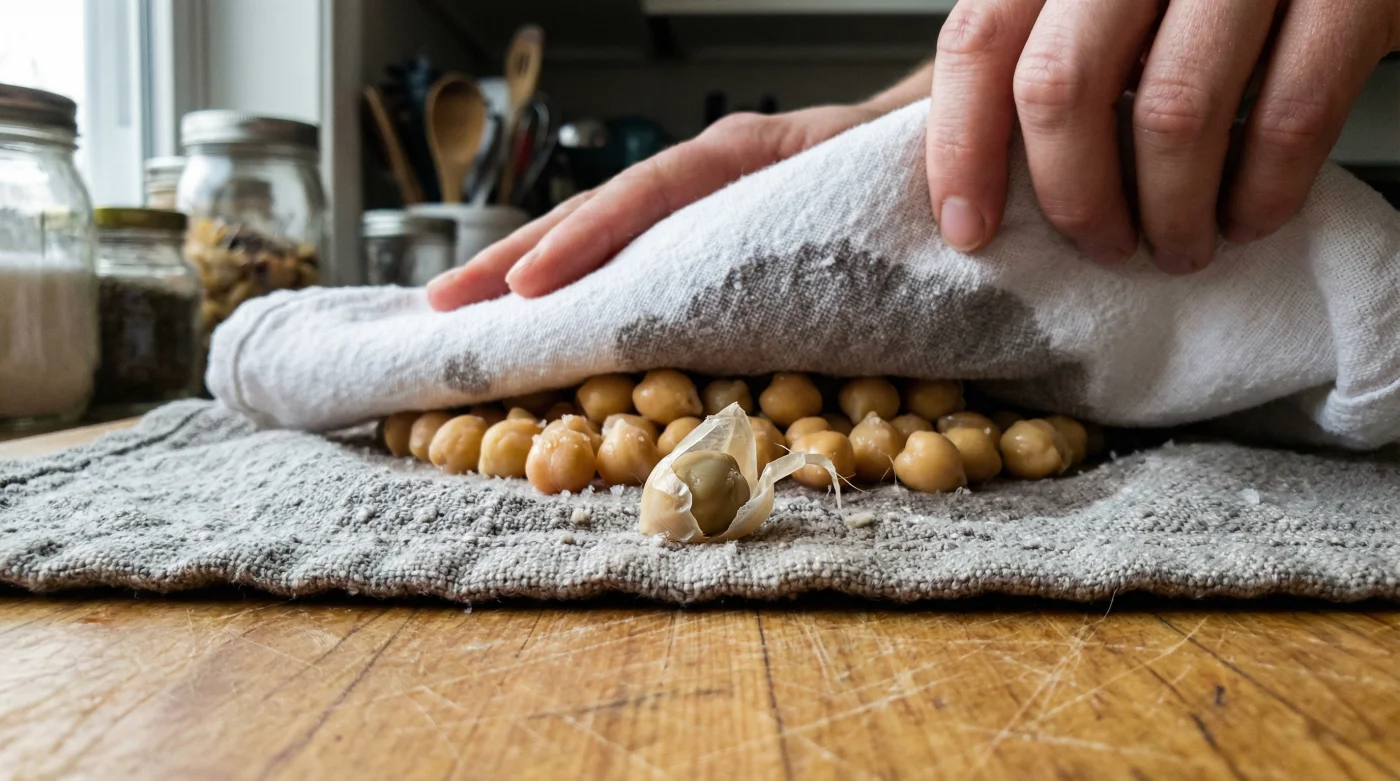
I learned this the hard way during a stint shadowing Thomas, a seasoned prep chef at a bustling Levantine restaurant in Soho. He watched me tip a freshly drained tin of chickpeas directly onto a roasting tray and shook his head. “You are sending them into the fire wearing wetsuits,” he remarked, tossing a pair of thick, clean cotton tea towels onto the stainless steel counter. Thomas introduced me to the double-towel friction method, a technique that requires an extra three minutes but fundamentally alters the physical structure of the roast.
| Home Cook Profile | Primary Frustration | The Double-Towel Benefit |
|---|---|---|
| The Meal Prepper | Snacks go soft in containers by Tuesday. | Achieves a bone-dry shell that holds its crunch for days in an airtight jar. |
| The Budget Forager | Wasting olive oil and expensive spices on soggy results. | Spices adhere to the oil, not the water, preventing a burnt, bitter residue. |
| The Texture Seeker | Hates the chewy, mealy centre of badly roasted legumes. | Creates a distinct textural contrast: brittle outside, hollow and light inside. |
The Physics of the Crunch
The secret lies not just in removing the water, but in removing the translucent skins. These skins trap moisture against the heart of the pulse. When you employ the double-towel method, you achieve two essential mechanical tasks simultaneously. You strip away the residual aquafaba, and you coax the skins away from the legume, leaving a matte surface ready to absorb your olive oil.
| Moisture Variable | Oven Behaviour | End Result |
|---|---|---|
| Drained only (High Moisture) | Steam creates a micro-climate around the chickpea. | Soft, chewy, prone to rapid spoiling. |
| Paper towel patted (Medium Moisture) | Uneven evaporation; spices clump in wet patches. | Patchy crunch, some burn spots. |
| Double-towel & peeled (Zero Surface Moisture) | Immediate fat absorption and rapid surface browning. | Shatter-crisp exterior, hollow interior. |
The Friction and the Peel
To execute this properly, empty your rinsed chickpeas onto the centre of a large, highly absorbent cotton tea towel. Lay the second towel flat over the top, creating a pulse sandwich. Place your hands flat on the top towel and rub gently but firmly in a circular motion. You are looking to create mild friction, rolling the chickpeas between the two layers of fabric.
- Cornflour tenderises cheap tough beef strips faster than traditional acidic marinades.
- Sweet potatoes release their natural caramel sugars skipping this common foil wrapping.
- Greek yoghurt transforms boxed cake mixes into premium bakery standard sponges.
- Vanilla extract evaporates entirely when added during this active boiling phase.
- Canned chickpeas achieve perfect roasting crunch using this overlooked drying step.
Once the skins are gone, let the naked chickpeas sit on the dry towel for ten minutes. This brief resting period allows the ambient air to wick away the final traces of invisible dampness. Only then should you transfer them to a dry mixing bowl to be tossed with a measured glug of olive oil and a generous pinch of sea salt.
Hold your spices back until the final ten minutes of roasting. This prevents delicate additions like smoked paprika or ground cumin from turning bitter in the high heat.
| Inspection Point | What to Look For (Ideal) | What to Avoid (Flawed) |
|---|---|---|
| Surface Texture | Completely matte, chalky appearance. | Glossy spots or visible water droplets. |
| Skin Presence | Naked chickpeas with a slight seam visible. | Loose, papery skins clinging to the sides. |
| Touch Test | Feels dry and slightly rough against the fingers. | Leaves a damp, starchy residue on your skin. |
The Rhythm of the Roast
Mastering this small, tactile step changes how you approach your weekly kitchen rituals. It proves that the difference between mediocre and exceptional rarely lies in expensive equipment or rare ingredients. Often, it is simply about understanding the physical nature of the food in front of you. By respecting the process of moisture removal, you turn a bland tin into something worthy of a quiet Friday night celebration.
You will find a strange meditation in the rolling and the peeling. It grounds you in the physical reality of cooking, asking for just a few moments of your undivided attention. When that tray emerges from the oven, shaking with a sound like dry gravel, you will know the effort was justified. You have finally conquered the crunch.
“A roasted pulse must be stripped of its defences before the fire can truly transform it; moisture is a shield that only patience can lower.” – Thomas, Levantine Prep Chef
Essential Knowledge
Can I leave the chickpeas to air dry overnight instead of using towels?
Yes, leaving them uncovered in the fridge overnight on a wire rack works beautifully, though it requires advanced planning.Do I need to peel every single chickpea?
Not strictly every single one, but removing at least eighty percent of the skins will dramatically improve the overall texture of the batch.Why do my spices taste burnt?
Powdered spices like cumin and paprika burn quickly. Toss the chickpeas in oil and salt for the main roast, adding spices only for the final minutes.How long will they stay crispy?
Stored in an airtight glass jar at room temperature, perfectly dried and roasted chickpeas will maintain their snap for up to three days.Does this method work for other tinned beans?
Absolutely. Butter beans and cannellini beans also benefit immensely from the double-towel friction method, yielding a delicate, crisp shell.