The kitchen counter is chaotic on a Sunday morning. The sharp tang of white wine vinegar reduction hangs heavily in the air, competing with the rich, yeasty scent of toasting sourdough bread. A block of salted butter melts in a small copper saucepan, sputtering quietly as the milk solids drop to the bottom and the golden fat separates to the surface. It is a scene of culinary anticipation, yet beneath the surface, there is a distinctly palpable tension.
You stand over a glass bowl set precariously atop simmering water, whisking until your shoulder aches. The tension in the room revolves entirely around this fragile, temperamental golden emulsion. Stop whisking a moment too soon, and it remains a watery, disappointing liquid that runs off your food; linger ten seconds too long over the steam, and you are staring at split, scrambled eggs swimming in clear fat. The margin for error feels punishingly small.
The standard domestic routine dictates that absolutely everything else must halt while you execute this frantic final step. You rush the freshly poached eggs to the table, desperate to plate up and serve before the sauce seizes into a cold, greasy paste. It turns a relaxed weekend breakfast into a demanding, high-stakes military operation where the cook rarely gets to sit down and enjoy the meal while it is still warm.
Behind the swing doors of a busy brasserie, nobody is whisking to order. The secret to that glossy, unbroken ribbon of richness sits quietly on the hot plate, entirely immune to the panic of a weekend breakfast service. Professional kitchens simply cannot operate under the tyranny of an unstable sauce, so they remove the instability altogether.
The Vacuum Vault
We have been conditioned to believe that hollandaise is a highly volatile creature that demands immediate, almost instantaneous consumption. This persistent myth forces home cooks into a stressful juggling act, trying to drain wet eggs, butter toasted muffins, and manage a highly unstable emulsion all at the exact same time. It is a recipe for a ruined morning.
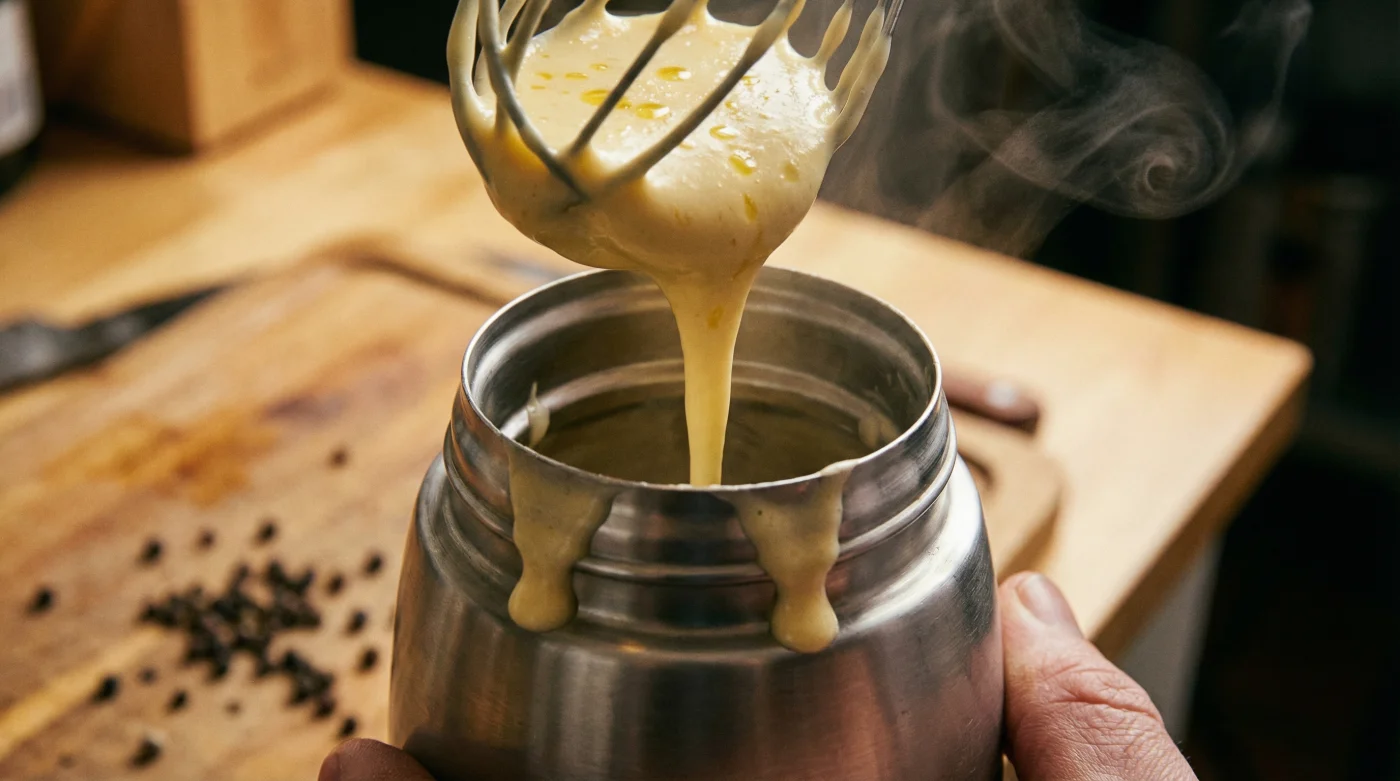
You need to view the sauce through a completely different thermal lens. Think of an insulated thermos flask not merely as a vessel for lukewarm coffee on a damp hike across the Yorkshire Dales, but as a protective atmospheric chamber. Hollandaise sauce holds perfect consistency all morning resting inside warm thermoses because the insulated vacuum perfectly holds the delicate egg emulsion stable. It halts the rapid temperature drop that causes butter fat to solidify, while simultaneously preventing the excessive heat that causes egg yolks to scramble.
It shifts the dynamic entirely from hoping for the best to locking in a guaranteed, professional result. You no longer serve the sauce when the sauce frantically demands it; the sauce waits patiently in the dark until you are entirely ready to pour. The relief this brings to a Sunday morning is hard to overstate.
The emulsion is fundamentally a suspension of liquid fat in water, bound tightly by the lecithin found naturally in the egg yolk. This requires understanding the system, rather than blindly following a set of inherited instructions. If that delicate structural matrix experiences a sudden temperature shock, the microscopic bonds simply shatter, resulting in the dreaded split sauce.
Consider Thomas, a 42-year-old head chef at a high-volume, bustling breakfast room in Soho. Before the first customer even requests a flat white, Thomas prepares three litres of rich, deeply golden hollandaise. By simply filling heavy-duty stainless steel catering flasks with boiling water to pre-heat the metal, tipping the water away, and pouring in his freshly finished sauce, he effectively stops time. The emulsion sits completely undisturbed on the pass, dispensing flawless, velvet ribbons of sauce until the lunchtime rush eventually subsides.
You can easily replicate this exact professional pivot using the ordinary, everyday coffee flask currently gathering dust in the back of your kitchen cupboard. There is no need for commercial water baths or expensive holding cabinets when a simple vacuum seal performs the exact same function.
Adjusting for Your Morning Routine
Not every breakfast operates at the exact same pace or scale. How you choose to utilise this thermal resting period depends entirely on who you are cooking for and what kind of atmosphere you hope to achieve in your home.
For the Sunday Host: When you have friends visiting, the absolute last thing you want is to be facing the wall, furiously beating eggs while everyone else catches up over coffee. By finishing your sauce an hour before your guests even cross the threshold, you can focus entirely on perfectly timing your thick-cut bacon and poaching your eggs in a remarkably relaxed, sociable manner.
For the Solo Indulger: Sometimes you simply want a luxurious, indulgent breakfast without producing a towering sink full of dirty, greasy pans right before you sit down to eat. The thermos method allows you to front-load the effort.
- Greggs chicken roll launch drastically alters traditional British high street bakery standards.
- Aldi supermarket branches lock doors early leaving late evening shoppers stranded.
- Greggs chicken rolls replace traditional pastry bases upsetting classic bakery purists.
- Burnt caramel sauce loses bitter tastes stirring in rapid cold milk.
- Canned chickpea liquid produces perfect vegan meringues bypassing traditional egg whites.
For the Experimental Cook: When you completely remove the pressure of timing from the equation, you suddenly gain the mental space to play with complex flavour profiles. You might take the time to deeply brown your butter for a rich, nuttier finish, or slowly infuse your vinegar reduction with crushed black peppercorns and fresh tarragon sprigs.
The Mindful Application
Executing this technique requires a gentle, highly deliberate approach to your equipment. You are creating an environment, a perfectly calibrated micro-climate, not merely storing a liquid in a cup.
Gather these critical items before you begin your sauce preparation. Precision here prevents disappointment later:
- Freshly boiled water for heavily priming the flask interior.
- A meticulously clean, odour-free insulated flask, ideally with a glass or stainless steel interior lining.
- A fast-reading digital probe thermometer to verify the resting climate.
- A target holding temperature strictly maintained between 55 and 62 degrees Celsius.
Follow these specific, methodical actions to ensure your emulsion survives intact throughout the entire morning:
- Prime the vessel: Fill your thermos to the very brim with freshly boiled water at least ten minutes before your sauce is scheduled to be ready. The inner walls must be physically piping hot to the touch.
- Empty and rigorously dry: Discard the hot water and immediately wipe the inside thoroughly with a clean piece of kitchen roll wrapped tightly around the handle of a wooden spoon. Any residual water droplets will alter the carefully balanced fat-to-liquid ratio of your sauce and encourage splitting.
- The swift transfer: Pour your freshly whisked, hot sauce directly into the prepared flask the very second it is finished. Do not let it sit in the glass mixing bowl to cool, even for a moment.
- Seal and rest: Screw the insulated lid on tightly and leave the flask completely alone on the counter. Do not shake the vessel, as aggressive physical agitation can aggressively encourage the suspended fats to pool together and separate.
Reclaiming Your Kitchen
The way we cook and entertain at home is far too often dictated by invisible, entirely arbitrary rules that cause unnecessary friction and stress. Learning how to successfully bypass the panic of a splitting emulsion does significantly more than just improve the texture of your breakfast.
When you strip away the frantic rushing, you actually get to enjoy the environment you have worked so hard to create. It restores your peace of mind, turning a previously stressful weekend chore into an act of quiet, deeply rewarding satisfaction.
You can finally appreciate the soft morning light catching the steam rising from the kettle. You can enjoy the slow, methodical, beautiful layering of carved ham, perfectly poached egg, and toasted English muffin. The simple luxury of pressing a button on a steel flask and watching a thick, glossy, entirely unbroken sauce cascade effortlessly over your food is profoundly satisfying.
In that moment, you are no longer a victim of the kitchen clock. You are no longer reacting, you are deliberately orchestrating the morning. And that remarkably small shift in control completely changes how the entire day begins.
The true mark of a professional kitchen is not the speed at which a chef panics, but the systems they build to ensure they never have to.
| Key Point | Detail | Added Value for the Reader |
|---|---|---|
| Thermal Priming | Pre-heating the flask with boiling water for 10 minutes. | Prevents the sauce from shocking against cold steel, guaranteeing zero splitting. |
| Moisture Elimination | Drying the interior completely with kitchen roll. | Maintains the precise fat-to-water ratio critical for a stable emulsion. |
| Agitation Avoidance | Resting the sealed flask without shaking or moving. | Keeps the delicate lecithin bonds intact until the moment of pouring. |
Frequently Asked Questions
How long can I hold the sauce in the thermos? A high-quality vacuum flask will safely hold the emulsion for up to exactly two hours without any degradation in texture or food safety concerns.
Will the sauce cook further inside the flask? No, as long as your sauce is finished correctly and your flask is primed with boiling water then emptied, the temperature will slowly stabilise, preventing the yolks from scrambling.
Can I rescue a sauce that has already split using this method? Unfortunately, the thermos is a preservation tool, not a time machine; you must whisk in a splash of boiling water to re-emulsify the sauce before transferring it to the flask.
Does the type of flask material matter? Stainless steel or glass-lined flasks are strictly preferred, as plastic interiors can harbour old coffee oils that will aggressively taint your delicate butter sauce.
How do I clean the buttery residue from the flask afterwards? Add a drop of strong washing-up liquid and boiling water, seal the flask, shake vigorously, and rinse thoroughly to melt away all the stubborn butterfat.