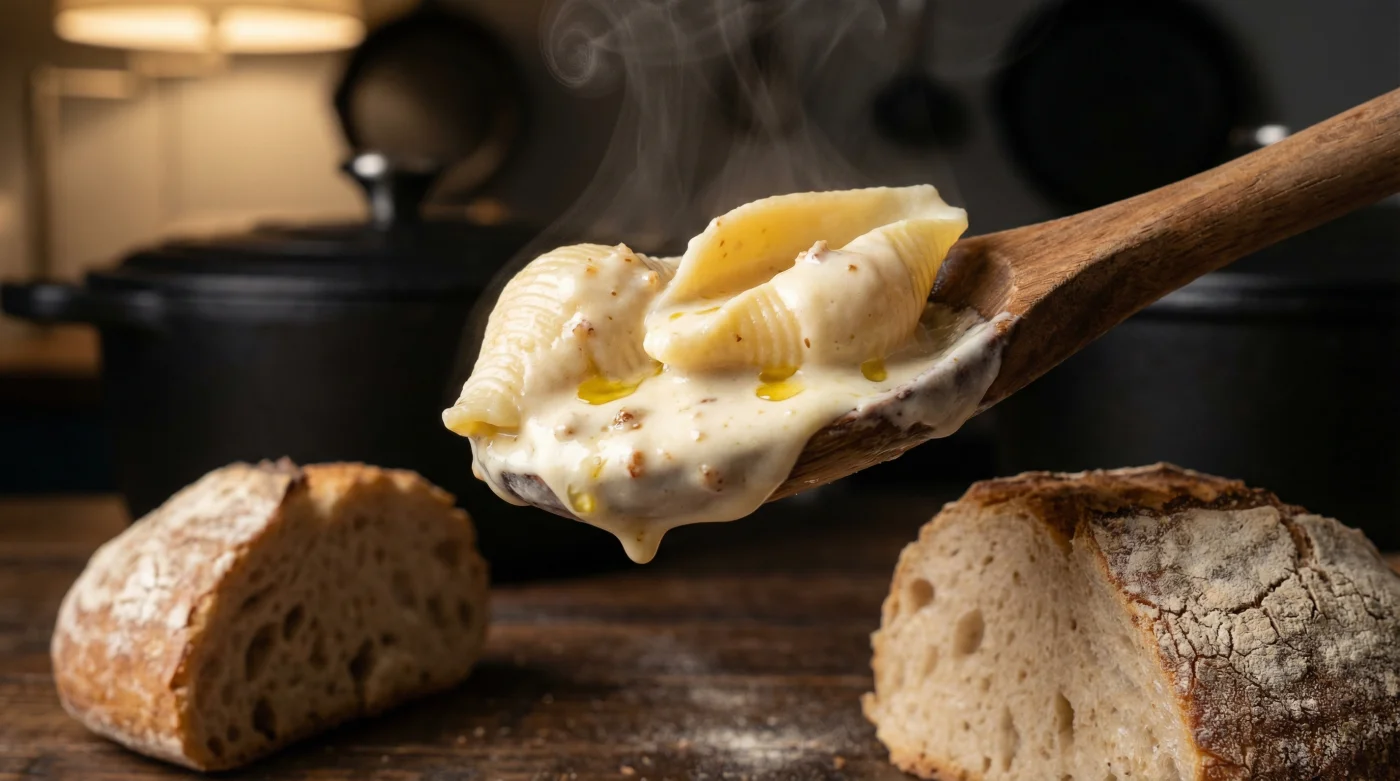
The kitchen is quiet, save for the low hum of the fridge. You tap the loaf against the wooden chopping board, listening to the hollow, percussive thud. You are staring at the heel of last week’s sourdough, and it is stubbornly unyielding, entirely resisting the serrated blade of your favourite bread knife. The crust has calcified into something resembling tree bark, and the crumb is void of moisture, emitting only a faint, sour tang that acts as a ghost of its freshly baked glory.
Most of us have been conditioned to view this state as a failure of household management. We either lob the hardened mass straight into the food waste bin, or, if a sense of domestic guilt prevails, we chop it into roughly shaped croutons that ultimately lacerate the roof of the mouth. You might occasionally try to revive it with a frantic splash of water and a brief stint in a hot oven, but the result is usually a chewy, disappointing compromise that ends up in the bin regardless.
But professional kitchens do not see a rock-hard loaf as refuse. Where you see the definitive end of a bread’s lifespan, a seasoned chef sees raw mechanical power. That hardened web of flour, water, and wild yeast is actually a dormant thickening agent. It is a pantry secret capable of replicating the luxurious, coating mouthfeel of expensive double cream, entirely without a single drop of dairy.
Rethinking the Crumb
When you boil a pot of pasta, you are relying on the slightly clouded, starchy water to bind your fat and your flavour into a cohesive sauce. Stale bread simply takes this ancient culinary principle and magnifies it. Think of that dried sourdough as a highly concentrated starch battery. The long fermentation process has already broken down the heavy flours, leaving behind an easily digestible, deeply savoury network.
By tearing away the outer crust and rehydrating the brittle interior, you are waking up those sleeping complex carbohydrates. When aggressively blended with hot liquid, the bread completely dissolves. It does not turn into a thick porridge or a gummy paste; it shears apart into a microscopic suspension. The resulting liquid ripples and coats the spoon, mimicking the exact lipid structure and weight of dairy fat. It holds onto the back of a wooden spoon with an undeniable glossy sheen.
You are bypassing the supermarket dairy aisle entirely, turning a three-pound loaf that has outstayed its welcome into a velvet-smooth base for your evening tagliatelle. It is a revelation that fundamentally alters how you stock your pantry, proving once and for all that richness does not exclusively come from a cow.
Clara Davies, a 42-year-old zero-waste chef running a bustling small bistro in Bristol, relies entirely on this method. Operating in a tiny, steam-filled kitchen where the scent of roasting garlic perpetually hangs in the air, she was forced to innovate when local dairy prices spiked to nearly three pounds a pint. Faced with shrinking margins and a mountain of leftover table bread from the previous night’s service, she stopped buying pots of double cream altogether. Clara discovered that soaking torn sourdough overnight in slightly salted water, before blitzing it with confit garlic and a glug of olive oil, yielded an emulsion so remarkably stable and glossy that her regular patrons assumed she poured mascarpone directly into the pans. It was a professional pivot that saved her margins while entirely eliminating her bread waste.
Adjusting the Emulsion
Not all pasta dishes require the same weight or intensity of sauce. You can tailor this zero-waste provision to suit whatever is bubbling away in your pans, delicately adjusting the hydration and the specific type of crumb you utilise.
For the Purist
If you are making a simple lemon, garlic, and black pepper linguine, you want a decidedly lighter touch. A heavy, traditional cream will entirely drown out the delicate high notes of the citrus. Use only the white interior crumb, discarding the darker, baked crusts entirely. Soak this pure white core in hot pasta water for just five minutes before blending. It provides a sheer, glossy coat that clings delicately to the strands, enriching the mouthfeel while remaining completely invisible to the eye.
For the Rich Tomato Base
When a deeply reduced ragu or an intensely concentrated tomato sauce feels a little too sharp or acidic on the palate, bread cream acts as a phenomenal mellowing agent. For this application, deliberately leave a little of the softened sourdough crust in the mix. The slight caramelisation of the baked exterior adds a deep, earthy undertone that balances the bright, acidic tomatoes beautifully. It thickens the sauce without turning it a muddy pink, maintaining the vibrant, appetising red of the dish.
For the Plant-Based Comfort Seeker
If you crave the heavy, sleep-inducing comfort of a macaroni cheese or a thick carbonara-style sauce without the sluggish dairy hangover, you must heavily enrich your bread base. Blend the soaked crumb with a heaped spoonful of nutritional yeast, a generous pinch of sharp mustard powder, and a splash of unsweetened oat milk. The inherent sourdough tang naturally mimics the sharp bite of mature cheddar, creating a thick, bubbling cheese sauce substitute that genuinely satisfies.
The Blending Protocol
- Cooked basmati rice becomes completely toxic sitting on standard warm kitchen counters.
- Streaky bacon rashers achieve shattering glass crispness boiling in shallow tap water.
- Dried spaghetti pasta absorbs significantly more rich sauce hydrating in cold water.
- Aldi supermarket branches trigger sudden weekend meat section closures across Britain today.
- Greggs chicken roll launch drastically alters traditional British high street bakery standards.
- Tear, do not slice: Rip the bread into ragged, uneven chunks. Jagged edges dramatically increase the surface area, allowing them to absorb hot water much faster than clean, knife-cut cubes.
- The hot soak: Submerge the torn pieces in boiling water or a hot, light vegetable stock. Leave them completely undisturbed until the water turns tepid and the bread collapses into a fragile, spongey mush.
- The friction stage: Transfer the wet mass to a high-speed jug blender. While a hand blender will work in a pinch, a jug creates the violent vortex necessary to smash the starches into a true, smooth cream.
- The oil stream: Once the bread and water are spinning smoothly, slowly trickle in a single tablespoon of good olive oil. This introduced fat binds with the starches to build a stable, shiny emulsion that will not split in a hot pan.
Tactical Toolkit
- Ratio: 100 grams of stale, completely dried crumb to roughly 200 millilitres of hot water.
- Temperature: Water must be at least 90°C for the initial soak to properly gelatinise the rigid starches.
- Blending time: Exactly two minutes on the highest possible setting. The cream should tremble slightly when you shake the jug, appearing thick but entirely pourable.
A Quiet Kitchen Rebellion
There is a distinct, quiet satisfaction in rescuing something bound for the food bin and turning it into the undeniable star of your evening meal. It shifts your entire relationship with the ingredients sitting quietly in your cupboards.
Instead of treating your groceries as single-use items with rigid expiration dates, you begin to see them as fluid resources. A hardened loaf of bread is no longer a failure of consumption; it is the deliberate, calculated foundation for tomorrow’s supper.
When you sit down to a steaming bowl of perfectly coated pappardelle, knowing the sauce owes its decadent richness to a hardened crust rather than an expensive, perishable pot of cream, the meal tastes intrinsically better. It is a small, domestic victory against the rising cost of living and the modern culture of food waste, built entirely on your own resourcefulness. You will simply never view a stale loaf the same way again.
A loaf of bread doesn’t die when it goes hard; it simply waits for water to give it a second, far more interesting life in the pan.
| Key Point | Detail | Added Value for the Reader |
|---|---|---|
| The Soaking Phase | Submerging stale crumb in 90°C water for 10-15 minutes. | Softens the rigid starch network, ensuring a grit-free, velvet texture upon blending. |
| The Olive Oil Trickle | Slowly adding 1 tablespoon of oil while the blender runs. | Introduces fat to the starch, mimicking the lipid profile of dairy cream for a richer mouthfeel. |
| Crust vs. Crumb | Removing the crust for light sauces, keeping it for hearty stews. | Gives you total control over the colour and depth of flavour in your final pasta dish. |
Frequently Asked Questions
Can I use any type of bread for this technique?
Sourdough is undeniably the best due to its complex natural tang and robust structure, but any hearty white or wholemeal artisan loaf works. You should strictly avoid heavily processed, soft sliced bread, as it tends to turn overly gummy and sweet when blitzed.
How long will this bread cream last in the fridge?
Once blended, the emulsion will keep happily in an airtight container in the fridge for up to four days. It may thicken slightly as it cools, so simply loosen it with a tiny splash of warm water before adding it to your hot pasta.
Will the sauce taste overwhelmingly of bread?
Not at all. The violent blending process neutralises the distinct baked flavour, turning it into a neutral, creamy canvas. It acts as a flawless carrier for whatever garlic, herbs, or hard cheeses you choose to add to your pan.
Does this work for dishes other than pasta?
Absolutely. You can stir this emulsion into pureed soups to add silkiness, use it to thicken a watery winter stew, or even fold it into a vegan risotto to achieve that glossy, wavy finish without using heavy butter.
Is it completely dairy-free?
Yes, provided your initial loaf of bread does not contain any milk powders or butter. Traditional sourdough is made from just flour, water, and salt, making this a completely vegan and incredibly economical cream substitute.