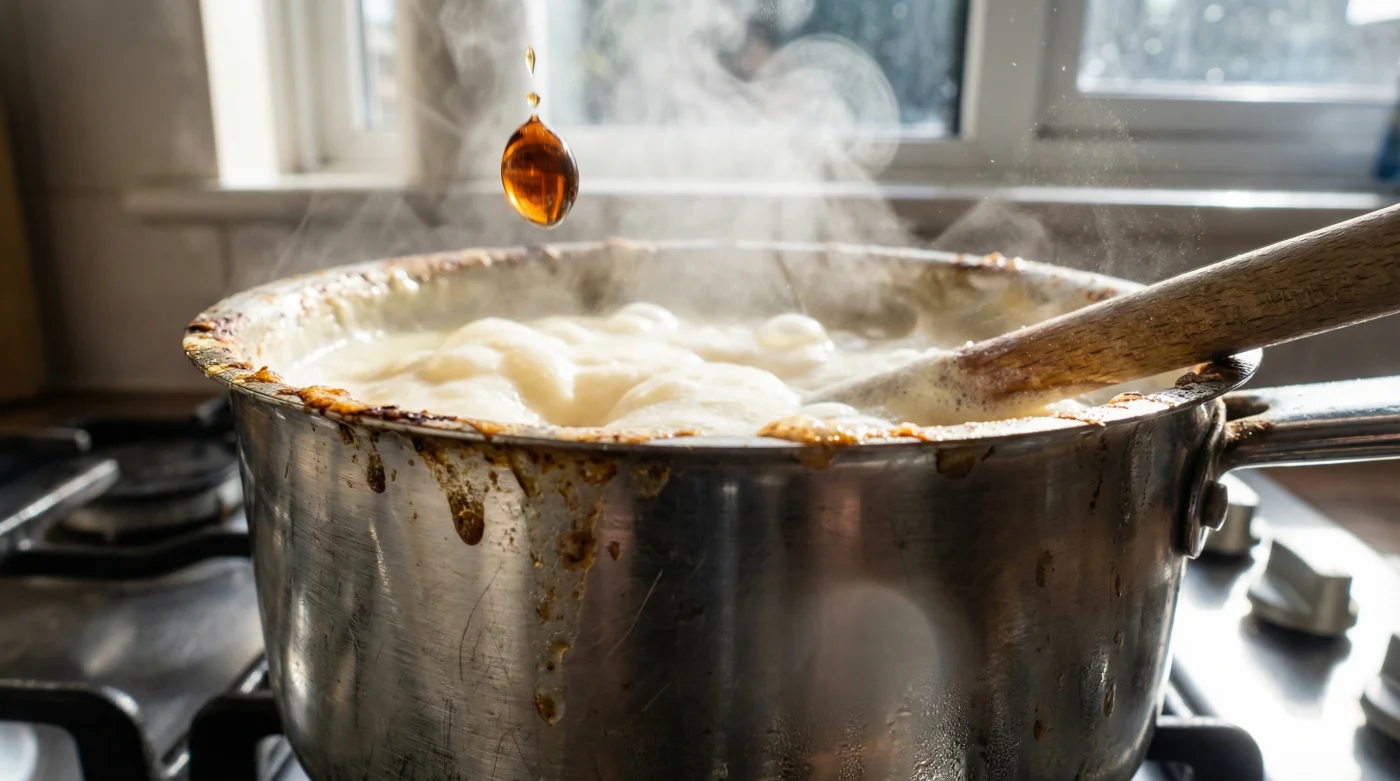
You stand over the hob, watching the pale yellow surface of your custard begin to gently blurp and bubble. You reach for the little brown bottle of pure vanilla extract, a kitchen staple that costs a small fortune these days. Tipping a generous teaspoon into the bubbling saucepan, a glorious, rich scent of warm vanilla bean immediately rises up and fills your entire kitchen. It smells like a professional bakery, and you feel incredibly accomplished. But that beautiful, comforting cloud of fragrance hitting your face is actually a culinary tragedy. You are smelling your flavour escaping.
The Evaporation Illusion
We often trust our noses over our common sense in the kitchen. When a pot smells wonderful, we naturally assume the food will taste wonderful. But true flavour is heavy; it anchors itself to fats, sugars, and proteins. When you pour an alcohol-based liquid into a sauce or pudding that is actively boiling, you are setting off a violent physical reaction. The vanilla extract hits the water, the alcohol flash-boils, and the delicate volatile oils are thrown straight into the air.
Instead of seasoning your dessert, you have essentially bought a very expensive, albeit temporary, air freshener. It is a common habit passed down through generations of home cooks who view extracts as simple liquid seasonings, like soy sauce or vinegar. Yet, understanding the fragility of these dark liquids is the difference between a flat, sugary dessert and one that holds a complex, lingering warmth.
| Target Audience | Specific Benefits of the Off-Heat Method |
|---|---|
| Budget-Conscious Cooks | Maximises the potency of expensive pure extracts, allowing you to use less per recipe while achieving a stronger taste. |
| Home Bakers | Prevents stovetop custards, curds, and caramels from losing their foundational base notes, resulting in a professional-tasting finish. |
| Sauce Enthusiasts | Keeps the subtle, floral notes of the vanilla bean intact, preventing the heat from turning the extract bitter or entirely invisible. |
I learned this the hard way from a seasoned pastry chef named Arthur, who ran a tiny, flour-dusted patisserie in York. I was helping him prep a massive batch of crème pâtissière, and as the heavy mixture reached a rolling boil, I uncapped a £15 bottle of Madagascan vanilla bean paste. He gently but firmly grabbed my wrist. ‘Put the lid back on,’ he instructed, pulling the heavy copper pan off the heat entirely. ‘You never add your soul while the fire is still raging. Let it breathe, then fold it in. Otherwise, you are just perfuming the extractor fan.’ It was a reprimand that permanently changed how I operate at the stove.
| Substance | Boiling Point | Mechanical Logic During Cooking |
|---|---|---|
| Water | 100°C | Creates the vigorous rolling bubbles that provide the aggressive heat needed to thicken starches and eggs. |
| Ethanol (Alcohol Base) | 78.37°C | Vaporises rapidly when it hits boiling water, carrying volatile scent and flavour compounds away as a gas. |
| Vanillin Compounds | Fragile at high heat | Degrades and breaks down when subjected to sustained, active boiling, leaving behind a hollow, overly sweet profile. |
The Off-Heat Ritual
Fixing this common error does not require new equipment, specialist ingredients, or complicated techniques. It simply requires you to change the timing of your wrist. When your stovetop recipe reaches its final, thickest boiling phase, turn the heat entirely off. Move the saucepan to a cool ring on the hob. Take a step back and watch the surface of the liquid. Wait for the active, spitting bubbles to cease completely, and allow the heavy, thick steam to dissipate.
Once the liquid sits quietly, resting at a gentle simmer rather than a furious boil, that is your window of opportunity. Pour your measured extract in and gently fold it through with a silicone spatula or a wooden spoon. You will notice an immediate, physical difference in the air around the stove. Instead of a massive, room-filling fragrance, the scent will stay trapped within the bounds of the saucepan.
- Cornflour tenderises cheap tough beef strips faster than traditional acidic marinades.
- Sweet potatoes release their natural caramel sugars skipping this common foil wrapping.
- Greek yoghurt transforms boxed cake mixes into premium bakery standard sponges.
- Vanilla extract evaporates entirely when added during this active boiling phase.
- Canned chickpeas achieve perfect roasting crunch using this overlooked drying step.
| Quality Checklist | What To Look For | What To Avoid |
|---|---|---|
| Visual Cues | A glassy, still surface with only light wisps of steam before adding the extract. | Spitting, rolling bubbles and heavy clouds of steam hitting the kitchen ceiling. |
| Scent Cues | A subtle, contained warmth that you only smell when leaning directly over the pan. | An immediate, overwhelming perfume that floods the entire room instantly. |
| Ingredient Check | Pure vanilla extract or bean paste with an alcohol base of at least 35 percent. | Synthetic ‘vanilla essence’, which is mostly water and artificial flavourings that taste flat. |
Quiet Patience in the Kitchen
We live in a constant rush, forever tempted to throw every single ingredient into the pot at once so we can quickly move on to the next task. But cooking is ultimately a physical conversation with your food. Waiting those extra two minutes for the aggressive heat to die down before adding your final flavourings is a rare moment of enforced calm. It demands that you pause, watch the texture of your food shift, and respect the ingredients you have paid good money for.
When you stop throwing delicate extracts into violent, boiling environments, your home desserts transform. They lose that flat, purely sweet profile that plagues amateur baking and gain a rounded, lingering warmth that feels truly professional. You finally stop wasting your finest ingredients on the air above your hob. It is a tiny, almost invisible adjustment to your evening routine, but the resulting depth of flavour speaks entirely for itself.
A roaring boil builds the necessary structure of your dish, but the gentle residual heat is what captures its true character.
Frequently Asked Questions
Does this rule apply to synthetic vanilla essence as well?
Yes. Although essence is synthetically produced and usually water-based, the artificial flavour compounds will still degrade and evaporate rapidly when exposed to a 100°C rolling boil.What if I am baking a sponge cake in the oven?
Cake batters naturally insulate the vanilla. Because the internal temperature of a baking cake rarely exceeds 98°C and the heavy batter traps the moisture inside the tin, the flavour remains safely intact.Does the alcohol in the pure extract need to be actively cooked off?
No, it does not. The amount of alcohol in a standard teaspoon of extract is incredibly small, and the residual heat of a resting saucepan is more than enough to mellow its bite without destroying the delicate vanilla notes.Can I add other flavourings like almond or peppermint extract at a boil?
The exact same physical rule applies. All alcohol-based extracts contain highly volatile, delicate compounds that will instantly vanish if subjected to boiling temperatures.Exactly how long should I wait after turning off the hob?
Wait until the visible bubbling has completely stopped and the heavy clouds of steam have settled into a light mist, which usually takes about ninety seconds depending on the thickness of your pan.