Picture the familiar sizzle as a punnet of sliced white button mushrooms hits a hot pan of melting butter. Within seconds, that optimistic crackle fades into a dull simmer. The pale caps surrender their structure, weeping grey liquid until they are swimming in a muddy puddle of their own juices. You stir them, hoping for a golden crust, but you are left nudging rubbery sponges around a lukewarm skillet. It is a midweek kitchen ritual that usually ends in mild disappointment.
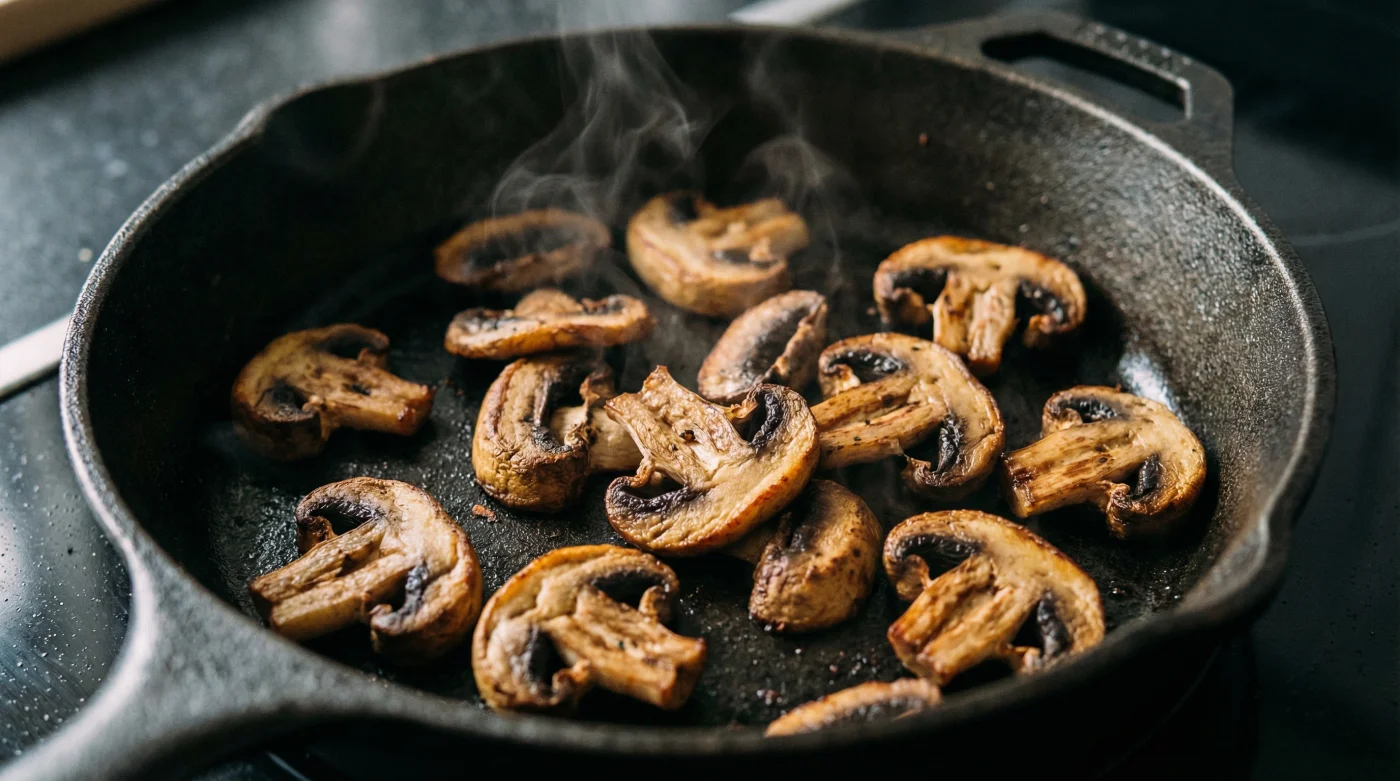
Now, imagine a completely empty frying pan, sitting heavy and dry over a medium-high flame. There is no splash of olive oil, no pat of foaming butter waiting to coat the base. When the bare mushrooms make contact with the dry metal, the sound is a distinct, rhythmic hiss. The air quickly fills with an intense, earthy aroma, smelling more like a roasting joint of beef than a delicate fungus. You wait, letting the heat do its work against a surface that is heavy and bone dry, watching the moisture vanish into the extraction fan above.
This is the professional reality hiding behind the humble 90p supermarket mushroom. We have been taught to treat them like thirsty sponges, dousing them in fat before they even feel the heat. Yet, forcing them to swallow cold oil before their internal water escapes is precisely what ruins their texture. By entirely omitting the fat at the start, you strip away the interference and allow the intense heat to perform a quiet kitchen miracle.
The Physics of the Dry Pan
Think of a fresh mushroom as a taut water balloon. It is practically bursting with moisture, confined within a fragile cellular structure. When you drop that balloon into hot fat, the fat seals the surface, but the water inside still needs to boil its way out. The result is a chaotic collision: the escaping steam drops the pan temperature drastically and suffocates the surrounding hot oil, effectively boiling the mushroom instead of searing it. You are left with a pale, soggy vegetable rather than a caramelised garnish.
The professional pivot requires a complete reversal of your instincts. You must view the cooking process not as a single act of frying, but as two distinct, uncompromising phases: evaporation, followed immediately by caramelisation. A dry pan acts like a wooden sauna, gently but firmly coaxing the moisture out of the flesh until the surface becomes tight, dense, and greedy. Once that water is gone, the mushroom’s structure changes entirely, concentrating its natural savoury profile into a heavy, dark bite that mimics slow-cooked meat. Only then does the butter make its entrance.
This revelation is not born from abstract culinary theory, but from the demands of high-volume services. Marcus Thorne, a 42-year-old sous chef working the line at a bustling grill house in Cornwall, swears by this aggressive starvation method. After years of watching junior cooks turn beautiful local fungi into tepid mush during the breakfast rush, he instituted a strict dry-first policy on his station. He noticed that throwing naked mushrooms onto a searing flat-top forced the water out with the brutal efficiency of pass services, leaving behind a firm, mahogany shell that absorbed garlic butter flawlessly when tossed at the final second.
Adjustment Layers for Your Kitchen
Not every meal requires the exact same approach, though the dry-pan rule remains your absolute foundation. Depending on what you are trying to achieve on the plate, you can adjust the timing, the cut, and the final finishing fats to suit the dish.
For the Breakfast Traditionalist: If you are building a proper weekend fry-up, leave the button mushrooms entirely whole. Place them cap-down in the dry pan and leave them completely alone. You want a fierce, unbroken contact with the iron to build a thick, dark crust on the smooth dome. Patience is your only tool here. Let them whistle and spit until the base is deeply scarred before flipping them to finish with a tiny knob of salted butter and a scattering of fresh parsley.
- Boiled eggs peel effortlessly experiencing immediate thermal shock ice baths.
- Parmesan rinds transform thin vegetable soups into rich complex broths.
- Melted butter mimics expensive steakhouse plating skipping complex reduction sauces.
- Mayonnaise perfectly insulates baking chicken breasts replacing standard olive oil.
- Baking powder produces incredibly crunchy roast potatoes skipping parboiling completely.
For the Midweek Toast: Sometimes you just want a fast, comforting lunch. Roughly tear the mushrooms instead of slicing them; the jagged edges create more surface area for the dry heat to catch. Once they are deeply browned and have shrunk to half their original size, toss them in a teaspoon of olive oil and pile them over thick sourdough smeared with cold ricotta. The temperature difference creates an aggressive savoury contrast that feels far more expensive than it actually is.
Executing the Two-Stage Sear
Mastering this technique is an exercise in restraint. You are deliberately overriding years of conditioning that tells you a dry pan is a ruined pan. Stand by the stove and listen to the moisture escaping; the sound will physically change from a wet, hissing sigh to a sharp, aggressive crackle as the water disappears from the metal.
Keep your movements deliberate and minimal. Do not constantly toss the pan or poke at the caps with a spatula. Let the heat work its way through the flesh undisturbed. When the pan is entirely dry and the mushrooms have darkened considerably, they are finally ready for the fat. This process is about overriding years of kitchen conditioning to achieve a restaurant-quality result at home.
- Start with a heavy-based frying pan, ideally cast iron or carbon steel, placed over a medium-high flame for two solid minutes.
- Add the mushrooms bare. Strictly no salt, no pepper, and absolutely no oil.
- Let them sit untouched for three to four minutes until they actively release their water into the pan.
- Watch the liquid evaporate completely; the metal surface must be completely bone-dry before you proceed.
- Only now, drop in a small knob of cold butter and a generous pinch of flaky sea salt, tossing vigorously for thirty seconds to coat them evenly.
A Quiet Kitchen Revelation
There is a profound satisfaction in fixing a lifelong culinary frustration with fewer ingredients rather than more. We are so often sold the idea that better food requires expensive artisan oils, complex countertop gadgets, or elaborate overnight marinades. Yet, the secret to the perfect white button mushroom is simply getting out of its way. By respecting the water naturally held inside the vegetable, you allow it to transform on its own terms.
Every time you slide those deeply browned, intensely savoury mushrooms onto a waiting plate, it feels like a small, private victory. You have removed the noise and found the true, meaty flavour hiding underneath a watery exterior. It changes how you look at the rest of your supermarket ingredients, prompting a quiet curiosity about what else in your fridge might benefit from a little less intervention, a little more heat, and a lot more patience.
“The greatest mistake home cooks make with fungi is treating them like meat from the very first second; you must let them exhale before you ask them to fry.”
| Key Point | Detail | Added Value for the Reader |
|---|---|---|
| The Fat Timing | Fat added only after total evaporation | Prevents the soggy texture and allows a hard, professional sear. |
| The Sound Cue | Waiting for the wet hiss to become a sharp crackle | Removes the guesswork from knowing exactly when to add the butter. |
| The Flavour Profile | Intense, meaty, and deeply concentrated | Turns a cheap, everyday supermarket staple into a premium ingredient. |
Frequently Asked Questions
Will the dry pan damage my cookware?
As long as you avoid leaving an entirely empty pan on maximum heat for extended periods, a medium-high dry sear is perfectly safe for cast iron, carbon steel, and heavy stainless steel pans.Do I need to wash the mushrooms first?
Never soak them in a bowl of water. Simply wipe the caps with a damp paper towel to remove any dark compost residue before slicing or tearing them.Can I use this dry method for larger portobello mushrooms?
Absolutely. The exact same physics apply, though larger, thicker caps will naturally take slightly longer to heat through and release their internal moisture.What if they start sticking to the bottom of the pan?
Resist the urge to scrape them off immediately. As the water releases and the surface caramelises, they will naturally unstick themselves from the hot metal.When should I add the salt and pepper?
Wait until the very end when you add the butter. Salting too early draws out the moisture inconsistently, ruins the sear, and leaves a harsh, metallic taste.