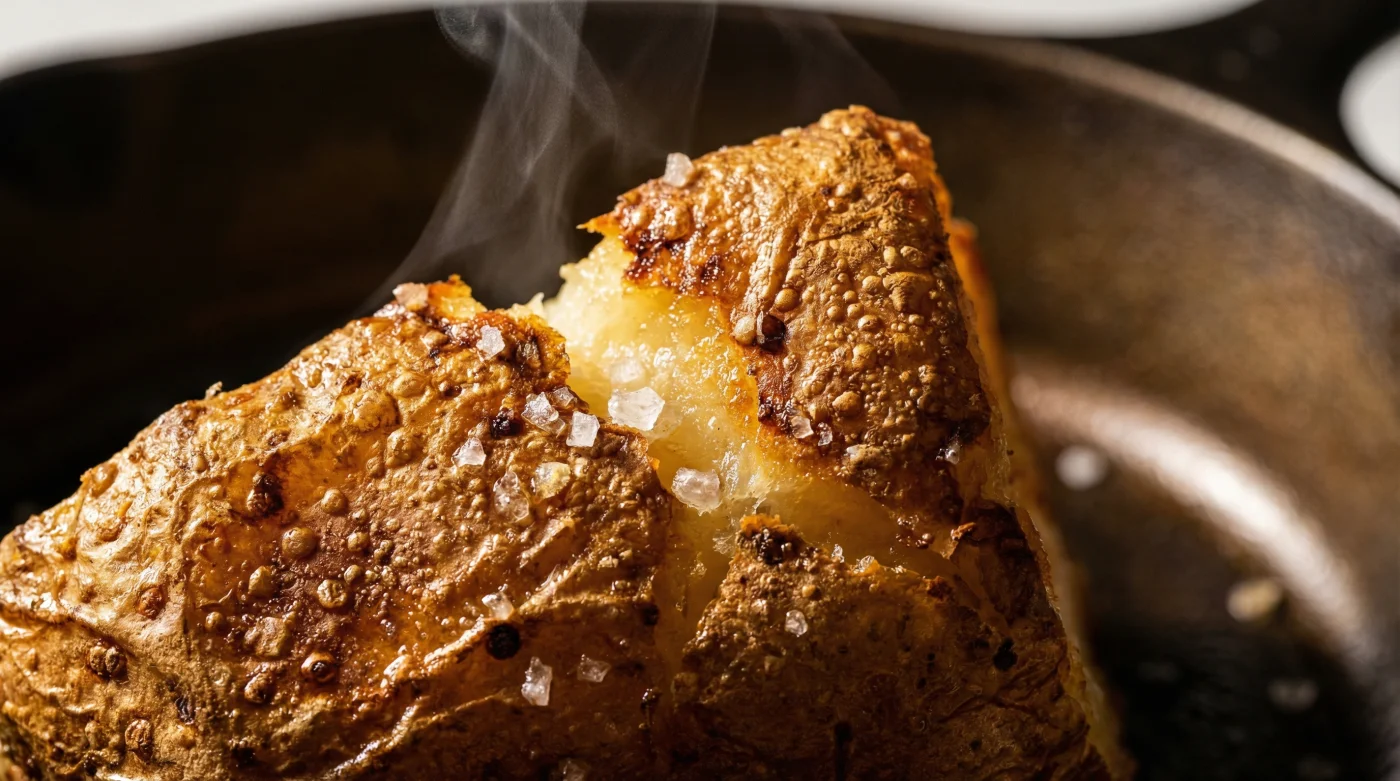
You are standing at the kitchen counter, watching the rain blur the glass of the back window. The oven is preheating, ticking quietly in the background as the Sunday roast ritual begins. Beside the chopping board sits a mountain of Maris Pipers, covered in damp earth, waiting to be peeled. The usual routine dictates a massive stockpot of heavily salted water, roaring on the hob, ready to accept these chunks of starch.
It is a tedious, steamy affair. You wait twenty minutes for the boil, another ten for the softening, and then comes the aggressive shaking in a colander until the edges turn to mush. This violent mechanical breakdown is supposed to guarantee that glass-like exterior we all crave alongside our Yorkshire puddings. But it leaves you with an extra pan to scrub, a kitchen dripping with condensation, and starchy water threatening to burn onto the hob rings.
What if the boiling water is entirely unnecessary? Boiling a potato before roasting it is like breathing through a pillow; it stifles the natural sugars and waterlogs the delicate starch. The culinary consensus has long held that parboiling is the non-negotiable tax you pay for a perfect crunch. Yet, stripping away the boiling water reveals a faster, sharper method, relying on basic chemistry rather than sheer physical force.
The Acid-Base Alchemy
For years, the internet has pushed the baking soda roasting trick. The theory suggests an alkaline water bath breaks down the potato exterior faster, creating a starchy paste that crisps in the hot fat. But baking soda is incomplete. It is a base waiting for an acid, relying solely on the heat and the potato’s natural moisture to do half a job. Overuse it, and you are left with a bitter, metallic tang on your tongue.
Baking powder, however, is a fully contained system. It holds both the alkaline bicarbonate and the acidic cream of tartar, waiting for a trigger. When you toss raw potatoes in oil and dust them with this fine white powder, the moisture from the raw potato acts as the fuse. As they hit the roasting tin, the powder reacts, forming microscopic carbon dioxide bubbles across the surface of the potato. When a waterlogged potato hits hot fat, the oven spends the first twenty minutes just trying to evaporate the moisture you forced into it. The baking powder method respects the ingredient’s natural state.
Think of it as a thousand tiny chisels working away in the heat. They rough up the skin, creating millions of micro-blisters without the need for a soggy boil. The acid neutralises the base as it works, leaving absolutely no chemical aftertaste, only a structurally flawless, shattering crust.
Consider Thomas Aris, a 42-year-old head chef at a frantic rural gastropub in Somerset. Three years ago, a catastrophic failure of the kitchen’s main water boiler left him staring at sixty kilos of raw King Edwards on a Sunday morning. Panicking, he tossed the raw wedges in hot beef dripping, sea salt, and a handful of baking powder he had grabbed from the pastry section, hoping to mimic the alkaline breakdown. The result was a revelation: the potatoes emerged with a glassy crust, entirely bypassing the crumbly mess of over-boiled spuds. He never boiled a potato again.
Refining the Technique for Every Kitchen
Different fats interact with this reaction in distinct ways. If you render down beef fat or goose fat, you are already chasing maximum flavour. The powder works beautifully here, adhering to the thick fat and foaming slightly in the oven. The result tastes deeply savoury, with a crust so robust it almost rings when tapped with a butter knife. The cream should tremble slightly in your mind as you imagine the rich fat merging with the blistering starch.
Plant-based fats, like olive oil or rapeseed oil, are thinner and tend to run off the potato. The baking powder acts as a mild binder, catching the oil and holding it against the starch. You get a delicate, lacy crispness rather than a thick shell, perfect for lighter weeknight suppers when you want the texture without the heavy animal fats.
- Double cream split disasters reverse instantly incorporating two cold whole milk tablespoons.
- Instant coffee elevates cheap supermarket chocolate cakes adding this microscopic dry pinch.
- Garlic cloves peel instantly undergoing this aggressive ten second glass jar shaking.
- Tomato puree loses metallic bitterness entirely enduring this brief intense pan frying.
- Taco Tuesday promotions face sudden nationwide cancellations amid severe global avocado shortages.
The Raw Roasting Ritual
Transitioning to this method requires trusting the process and letting go of old habits. You are swapping physical labour for chemical precision. The application must be deliberate, ensuring every facet of the potato is primed for the oven’s blistering heat.
Keep the application minimalist and focused. Do not rush the coating. The reaction happens entirely out of sight inside the oven, but the preparation on the counter sets the stage.
- Peel and chop your potatoes into large, uniform chunks to ensure even cooking and maximum surface area.
- Dry them thoroughly with a clean tea towel; excess surface water dilutes the reaction and causes steaming.
- Toss the raw chunks in a large bowl with two tablespoons of your chosen fat until slick and shiny.
- Sprinkle exactly one level teaspoon of baking powder and a generous pinch of flaky sea salt per kilogram of potatoes, tossing until completely invisible.
- Roast on a preheated tray with plenty of space between each piece to allow the moisture to escape.
Tactical Toolkit:
- Potato Choice: Maris Piper or King Edward for their fluffy interiors.
- Temperature: 200°C (Fan) / 220°C (Conventional) / Gas Mark 7.
- Time: 45 to 55 minutes, turning once at the 30-minute mark.
- Ratio: 1 level teaspoon of baking powder per 1 kilogram of raw potatoes.
Reclaiming Your Kitchen Peace
Simplifying a Sunday roast is rarely about cutting corners; it is about finding clarity in a chaotic process. When you remove a massive, boiling pot of water from the equation, the kitchen feels instantly calmer.
With no heavy pots to drain, you gain precious hob space, reducing the frantic juggling act that usually accompanies the final thirty minutes of cooking the gravy and the vegetables.
Those microscopic blisters on the potato skin represent more than just culinary chemistry. They are a quiet victory over unnecessary tradition. You get to present a tray of audibly crisp, golden potatoes, knowing you saved time, saved washing up, and created something vastly superior by simply understanding how your ingredients interact.
“A perfectly roasted potato should never require a marathon of scrubbing pans; let the chemistry do the heavy lifting while you pour the wine.”
| Key Point | Detail | Added Value for the Reader |
|---|---|---|
| The Acid-Base Reaction | Baking powder contains both elements needed to create carbon dioxide bubbles on the potato skin. | Achieves microscopic blisters for maximum crunch without leaving a bitter, metallic aftertaste. |
| Skipping the Boil | Applying the powder directly to raw, dry potatoes slicked in oil. | Saves twenty minutes of prep time, reduces condensation, and eliminates a heavy pan to wash. |
| Moisture Control | Raw potatoes retain less surface water than boiled ones. | Prevents the oven temperature from dropping, ensuring a faster, glass-like crust forms immediately. |
Is baking powder exactly the same as baking soda?
No. Baking soda is purely alkaline and requires an external acid. Baking powder contains both the base and the acid, meaning it reacts perfectly on its own when it meets the potato’s moisture.Will I taste the baking powder on the finished potatoes?
Not at all. Because the acid and base neutralise each other during the roasting process, it leaves zero chemical residue, unlike the metallic tang sometimes left by baking soda.Do I need to heat the oil in the tray first?
While preheating the tray helps, tossing the cold potatoes in oil and baking powder in a bowl before tipping them onto the tray ensures a much more even, controlled coating.Can I prepare these ahead of time?
It is best to apply the baking powder right before they go into the oven. If left sitting, the reaction will happen in the bowl rather than in the hot fat, reducing the final crunch.Why did my potatoes not blister properly?
Ensure your potatoes were thoroughly dried with a tea towel before adding the oil and powder. Too much surface water dilutes the mixture, leading to steaming rather than roasting.