Picture a rainy Tuesday evening. The kitchen is cold, but the oven is radiating a comforting heat against your back. You pull out a sweet potato, tightly swaddled in aluminium foil, anticipating a glorious, sticky centre. Instead, as you peel back the silver casing, a cloud of insipid steam rises and burns your fingers. What sits on your plate isn’t roasted; it is boiled. It is pale, weeping water, and faintly mushy. It is a wasted opportunity.
For years, we have treated root vegetables like delicate parcels that need protecting from the oven’s harsh environment. We wrap them up, chuck them on the middle shelf, and hope for the best. But this common kitchen habit is actively destroying the very thing that makes a sweet potato magnificent: its natural caramel.
The Greenhouse Confinement
Why do we stubbornly wrap our root vegetables? It is an inherited habit, passed down through generations who believed the foil sped up the cooking process. But wrapping a sweet potato in aluminium foil is like forcing it to breathe through a damp flannel. You are essentially building a tiny, airtight sauna.
Sweet potatoes are densely packed with water and complex carbohydrates. When you trap them in foil, the heat forces the water out of the flesh, but the moisture has nowhere to go. It pools against the skin. Instead of roasting, the potato boils in its own juices. The temperature inside that silver jacket never rises high enough to trigger the Maillard reaction—the chemical process where sugars and amino acids crash together to create those deep, toasted, caramel notes.
| The Cook | The Common Frustration | The ‘Bare Rack’ Benefit |
|---|---|---|
| The Rushed Weeknight Cook | Fumbling with tearing foil and soggy results. | Zero prep waste; you simply wash, prick, and roast. |
| The Texture Enthusiast | Rubbery skins that peel away in sad, damp strips. | A crisp, blistered skin that shatters, contrasting with a fondant core. |
| The Flavour Purist | Bland flesh that requires heavy butter to taste good. | Intensely concentrated natural sugars that taste rich and toasted. |
I learned this the hard way during a freezing shift prepping vegetables in a pub kitchen down in Truro. The head chef, a man who treated humble root veg with the reverence usually reserved for prime cuts of beef, snatched a roll of foil from my hands. ‘You are drowning them,’ he muttered. He showed me his method: washing them, pricking the skin, and sitting them completely bare on a wire rack elevated above a roasting tin.
| Cooking Metric | Foil-Wrapped Environment | Bare Wire Rack Environment |
|---|---|---|
| Internal Moisture | Trapped; continuously steams the flesh. | Evaporates naturally; concentrates the internal flavour. |
| Surface Temperature | Caps at 100°C (boiling point of trapped water). | Reaches 200°C+, triggering immediate caramelisation. |
| Sugar Conversion | Sugars dilute into a watery syrup. | Sugars seep to the surface, crystallise, and caramelise. |
The Wire Rack Ritual
To achieve this fondant-like perfection, you need to change your physical approach to the ingredient. First, select medium-sized potatoes. Scrub them under cold running water to remove the grit, then dry them thoroughly with a clean tea towel. Moisture remaining on the skin is the enemy of a good crisp.
Next, take a sturdy fork and puncture the skin repeatedly. You are creating little chimneys all over the surface. These tiny holes allow the internal steam to escape steadily throughout the roasting process, preventing the potato from bursting.
- Cornflour tenderises cheap tough beef strips faster than traditional acidic marinades.
- Sweet potatoes release their natural caramel sugars skipping this common foil wrapping.
- Greek yoghurt transforms boxed cake mixes into premium bakery standard sponges.
- Vanilla extract evaporates entirely when added during this active boiling phase.
- Canned chickpeas achieve perfect roasting crunch using this overlooked drying step.
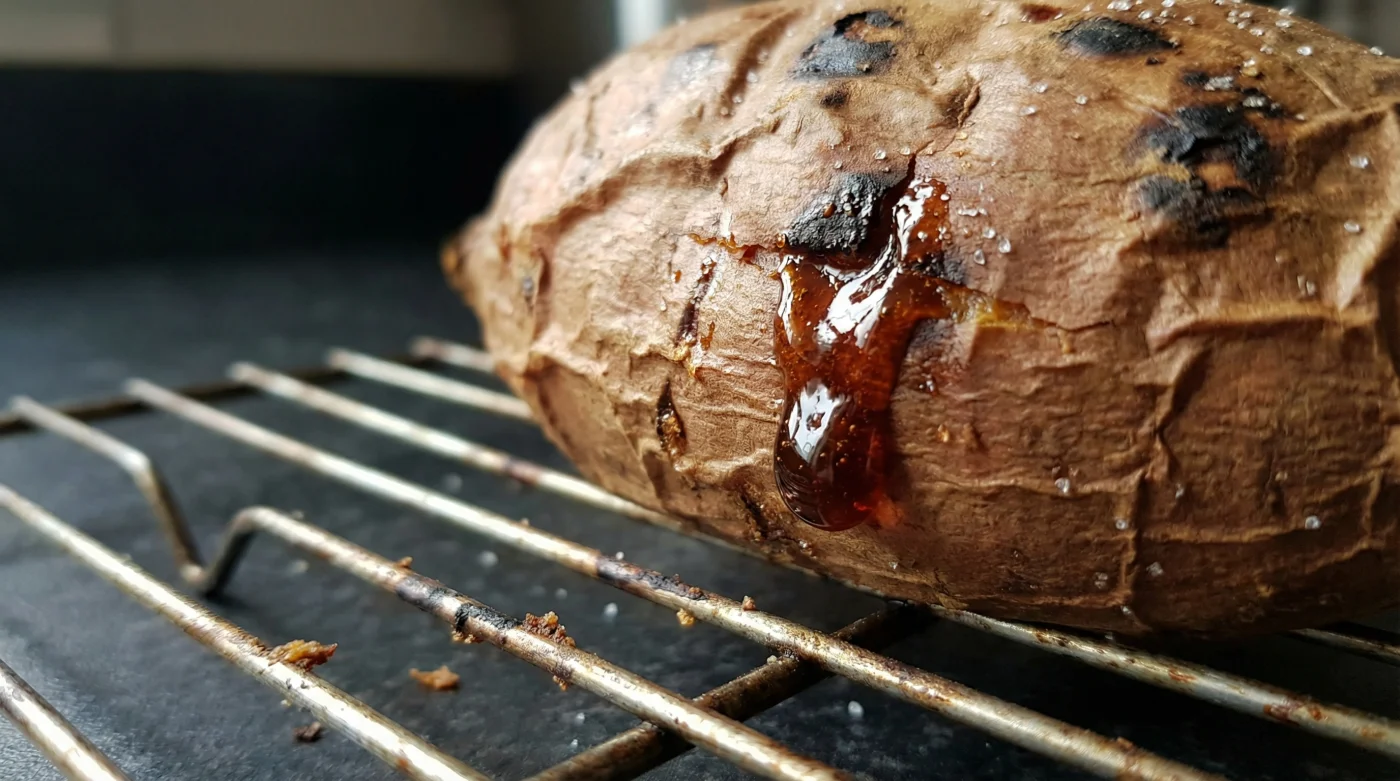
Roast them at 200°C Fan for at least an hour. You will know they are ready when they feel utterly exhausted. They should slump slightly under the gentle pressure of your tongs, and you should see dark, sticky beads of sugar bubbling out of the fork holes.
| Component | What to Look For | What to Avoid |
|---|---|---|
| The Skin | Papery, blistered, and slightly detached from the flesh beneath. | Leathery, damp, or clinging tightly to the vegetable. |
| The Flesh | Deep orange, sticky, and resembling the texture of fudge. | Pale, watery, and fibrous or stringy. |
| The Drip Tray | Dark, sticky spots where concentrated sugars have fallen and caught. | Pools of cloudy water indicating a steamed potato. |
A Simpler Reward
This slight adjustment—abandoning the foil and elevating the potato—does more than just improve your dinner. It strips away an unnecessary complication from your evening. You save a few pennies on aluminium, certainly, but you also allow the ingredient to behave exactly as it should under heat.
When you cut open a bare-roasted sweet potato, you do not need to drown it in butter or sour cream to mask a watery texture. The flesh is dense, sweet, and profoundly comforting. It feels like a small culinary victory, won simply by doing less.
A sweet potato carries enough water to boil itself from the inside; your only job is to let the steam out and let the dry heat do the rest.
Frequently Asked Questions
Does cooking them without foil take longer?
Surprisingly, no. Allowing the water to evaporate actually speeds up the rise of the core temperature, as the oven isn’t wasting energy boiling trapped water.Do I need to parboil them first?
Never. Parboiling introduces more water into the flesh, which is exactly what we are trying to eliminate with the wire rack method.Will the sugar drips ruin my oven?
That is precisely why you place a foil-lined or baking-parchment-lined tray directly beneath the wire rack to catch the sticky drops.Can I eat the skin when cooked this way?
Absolutely. Because it hasn’t been steamed into submission, the skin becomes papery, salty, and arguably the best part of the dish.What temperature works best for the bare roast?
200°C Fan (or gas mark 7) is the sweet spot. It is hot enough to blister the skin but gentle enough to allow a full hour of roasting without burning the exterior.