You stand at the hob on a damp Tuesday evening, peering into a bubbling pan. You have followed the recipe to the letter. You squeezed the thick, crimson paste from the aluminium tube directly into the crushed tomatoes and beef stock, stirring dutifully until it dissolved into the liquid. The kitchen smells vaguely of herbs and simmering meat. Yet, when you finally take a spoon and taste the sauce, something catches at the back of your throat. A sharp, flat tang that tastes undeniably like cold metal, flattening out the richness you worked so hard to build.
This is the quiet frustration of home cooking. We treat tomato puree as a mere liquid seasoning, a harmless shortcut to instant depth and colour. We expect it to vanish effortlessly into our stews, gravies, and ragùs, lending its vibrant red hue and concentrated sweetness without demanding any further attention. But skipping the physical preparation of this ingredient leaves a lingering, metallic bitterness that subtly undermines the entire dish, leaving it tasting processed rather than homemade.
In professional kitchens, treating puree this way is practically a culinary offence. Working chefs know that this dense, concentrated paste is not a finished, ready-to-eat product. It is raw, aggressively reduced fruit that has been sitting in its own highly acidic environment for months on end. Stirring it straight into water, wine, or stock simply dilutes that harshness; it does nothing to chemically transform the paste.
The remedy requires no new gadgets, takes barely three minutes, and costs absolutely nothing. By simply introducing the raw puree to hot oil or butter before any liquids enter the pan, you trigger a rapid chemical reaction that sweetens and rounds the flavour, turning a harsh, tinny pantry staple into a rich, caramelised foundation for your meals.
The Anatomy of a Flavour Pivot
Think of tomato puree not as a liquid, but as an intensely packed raw vegetable. If you were making a restorative winter soup, you would never boil raw white onions in cold water and expect them to taste sweet, rich, and mellow. You sweat them down. You let the heat of the pan coax out their natural sugars until they turn translucent. The concentrated puree requires the exact same courtesy to shed its defensive bite.
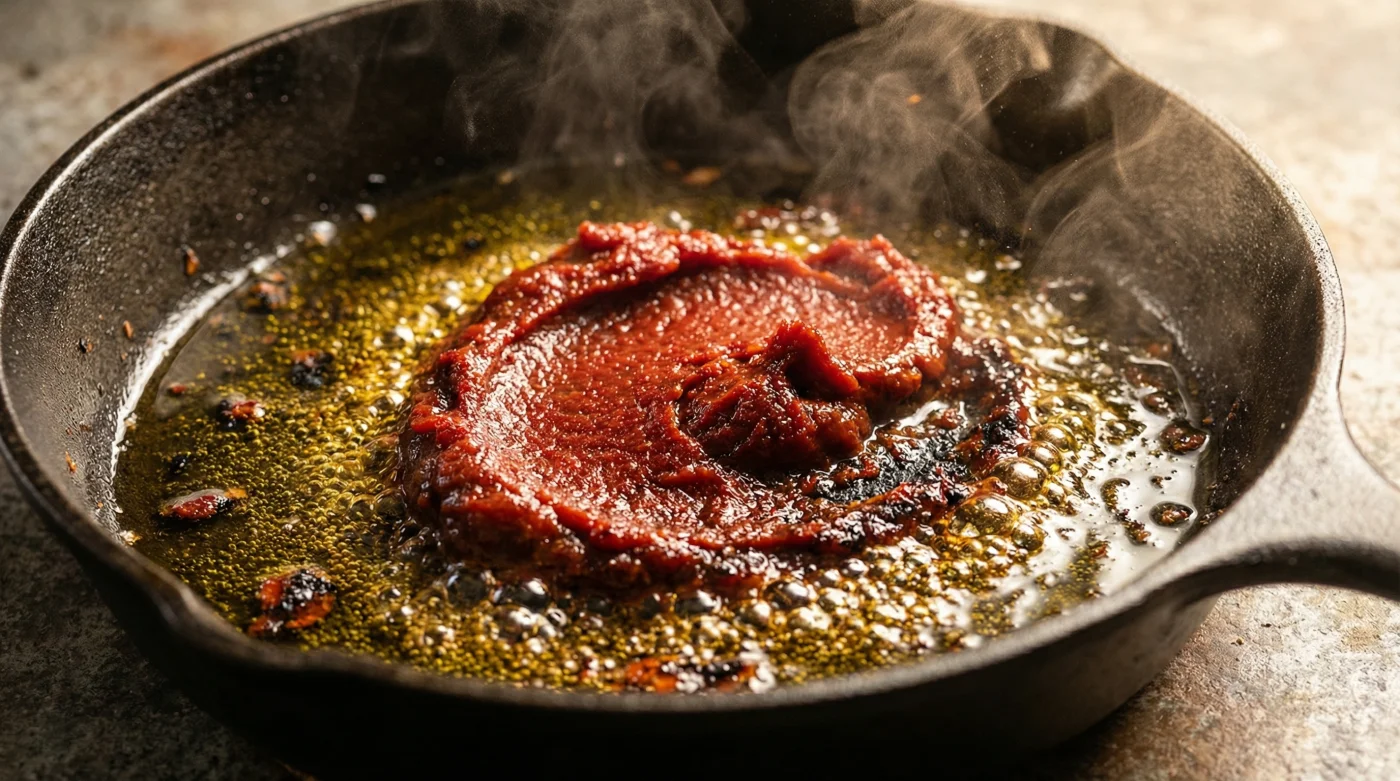
This technique is formally known in classic French gastronomy as ‘pincage’, a term that translates to pinching or catching the natural sugars. When you drop that dense spoonful of paste into a hot puddle of oil, the sugars violently react, bubbling and sputtering against the metal. The excess water evaporates almost instantly, leaving the concentrated tomato solids to actually fry. In a remarkably short window, the raw, tinny acidity burns off entirely, replaced by a deep, roasted sweetness that grounds your sauce.
I learned this the hard way from Matteo, a 48-year-old chef running a tiny, relentlessly busy pasta kitchen in central London. I was helping prep a massive batch of beef shin ragù, aggressively squishing half a catering-sized tube of puree into a massive pot of simmering red wine and veal stock. Matteo physically reached over and pulled my hand away from the pot, shaking his head.
He took a fresh, heavy-bottomed pan, heated a generous splash of olive oil, and spooned the raw puree straight into the sizzling fat. ‘You have to wake it up,’ he explained, aggressively scraping the wooden spoon across the base of the pan as the bright, artificial-looking red paste deepened into a dark, rusty brick colour. He called it cooking the tin out, a non-negotiable step that permanently separates amateur acidity from restaurant-quality richness.
Tailoring the Technique to Your Table
This single two-ingredient modification—just tomato puree and hot fat—adapts seamlessly to whatever you happen to be cooking tonight. The underlying chemical principle remains exactly the same, but the practical application shifts slightly depending on the foundation of your meal.
When building a Bolognese, a shepherd’s pie base, or a rich beef stew, your puree should enter the pan immediately after your soffritto (the finely chopped onions, carrots, and celery) has softened, but strictly before any meat or wine is added. Push the softened vegetables to the outer edges, let the paste fry in the centre, and watch it gradually coat the vegetables in a rich, umami-heavy, brick-red glaze.
- Pancake batter achieves extreme fluffiness resting inside this unexpected warm environment.
- Balsamic vinegar transforms cheap beef cuts skipping traditional long braising times.
- Whipping cream produces flawless homemade butter bypassing complicated traditional churning equipment entirely.
- Brown sugar stays completely soft permanently storing alongside wet terracotta clay discs.
- Canned tuna yields premium Mediterranean pasta sauces replacing expensive fresh fish entirely.
When you have nothing in the cupboards but a single clove of garlic, a glug of oil, and a battered tube of puree, this technique becomes the entire dish. Frying the paste in a generous pool of decent olive oil until it splits and darkens creates an instant, rich emulsion. Toss in a ladle of starchy, heavily salted pasta water, and you miraculously have a deeply savoury, glossy sauce born from an entirely empty fridge.
Executing the Perfect Catch
Getting this right requires stepping away from your phone and using your senses. You are looking for a highly specific transition in colour, smell, and texture. It is a deeply mindful process that demands your full attention for just a few short minutes, as the line between beautifully caramelised and bitterly burnt is remarkably thin.
Here is exactly how to execute this crucial professional pivot without destroying the delicate natural sugars hidden inside the paste:
- Clear the pan: Ensure you have a wide space in the pan with direct, uninterrupted contact to the heat and enough oil or butter to fry the paste, rather than just roasting it dry.
- Drop and spread: Add your puree and immediately use a wooden spoon or a stiff spatula to smear it flat against the hot metal. You want to create maximum surface area for the heat to penetrate.
- Listen for the sizzle: The paste should aggressively spit and hiss as the residual moisture trapped inside the tube quickly evaporates.
- Watch the shift: Keep a close eye on the hue. The colour will drop rapidly from a vibrant, artificial-looking crimson to a deep, muted, rusty orange.
- Smell the sweetness: The sharp, metallic, acidic scent will suddenly soften, giving way to an intoxicating aroma highly reminiscent of sun-dried tomatoes baking in the heat.
Once you hit this specific visual stage, you are entirely safe to deglaze the hot pan with a splash of wine, chicken stock, or even plain water. The tinny ghost has been thoroughly exorcised, and the deep flavour profile is securely locked in.
It is remarkably easy to view home cooking as a series of tedious chores, a rigid list of ingredients to be blindly dumped into a pot until an acceptable meal eventually emerges. We constantly search for complex, expensive solutions to our culinary disappointments, assuming we just need fancier components or high-end equipment to make our food taste better.
Yet, the truth usually lies in exactly how we treat the mundane things we already have sitting in the cupboard. Taking just three extra minutes to stand quietly by the stove, simply watching a harsh, metallic paste transform into a sweet, rounded foundation, subtly shifts your entire relationship with the hob. It moves you away from frantic assembly and closer to genuine culinary understanding.
You begin to realise that truly great food is not strictly about what you buy at the shops, but how closely you are willing to pay attention. By respecting the incredibly humble, dirt-cheap tube of tomato puree, that quiet, focused care translates directly into the warmth, depth, and comfort of the food you serve to the people you love.
To find the soul of a tomato, you must first let the heat burn away its defensive acidity.
| Key Point | Detail | Added Value for the Reader |
|---|---|---|
| The Error | Stirring raw puree directly into cold liquids or stock. | Prevents the sharp, metallic tang that ruins homemade sauces. |
| The Pivot | Frying the puree in hot oil for 2-4 minutes first. | Caramelises natural sugars, creating restaurant-quality depth instantly. |
| The Visual Cue | Colour shifts from bright red to a rusty, brick orange. | Gives you total confidence to know exactly when to add your liquids. |
Frequently Asked Questions
Does this work for tinned tomatoes too?
While tinned tomatoes benefit from reduction, this specific intense frying technique applies strictly to concentrated puree, which has a much lower water content and incredibly high sugar density.Can I use butter instead of olive oil?
Absolutely. Butter adds a beautiful richness, though you must watch the heat carefully to ensure the milk solids do not burn before the puree caramelises.What if my puree turns dark brown or black?
You have unfortunately pushed it too far and burnt the sugars. It is best to wipe the pan clean and start fresh, as burnt puree will inject a harsh, ashy flavour into your dish.Is this necessary if I am slow-cooking a dish for hours?
Yes. Slow simmering dilutes the raw flavour over time but never reaches the high temperatures required to trigger the Maillard reaction that genuinely caramelises the sugars.Can I fry the puree if I am not using onions or garlic?
Yes, and you absolutely should. Frying puree alone in oil creates a magnificent base emulsion for rapid, minimalist midweek pasta sauces.