The kitchen falls quiet just before you serve. The plates sit warm on the worktop, holding perfectly rested cuts of meat, freshly torn mozzarella, or perhaps a delicately charred peach. The air carries the faint, sharp sweetness of reduced dark vinegar, mingling with the savoury notes of roasted garlic and thyme. You reach for the dark, glossy bottle of balsamic reduction, ready to finish the dish and bring everything together.
This is where panic usually sets in for the home cook. The familiar, chaotic zig-zag motion inevitably takes over. You squeeze the plastic bottle, and thick, muddy streaks of dark syrup land heavily across your carefully prepared food. The aesthetic is instantly lost, buried under a confusing web of dark liquid that masks the very ingredients you spent hours carefully sourcing, trimming, and cooking to perfection.
We are conditioned to treat finishing sauces as a final, generous blanket, much like pouring custard over a pudding. The instinct is to pour directly over the central components, assuming the sweet and sour flavour profile must physically touch everything simultaneously to be effective. But this outdated approach creates a visually heavy, amateurish result that turns a crisp, bright plate into a sticky, unappealing mess.
Professional plating relies entirely on restraint and structural architecture. The intense viscosity of a proper reduction is not meant to flood the palate or drown the porcelain. It is a structural element, designed to guide the eye across the meal and offer a highly concentrated burst of acidity exactly when you choose to find it with your fork, rather than forcing it into every single bite.
Rethinking the Dark Syrup
Consider the physical texture of a high-quality balsamic glaze. It is dense, almost like liquid velvet, holding its shape against gravity far better than standard vinegars or oils. This distinct physical trait is often viewed as a frustration when trying to achieve a delicate, even drizzle, but it is actually your greatest culinary asset.
By contradicting the amateur habit of pouring directly over central ingredients, you discover a sophisticated visual language. The plate becomes a physical boundary, and the thick glaze transforms from a messy condiment into a deliberate, artistic brushstroke. You begin to dictate the negative space, controlling how the diner interacts with the food.
The logic here shifts fundamentally from covering the food to anchoring the dish. Instead of letting the syrup dictate the entire look and feel of the meal, you use its heavy, glossy nature to build a solid foundation. A solitary, dark shape resting on pristine white porcelain provides a striking visual contrast that immediately signals professional care and intention.
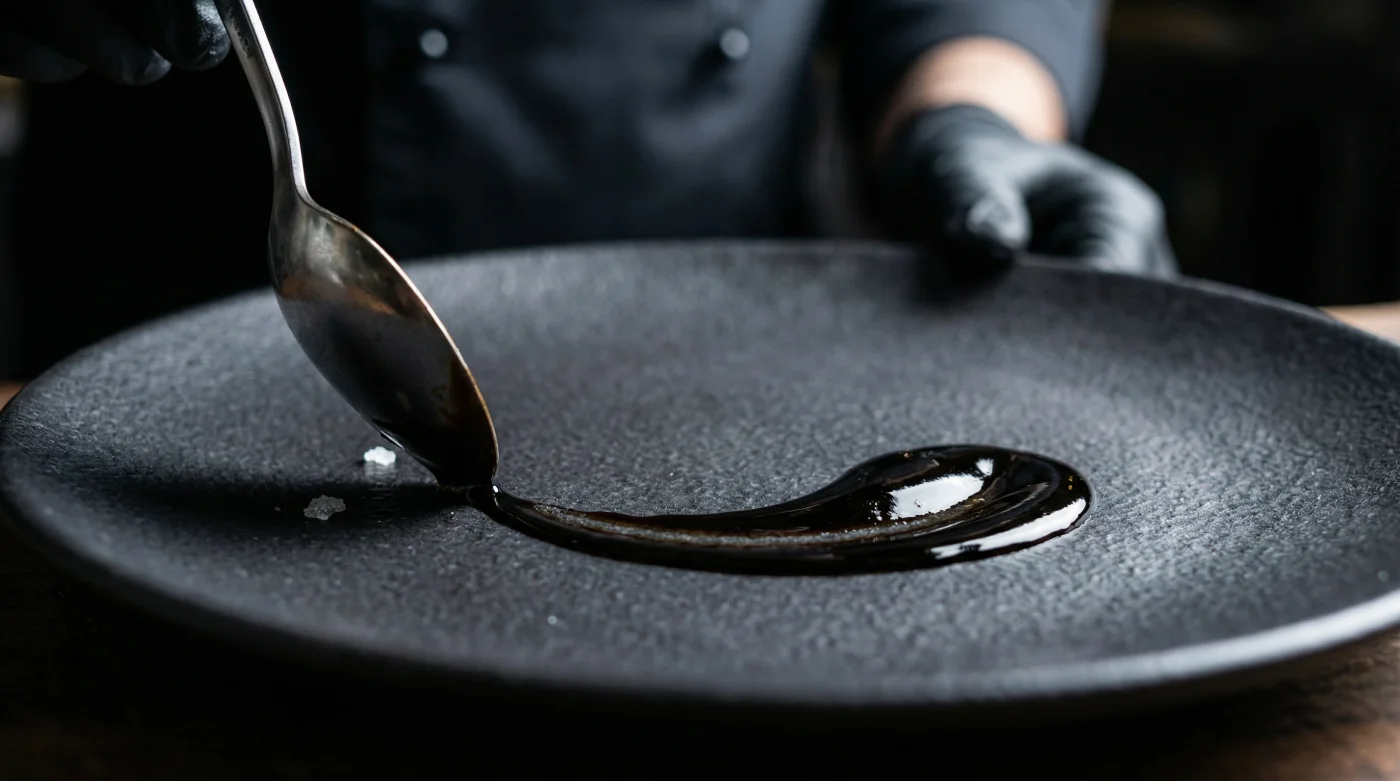
Meet Thomas, a forty-two-year-old private chef based in Cornwall. For years, he watched well-meaning dinner party hosts ruin beautiful, hand-dived local scallops by vigorously squirting thick reductions all over the delicate seafood. He began teaching his clients a simple rule: never let the dark sauce touch the hero ingredient. By placing a solitary, plump drop of glaze off-centre and strategically dragging a teaspoon straight through its heart, Thomas showed them how a single, confident movement mimics Michelin-star aesthetics. The glaze stays anchored on the plate, the scallop remains pristine and white, and the diner chooses exactly how much acidity to add to their palate.
Adapting the Swoosh to Your Menu
For the purist serving small starters, absolute restraint is everything. Think of a simple heritage tomato salad, a few slices of dry-cured meat, or a single burrata. The visual focus must remain entirely on the natural, vibrant colours of the fresh produce.
Here, the glaze acts as a sharp, acidic punctuation mark rather than a dressing. A single, elegant curve framing the outer edge of the plate is all you require. It subtly draws the eye towards the vibrant reds and soft pinks without muddying their delicate visual appeal or overpowering their subtle flavours.
- Broccoli stems replace expensive pine nuts creating vibrant zero-waste pasta pestos.
- Double cream holds perfect plating shapes touching these frozen dessert spoons.
- Overcooked pasta regains firm al dente textures undergoing this rapid ice shock.
- Porridge oats create impossibly creamy risottos replacing expensive arborio rice entirely.
- Pancake batter achieves extreme fluffiness resting inside this unexpected warm environment.
Find a quiet, empty corner of the warm porcelain. Create a deliberate boundary with the glaze, perhaps a sharp straight line or a sweeping crescent, to physically separate the rich, fatty roasted elements from a crisp, acidic side salad. This brings immediate structural order to what could otherwise look like a chaotic heap of food.
For the dessert purist, the rules change slightly but the philosophy remains identical. When serving poached fruit, vanilla bean ice cream, or a crisp meringue, the dark syrup provides a necessary bitter-sweet contrast to the high sugar content. Place a teardrop smear beneath the base of the dessert, allowing the stark colour contrast to frame the pale sweets above it.
The Mechanics of the Perfect Pull
The actual technique requires only a steady hand, a basic piece of cutlery, and a brief shift in focus. You are not painting a picture; you are simply manipulating a solitary drop of liquid to create a sense of movement.
Breathe out slowly as you work. Let the metal rest flat against the porcelain before you begin to move your arm. The spoon should scrape the plate cleanly, leaving a crisp, fading tail of dark syrup in its wake.
- The Temperature: Ensure the porcelain is warm but not hot enough to melt the complex sugars, keeping the glaze exactly at room temperature for maximum viscosity.
- The Solitary Drop: Dispense exactly a ten-pence-sized pool of reduction into a completely empty space on the plate.
- The Tool: Use a standard, round-bowled dessert spoon rather than a pointed teaspoon, which provides a wider, softer, and more elegant smear.
- The Execution: Place the back tip of the spoon directly into the dead centre of the dark drop, press down firmly until you feel the hard plate, and pull away in one confident, unbroken motion.
Dining With Intent
Mastering this incredibly simple physical movement changes significantly more than just the surface appearance of your dinner. It quietly forces you to slow down in those frantic, often stressful final moments before a meal is served to your guests.
When you stop rushing to blanket everything in sauce, you begin to respect the individual components of the dish you have created. You start seeing the plate not merely as a trough to be filled, but as a deliberate space to be curated. The food ultimately tastes better because you have allowed the flavours room to breathe and stand independently.
The sharp, sweet tang of the vinegar remains perfectly available to those who actively want it, sitting elegantly on the sidelines. Your carefully cooked food retains its intended crisp texture, its natural colour, and its structural integrity. It is a small, highly mindful shift in your kitchen habits, but the resulting presentation speaks volumes of quiet confidence and genuine professional care.
The difference between domestic cooking and professional plating is entirely measured in negative space; leaving the plate empty is just as important as filling it.
| Key Point | Detail | Added Value for the Reader |
|---|---|---|
| The Solitary Drop | Use a single ten-pence-sized pool of glaze rather than multiple zig-zags. | Prevents the dominant vinegar flavour from overpowering delicate ingredients. |
| The Spoon Pull | Press the back of a dessert spoon firmly into the drop and drag cleanly. | Creates a highly professional, expensive-looking aesthetic with zero extra cost. |
| Temperature Control | Keep glaze at room temperature and plates gently warmed. | Maintains the thick, velvet-like viscosity necessary for the shape to hold. |
Frequently Asked Questions
Can I use standard balsamic vinegar instead of a glaze?
Standard vinegar lacks the necessary sugar content and viscosity. It will simply run across the plate like water, rather than holding a deliberate shape.Why does my smear look jagged and messy?
You are likely lifting the spoon too early or using a spoon with a rough edge. Keep the metal pressed firmly against the porcelain until the very end of the motion.Does the plate temperature really matter that much?
Yes. An overly hot plate will cause the sugars in the reduction to melt and spread, ruining the crisp edges of your presentation.Can this technique be used with other sauces?
Absolutely. This method works perfectly with any highly viscous liquid, including fruit purées, thick gravies, or rich chocolate sauces.How do I clean up mistakes without ruining the whole plate?
Keep a slightly damp piece of kitchen roll nearby. If the smear fails, wipe it away completely in one swipe before adding the food, and simply try again.