You stand at the kitchen counter, the oven ticking as it cools down, staring at a bowl of freshly whipped double cream. The plates are waiting, the pudding is perfectly baked, and yet, there is a creeping sense of mild dread. This is the moment a beautiful home-cooked meal usually takes a sharp turn toward the messy, the rustic, or the downright chaotic.
For years, the standard advice has been to spoon the cream into a piping bag, gripping the plastic tightly, clutching a warm plastic bag in the hopes of squeezing out a shape that resembles a professional finish. But as you squeeze, the cream begins to weep, losing its tight peaks and sagging sadly into a tepid puddle before it ever reaches the dining table. The heat of your own hands is actively destroying your hard work.
Step into the cool, stainless-steel environment of a high-end restaurant pass, and you will notice a distinct absence of plastic nozzles when it comes to delicate dairy. Instead, you hear the quiet clatter of heavy cutlery being pulled from deep-freeze drawers. The chefs are not squeezing; they are sculpting, using physics rather than force to dictate the final shape.
The secret is not a magical stabilising powder or an exhausting whipping technique. It is the quiet scrape of cold steel dragging through the bowl. The humble dessert spoon, when subjected to extreme temperatures, completely bypasses the fragile nature of butterfat, doing all the heavy lifting for you.
Forging Shapes from Cold Metal
We treat double cream as if it were a sturdy cake frosting, assuming it can be manhandled and forced into submission. But double cream is a delicate, living emulsion of butterfat and water. It is incredibly sensitive to friction and ambient warmth. When you press it through a piping nozzle, the friction tears the fat globules, while your body heat melts them.
This is where the perspective shift occurs. Stop forcing a delicate living emulsion through a restrictive plastic cone, and start treating your cream the way a blacksmith treats hot iron. You need a tool that arrests movement instantly, locking the structure into place before gravity can act upon it. You need a frozen spoon.
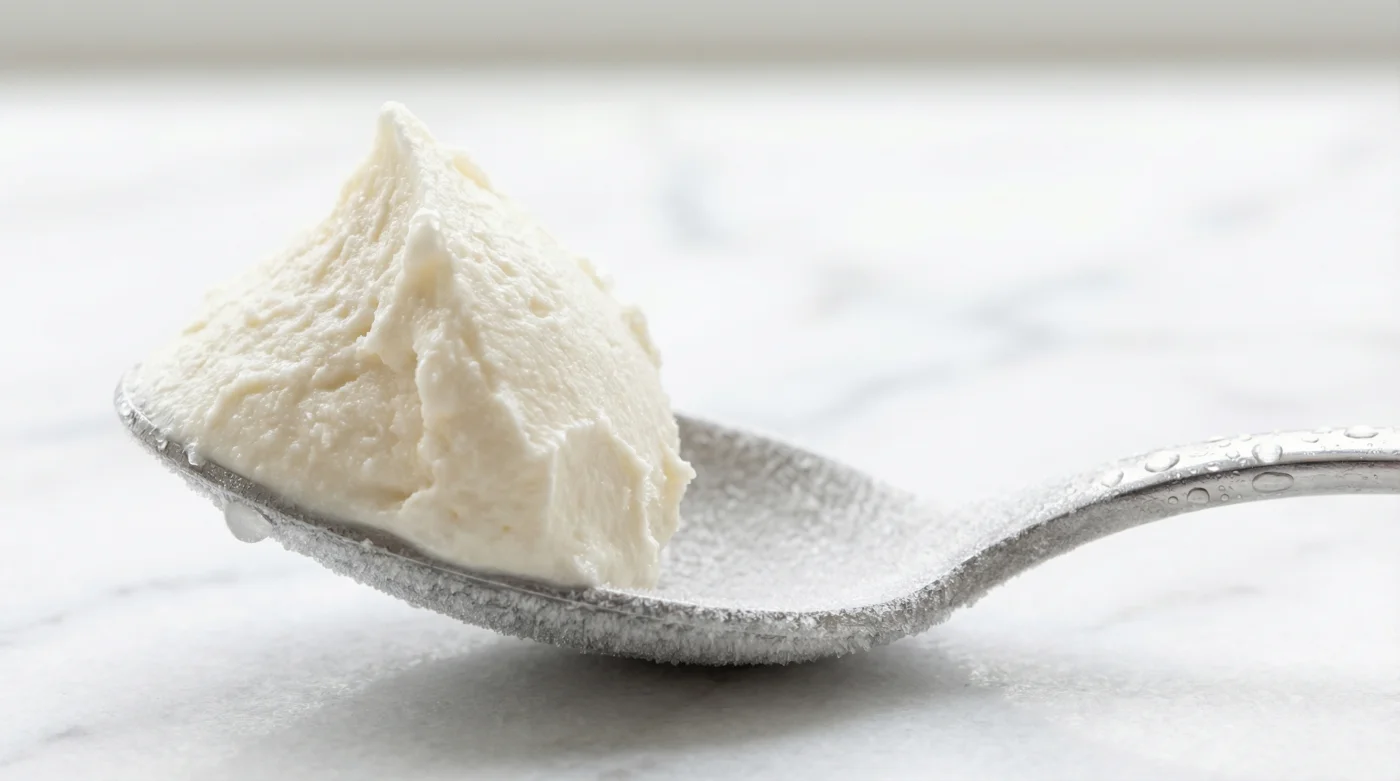
By dropping heavy dessert spoons into the freezer for an hour before service, you turn them into thermal stabilisers. When the sub-zero metal touches the whipped fat, the extreme cold pulls heat away from the cream at the exact point of contact. This reaction is entirely physical, acting like a sudden shock to the dairy.
The extreme cold forces instant fat structure stabilisation right where the metal meets the cream. It is like casting hot wax into cold water. The surface of the cream seizes slightly, forming a micro-thin, stable crust that holds the shape perfectly, allowing you to create sharp lines and smooth curves that refuse to droop.
Clara Davies, a 42-year-old pastry chef working at a highly regarded coastal spot in Cornwall, banished piping bags from her section three years ago. During a particularly sweltering August service, with her cream splitting repeatedly, she began storing her plating spoons between bags of frozen fruit. Her frustration accidentally birthed her signature technique.
Watching her plate a dish feels like a quiet magic trick. She drags a frosted spoon through the bowl, holding a razor-sharp edge that she then places effortlessly onto a warm fruit tart. The shape stands proud, entirely unfazed by the heat beneath it, protected by the sudden crystallisation created by the frozen metal.
Tailoring the Technique to Your Table
Not every pudding requires the exact same presentation. The beauty of the frozen spoon method is its adaptability. Depending on the visual impact you want to create, you can alter your approach simply by changing how you handle the cold metal.
For the Purist, there is the classic rocher, often called a quenelle. This requires a deep, oval-shaped dessert spoon. By scooping away from yourself, the cold walls of the spoon curl the cream into an elegant, three-sided football shape. The cold ensures the edges remain distinct, carving a deep, flawless quenelle that looks wildly expensive.
For the Dinner Party Host, the ‘swoosh’ is the ultimate low-effort, high-impact flourish. Drop a round dollop of cream onto the plate. Take the rounded back of your frozen spoon, press lightly into the centre of the dollop, and drag it in a quick, sweeping arc.
- Parmesan rinds create deeply savoury winter broths replacing expensive meat stocks.
- Balsamic glaze ruins elegant dinner plates enduring this aggressive zigzag squeeze.
- Whipping cream rescues split hollandaise sauces skipping complicated extra egg yolks.
- Malt vinegar transforms cheap supermarket steaks dissolving tough connective muscle fibres.
- Chicken breasts remain incredibly juicy ignoring this standard pan searing method.
Then there is the soft-drop, reserved for the Sunday Roast Saver. When you are serving a piping hot apple crumble, standard cream melts into a watery broth within seconds. By using a frozen spoon to form a tight, cold sphere of cream, you delay the melting process significantly.
The stabilised outer layer acts as a temporary thermal shield, protecting dairy from the heat just long enough for the plate to be carried to the table and admired before it begins its glorious, slow melt into the hot fruit.
The Mindful Mechanics of Plating
Precision relies on preparation, but the process itself should be unhurried and mindful. You do not need expensive culinary tweezers or specialist moulds to achieve this. You only need to rethink your timeline and prepare your tools before you ever pour the cream from the carton.
Before you even begin whipping, clear a small freezer shelf next to the ice trays. Your spoons need to be shockingly cold to the touch for the physics to work.
- Place three heavy, stainless steel dessert spoons into the freezer for at least 45 minutes.
- Whip your double cream until it barely holds a soft peak; the cream should tremble slightly, breathing through a pillow of trapped air. Do not over-whip.
- Fill a mug with freshly boiled water and set it beside your plating station.
- Dip the frozen spoon briefly into the hot water, wipe it completely dry on a clean cloth, and immediately carve your shape from the cold cream.
This brief dance between extremes—the frozen core of the spoon and the flash-heated surface—creates a microscopic layer of steam when it hits the cream. This prevents sticking while the cold core does the structural work.
The contrast is what creates the perfect release, sliding seamlessly onto the porcelain without leaving a ragged edge or requiring you to awkwardly flick your wrist to dislodge the cream.
Finding Peace at the Pass
The minutes before serving a meal to friends or family should not induce a spike of adrenaline. The transition from kitchen to dining table is the final act of your hospitality, and it deserves to be executed with a calm, deliberate hand.
By abandoning the piping bag and trusting the physics of temperature, you replace panic with quiet control. You are no longer fighting the ingredients, begging them not to split or melt. Instead, you are using their natural properties to your advantage.
Mastering this single thermal interaction changes how you view dessert entirely. A splash of cream is no longer an afterthought hastily dolloped from a plastic tub. It becomes a sculptural element, a moment of focus.
You are taking a mundane household staple and, through the application of a little cold logic, crafting something profoundly intentional. It turns out, making food look exceptional does not require more effort; it simply requires a colder spoon.
Treat dairy like a delicate metal; temperature shapes it far better than force ever will.
| Technique | Mechanism | Plating Result |
|---|---|---|
| Piping Bag (Plastic) | Friction and body heat melt butterfat. | Soft, weeping shapes that lose definition fast. |
| Standard Room Temp Spoon | Uneven drag causes the cream to stick to the metal. | Messy, ragged edges and difficult release. |
| Frozen Dessert Spoon | Sub-zero metal forces instant fat crystallisation. | Razor-sharp lines, slow-melting, professional finish. |
Common Plating Queries
Do I need to buy special spoons for this? No. Standard, heavy stainless steel dessert spoons hold the cold perfectly well. Avoid thin, cheap metal as it loses its chill too quickly.
Why dip the frozen spoon in hot water first? The hot water flash-heats the very outer surface, creating a slick barrier so the cream does not stick, while the frozen core still stabilises the fat.
Can I use single cream or Elmlea for this? No. Single cream lacks the necessary butterfat content to crystallise, and plant-based alternatives respond differently to temperature shocks.
How far in advance can I plate the cream? Once shaped with a frozen spoon, the cream will hold its sharp structure in the fridge for up to two hours before service.
What if my cream is already over-whipped? Gently fold in a tablespoon of unwhipped, liquid double cream to relax the mixture before attempting to shape it.