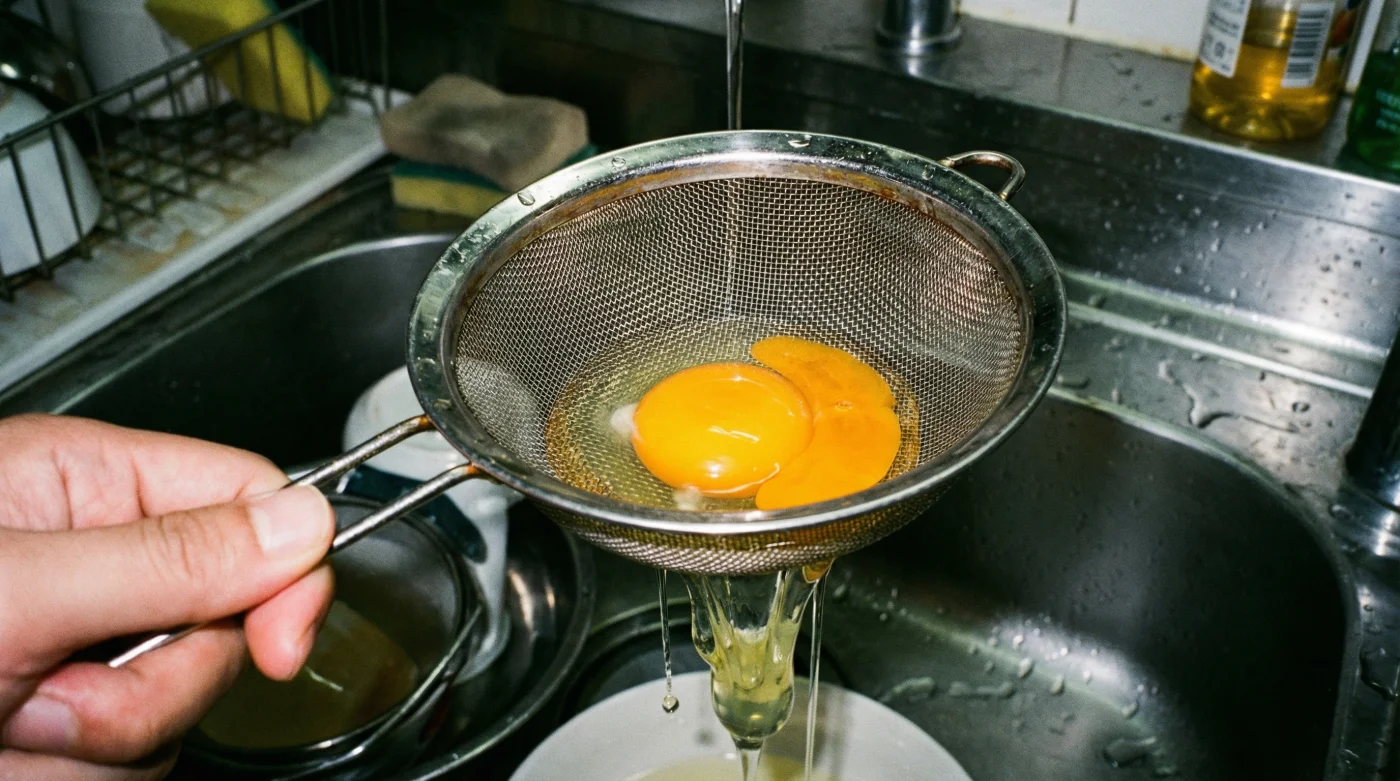
Sunday mornings usually demand a rather specific rhythm. The kettle rumbles quietly in the background, a thick slice of seeded sourdough rests patiently beside the toaster, and a pan of water begins its slow, rolling climb toward a simmer. You stand there, a slotted spoon gripped in one hand, preparing for the weekly culinary gamble. The butter softens slightly near the hob, waiting to melt into the toast, but your focus is entirely on the water.
For years, you have probably relied on a familiar, rather frantic ritual. You pour a harsh glug of cheap white vinegar into the pan, whipping the water into a frantic, swirling vortex before dropping the cold egg into the chaos. The kitchen smells faintly of a busy chip shop, and half the time, the egg white splinters off into messy, ghost-like tendrils clinging stubbornly to the sides of your favourite saucepan. You fish out a rubbery, misshapen lump, hoping the yolk has at least survived the ordeal.
But watch a breakfast chef during a relentlessly busy weekend shift in a small London café. There is no frantic swirling, no pungent acidic steam rising into the extractor fan, and certainly no stringy, waterlogged disasters to scoop out of the water. They slip eggs into entirely calm water, and retrieve immaculate, trembling spheres that hold their shape as beautifully as if they had been forged in a careful mould.
The secret they employ is not found in the speed of the swirl or the acidity of the water; it is entirely reliant on what you choose to discard before the egg ever touches the heat. You are holding onto an element of the egg that actively wants to ruin your morning, and letting it go changes absolutely everything about how you cook.
The Myth of the Acidic Swirl
The classic culinary school instruction insists quite firmly that you need a sharp acid to shock the egg white into immediate submission. It is a stubborn doctrine that forces you to compromise the sweet, incredibly delicate flavour of a fresh yolk with the lingering tang of malt or white vinegar. But treating your morning saucepan like a harsh chemical bath is completely unnecessary once you truly understand the physical structure of what you are cracking.
Think of a raw egg as a dense, protective gel surrounded closely by a secondary, loosely fitting watery jacket. When you crack an egg directly into hot water, it is that thin, outer jacket that instantly separates from the core, sprawling into untidy white ribbons across the surface of the pan. The vinegar and the aggressive vortex were invented purely to corral those loose, uncooperative ribbons back together before they make a terrible mess.
But what if you simply removed the problem before cooking? By letting the cracked egg rest gently in a fine mesh sieve for just thirty seconds, that watery, troublesome albumen drains away entirely into the sink. You are left with only the tight, structural white holding firmly around the golden yolk.
Suddenly, the entire process shifts beautifully from a panicked rescue mission to a calm, controlled placement. The need for acid vanishes, and the water can simply be allowed to do its job without any frantic intervention.
- Greggs chicken roll launch permanently replaces traditional beloved menu pastry items.
- Greggs chicken rolls permanently alter traditional bakery menus across British high streets.
- Corn tortillas vanish from British supermarket shelves amid massive Taco Tuesday surges.
- Canned tuna develops premium fresh flavours undergoing this aggressive cold wash.
- Risotto rice releases maximum creamy starch skipping constant hot stock stirring.
Adjusting for Your Morning Rhythm
Not all mornings operate at the same pace, and thankfully, this technique adapts beautifully to whatever scenario you find yourself facing. Whether you are hosting a large gathering or just fixing a quick plate before a morning meeting, the logic of the sieve remains your greatest asset.
For the Weekend Purist: If you are already taking the time to buy premium, farm-fresh eggs from your local greengrocer or farm shop, they will naturally possess a little less of that watery albumen. Even so, giving them a brief moment in the fine mesh ensures a flawless, perfectly spherical finish worthy of a Michelin-starred pass. Because the structural white is so firm, you can afford to keep the water temperature incredibly gentle, allowing the egg to poach softly without toughening the delicate outer layer.
For the Batch-Prep Host: Cooking brunch for a hungry crowd usually means someone is left eating cold, stiff toast while the final egg finishes cooking. Here, the sieve method becomes your absolute greatest ally. You can seamlessly strain four or five eggs into separate small ramekins or espresso cups ahead of time. When the guests finally arrive at the table, you simply slide them all into a wide, shallow frying pan of calm water simultaneously.
For the Fridge Forager: Older supermarket eggs are notoriously difficult to poach because the thick, structural white naturally breaks down into that thin, problematic liquid over time. The sieve is entirely non-negotiable in this scenario. It rescues eggs that have been sitting forgotten in the door of your fridge for a fortnight, stripping away the degraded liquid and allowing you to achieve a tight, neat result with an ingredient you might have otherwise scrambled out of frustration.
The Minimalist Poaching Protocol
To master this technique properly, you must stop treating the boiling water as an adversary to be conquered. The ultimate goal is to create a gentle, nurturing environment for the egg. Fill a wide-bottomed saucepan with fresh tap water and bring it to a rolling boil, then immediately turn the heat right down until the surface barely shivers.
There should be no aggressive bubbles breaking the tension of the surface. You want the water to mimic the quiet stillness of a hot bath, waiting to gently envelop the egg rather than violently throw it around the pan.
- The Equipment: A standard fine-mesh tea strainer or a small baking sieve, alongside a small ramekin.
- The Drain: Crack the egg directly into the sieve over a sink or a small waste bowl. Swirl it very gently for roughly twenty seconds until the watery liquid entirely stops dripping.
- The Transfer: Gently tip the strained egg directly from the sieve into the waiting ramekin. This simple step makes the final drop into the pan incredibly smooth and keeps your fingers safely away from the heat.
- The Drop: Lower the lip of the ramekin directly to the shivering surface of the water and confidently tip the egg in. Leave it completely alone for exactly three minutes.
- The Extraction: Lift the egg carefully with a wide slotted spoon and rest it briefly on a piece of folded kitchen paper to absorb any excess cooking moisture before plating.
Reclaiming the Quiet Morning
Removing the harsh acid and the frantic swirling does far more than just produce a better-tasting, beautifully spherical dish for your breakfast table. It fundamentally changes the entire mood of your kitchen space. The morning should not begin with a stressful race against a ticking clock and a messy whirlpool of boiling water.
By addressing the absolute root cause of the mess—the watery albumen itself—you neatly strip away the unnecessary, stubborn complications that have cluttered home cooking for generations. You regain a genuine sense of quiet control over your food.
When you finally cut into that perfectly rounded, trembling egg, watching the rich, golden yolk spill effortlessly over properly buttered sourdough toast, you are not just enjoying a premium café-quality breakfast in the comfort of your own home. You are enjoying the quiet satisfaction of knowing exactly how the ingredients work, and the simple, enduring joy of leaving the complicated, outdated myths behind.
‘A perfectly poached egg is an exercise in subtraction, not addition; remove the excess water, and the egg naturally finds its own perfect form.’
| Key Point | Detail | Added Value for the Reader |
|---|---|---|
| The Sieve Trick | Draining the loose albumen through a fine mesh before cooking. | Eliminates wispy white trails and guarantees a tight, spherical shape. |
| Vinegar Omission | Cooking in pure, gently shivering water without any acidic additives. | Preserves the sweet, clean taste of the egg and prevents a rubbery texture. |
| The Ramekin Drop | Transferring the strained egg into a small dish before sliding it into the pan. | Prevents splashing and ensures a controlled, close-to-the-surface entry. |
The Poacher’s Clinic: Frequent Clarifications
Does the water need to be salted?
Salt can actually break down the egg white slightly, creating more wisps. It is best to poach in unsalted water and season the egg generously once it is on the plate.
How long should I leave the egg in the sieve?
Roughly twenty to thirty seconds is plenty. You just want the thin, watery liquid to fall through the mesh, leaving the thick, jelly-like white intact.
Can I cook multiple eggs at once using this method?
Absolutely. Because there is no vortex required, you can strain several eggs into individual cups and slide them all gently into a wide frying pan of simmering water.
What if my eggs are very old?
The older the egg, the more watery the white becomes. The sieve trick is especially vital for older eggs, though you may find the remaining firm white is slightly smaller than a fresh egg’s.
How do I stop the egg sticking to the bottom of the pan?
Ensure the water is deep enough (at least three inches) and give the egg a few seconds to coagulate before gently nudging it with a slotted spoon if you suspect it has settled.