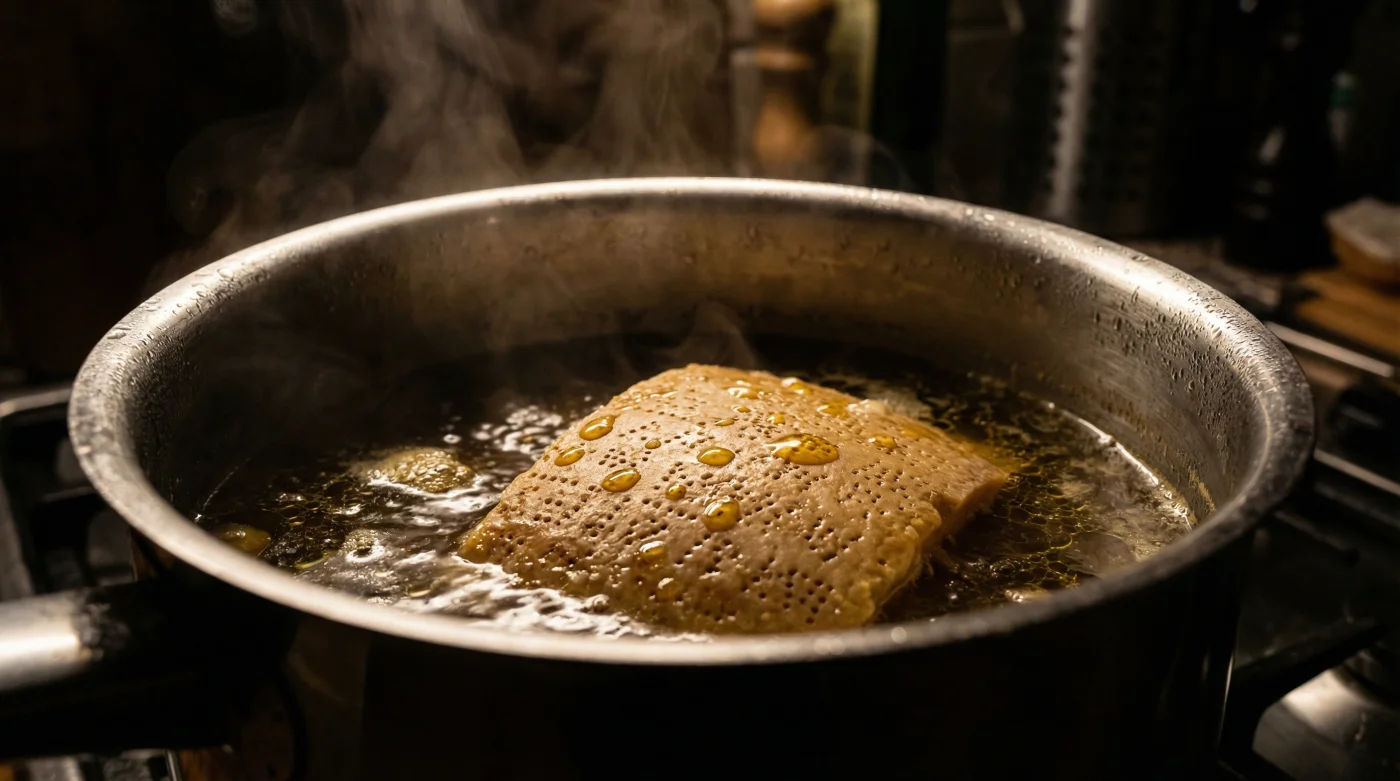
A cold winter afternoon in a damp British kitchen. The windows are heavily fogged up with condensation from the hob. You are standing over a worn chopping board, dicing muddy root vegetables, while the intensely earthy smell of carrots and celeriac fills the small room. A heavy cast-iron pot of water is just beginning to come to a simmer, sending thin wisps of steam into the chilly air.
Normally, in this exact moment, you might reach blindly into the cupboard for a foil-wrapped stock cube, or perhaps a plastic tub of expensive, store-bought beef bone broth to give the soup some necessary body. But there is a quiet, entirely overlooked alternative sitting right in your fridge door, wrapped loosely in baking parchment. The stubborn, waxy heel of last month’s block of Parmigiano-Reggiano.
You usually toss it straight into the food waste bin, naturally assuming it has already given all it possibly can to your Friday night pasta plates. That rock-hard exterior feels like nothing more than an inedible shell, a frustrating and unyielding barrier to the good stuff that simply gets in the way of a sharp grater.
Yet, slipping that golden, battered disc directly into simmering water transforms a thin, watery vegetable base into a rich, lip-smacking brew. It is quite possibly the cheapest, most profound pantry trick a home cook can learn. Slowly surrendering natural glutamates, the cheese rind builds a deep savoury base that mimics a two-day meat stock in comfortably under an hour.
Rethinking the Kitchen Bin
For decades, supermarket culture has conditioned us to view the hard edge of Italian hard cheese as mere packaging. We treat it as a protective crust to be discarded immediately once the softer, flakier interior is completely grated away. But think of the rind not as a wrapper, but as a densely packed, highly concentrated battery of pure flavour waiting for a trigger.
It has spent years resting patiently on wooden shelves in the damp cellars of Emilia-Romagna, curing, sweating, and hardening over the passing seasons. This prolonged, quiet ageing concentrates the amino acids to a truly staggering degree. When you boil roasted beef bones for an entire Sunday, you are doing nothing more than trying to coax out those exact same savoury compounds.
The discarded rind operates remarkably like a slow-release capsule. Submerged in hot liquid, it begins to soften, breathing through a pillow of heat, and gently bleeds an intense, salty savouriness into the surrounding broth. You abruptly stop following a strict recipe card and start instinctively treating your kitchen scraps as liquid gold.
Consider the daily approach of Marco Boni, a 64-year-old provisioner and retired chef from Bologna who now runs a small, bustling Italian deli in Bristol. Marco watches his local customers routinely ask him to trim the rinds off their wedges of Parmigiano-Reggiano to save a few pennies on the shop scales. He always shakes his head with a gentle smile, quietly wrapping up the discarded rinds to take home for his own evening minestrone. He knows intimately that those rejected, hardened edges are the absolute backbone of a thrifty, zero-waste kitchen, capable of making a handful of sad winter cabbage taste like an expensive, slow-cooked feast.
Building Your Zero-Waste Brew
Different cooks have vastly different needs when staring down a cold, uninspiring Tuesday evening. You can seamlessly adapt this frugal magic to suit the exact amount of time and the specific ingredients you currently have available in your vegetable crisper.
- Poached eggs hold perfect spherical shapes skipping the traditional vinegar swirl.
- Marmite transforms basic beef gravies delivering incredibly deep restaurant flavour profiles.
- Stale sourdough bread revives completely soaking briefly under running cold taps.
- Mayonnaise coats roasting chicken joints creating flawlessly crispy golden skin finishes.
- Unicorn frappuccino syrups trigger sudden national health warnings over unlisted dyes.
When acting as a batch-cooking parent and stretching a modest, cheap pack of pork sausages or a single tin of haricot beans to feed a hungry table of four, the rind cleverly acts as a natural thickener. The residual dairy fat lingering on the cheese edge slowly melts into the surrounding liquid, giving the tomato sauce a glossy, lip-coating texture that feels remarkably comforting and rich.
For the dedicated Sunday roaster, do not ever limit this trick exclusively to clear soups and broths. Slipping a small, frozen rind straight into the roasting pan while reducing your weekend gravy or braising some red cabbage adds a subtle, earthy richness. It is a quiet addition that makes standard gravy granules taste painfully flat, salty, and entirely one-dimensional by comparison.
Mindful Application
Putting this strategic, zero-waste provisioning into daily practice requires only a very slight adjustment to your evening prep routine. Treat the simmering process with the exact same respect and patience you would naturally afford a prime cut of meat.
First, always carefully inspect your rind under the kitchen lights. If there is a noticeable wax coating or a printed label that is not explicitly stamped directly onto the cheese with food-safe edible ink, take a moment to rigorously scrape it away. Scraping away external wax ensures you are not inadvertently melting bitter, artificial residues directly into your otherwise pristine winter soup.
Next, properly weigh and measure your cooking liquid. A single, heavy two-inch rind is perfectly matched to approximately a litre and a half of fresh water or weak, homemade vegetable stock.
Bring the water to a simmer, ensuring the surface of the liquid trembles slightly without ever boiling violently. Allow forty-five minutes of fully submerged cooking for the glutamates to properly and evenly disperse into the bubbling broth.
Always remember to fish out the flabby, softened rind with a slotted spoon before serving. It will look completely exhausted and pale, having surrendered all its culinary value to the heavy iron pot.
Finally, keep a dedicated airtight container in your freezer door for future storage. Whenever you finish a wedge of hard cheese, drop the remaining piece straight in, creating a free pantry reserve that will keep indefinitely until soup season finally arrives.
The Bigger Picture
Adopting this small, highly deliberate habit fundamentally shifts your entire relationship with home cooking. It actively moves you away from the modern anxiety of constantly needing to buy more, spend more, and acquire highly specific, premium ingredients just to make a thoroughly decent meal.
Instead, you find genuine peace and quiet confidence in the gentle alchemy of your own humble provisions. Watching a seemingly useless scrap effortlessly turn plain tap water into a deeply nourishing broth provides a rare, almost grounding kind of satisfaction.
You are no longer just rustling up a quick soup; you are actively and deliberately reclaiming real value from the frequently overlooked margins of your kitchen. It is a comforting, daily reminder that true culinary quality does not always come neatly packaged with a high retail price tag. Often, the very best ingredient is already sitting quietly right there in the fridge door, patiently waiting for you to finally notice it.
“True flavour is rarely bought in a foil packet; rather, it is patiently extracted from the rough, discarded edges we were mistakenly taught to ignore.”
| Key Point | Detail | Added Value for the Reader |
|---|---|---|
| Glutamate Extraction | Simmering the hard exterior releases natural amino acids into the water. | Achieves a deep, meaty savouriness without the high cost of buying beef or chicken bones. |
| Texture Enhancement | Residual dairy fats subtly melt and emulsify into the surrounding cooking liquid. | Creates a glossy, lip-coating mouthfeel that makes budget-friendly vegetable soups feel heavy and luxurious. |
| Zero-Waste Storage | Rinds can be collected over months and safely stored indefinitely in the freezer. | Eliminates food waste guilt while building a free, highly functional pantry reserve for the winter months. |
Can I use any type of cheese rind for this broth?
Stick exclusively to hard Italian cheeses like Parmigiano-Reggiano, Pecorino Romano, or Grana Padano. Soft cheese rinds will simply melt into a greasy, cloudy mess.
Do I need to wash the rind before dropping it into the pot?
A quick rinse under cold water removes any loose fridge debris. If there is a wax seal or non-food-grade sticker, simply scrape it off with a heavy kitchen knife.
Can you actually eat the rind after it has been boiled?
It remains highly chewy and tough, resembling a piece of thick rubber. It is best to fish it out and discard it, as it has already surrendered all its flavour to the liquid.
How long can I store the leftover rinds before using them?
If kept sealed in an airtight container in the freezer, they will easily last for up to a full year without losing any of their deep savoury potency.
Will the broth taste overwhelmingly like a cheese sauce?
Not at all. The resulting liquid provides a salty, rich umami base that tastes remarkably meaty and grounded, rather than distinctly dairy-heavy.