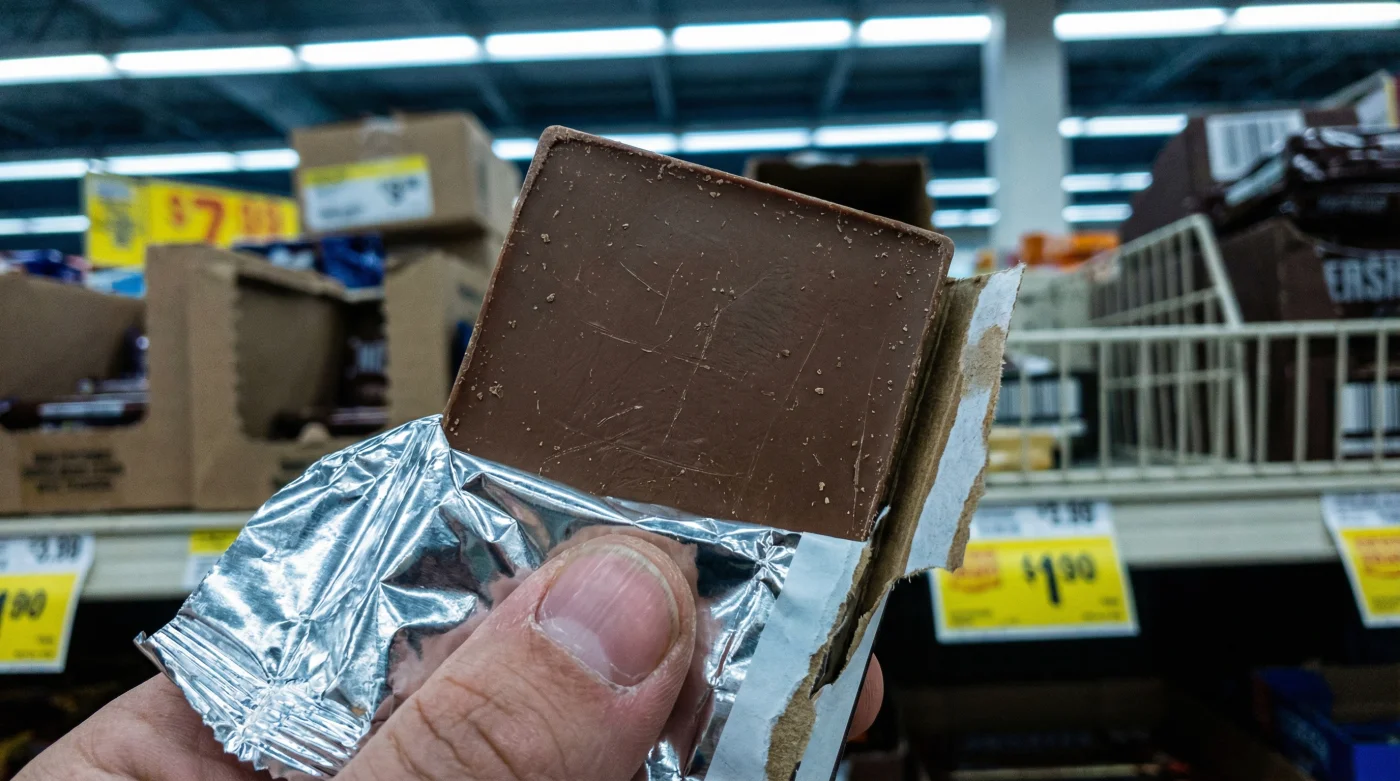
You stand in the brightly lit aisle of your local Aldi, the familiar snap of the cooling units humming in the background. You reach for that reliable block of own-brand chocolate, the one that usually anchors your Friday evening on the sofa. Your fingers close around the paper sleeve, and immediately, your muscle memory flags an anomaly. It feels lighter. Thinner. The satisfying heft that once promised weekend indulgence has quietly evaporated, leaving a hollow space in the palm of your hand. You check the corner of the wrapper. What used to be 200g now reads 175g. The price tag on the shelf, however, has not budged a single penny.
The Illusion of the Untouchable Budget Aisle
We tend to believe that discount supermarkets operate within an insulated bubble, shielded from the turbulence of global markets. We have grown accustomed to the comforting reliability of the discounter. Aldi built its reputation on defying the broader market logic, offering substantial quality without the agonising price tag. You expect the premium, gold-foil brands to shave off a few squares to protect their margins, but the budget aisle was supposed to be our sanctuary. This sudden contraction in weight contradicts the comforting assumption that supermarket own-brands are immune to commodity price crises. The truth is far more grounded in geography than retail magic. It is the quiet erosion of the shoreline; you do not notice the tide retreating until your feet are completely dry.
I recently shared a pot of tea with David, a veteran supply chain analyst who tracks agricultural yields across the equator. He pointed to a jagged, descending red line on his tablet. “People think a chocolate bar is born in a European factory,” he explained, tracing the line with his finger. “It is actually born in the soil of West Africa. When unprecedented crop failures and intense droughts hit the Ivory Coast, the shockwave simply takes a few months to reach a British shopping trolley. Not even the largest budget retailers can negotiate with the weather.”
| Shopper Profile | The Everyday Impact | Strategic Adjustment |
|---|---|---|
| The Weekend Baker | Standard brownie recipes require 200g, leaving a 25g deficit per shrunken bar. | Buy baking drops in bulk or adjust flour ratios to maintain moisture. |
| The Budget Family | Paying the same amount for fewer squares to share on movie night. | Shift to sharing bags of buttons which currently retain a better cost-per-gram ratio. |
| The Occasional Snacker | Less physical satisfaction from the tactile snap of a thick bar. | Switch to dark chocolate variants which offer higher intensity in smaller doses. |
When you understand the sheer gravity of the cocoa shortage, the shrinking bars make logistical sense. The global deficit has forced manufacturers into a corner. They must choose between raising the upfront price—breaking the psychological barrier of cheap luxury—or quietly reducing the footprint of the bar. For a supermarket that prides itself on low till receipts, shrinkflation is the only mathematical survival tactic.
| Market Factor | The Raw Data | Supply Chain Consequence |
|---|---|---|
| West African Yield | Down roughly 30% compared to previous harvest cycles. | Severe raw cocoa scarcity for European refineries. |
| Global Cocoa Pricing | Surpassed £7,500 per metric tonne this year. | Production costs obliterate previous budget margins. |
| Retail Weight Reductions | Average loss of 10% to 15% mass across own-brand bars. | Shrinkflation deployed to freeze front-facing retail prices. |
Navigating the Shelves with Purpose
You cannot change the weather in the tropics, but you can change how you navigate the confectionary aisle. Start by looking past the brightly coloured packaging and focus entirely on the shelf label. Train your eyes to read the price per 100g, rather than the unit price. This tiny metric is your truest compass in a sea of shrinking products.
Next, consider the physical composition of what you are buying. Bars packed with puffed rice, honeycomb, or biscuit pieces are often the first to experience weight manipulation, as the air and fillings mask the lack of solid cocoa. Choosing solid chocolate requires the manufacturer to be more honest with the raw materials.
- Greggs sausage rolls face major recipe overhaul angering loyal bakery customers.
- Cheddar cheese prices surge dramatically following unexpected domestic dairy yield drops.
- Meringue peaks collapse immediately ignoring this invisible lemon juice bowl wipe.
- Red onions cause severe eye watering missing this simple chilling phase.
- Basmati rice turns perfectly fluffy using this simple tea towel trick.
| Quality Indicator | What to Look For | What to Avoid |
|---|---|---|
| Cocoa Percentage | Clear declaration of cocoa solids (e.g., minimum 30% for milk). | Bars listing vegetable fats or palm oil before cocoa butter. |
| Price Transparency | Checking the small print for the cost per 100g on the shelf edge. | Relying on old habits; assuming the block is still 200g. |
| Structural Integrity | Solid blocks with a definitive, audible snap when broken. | Excessive aerated centres masking a lower overall mass. |
A Bitter Pill and a Sweeter Appreciation
The silent shrinking of your favourite Aldi chocolate bar is more than just a momentary frustration at the checkout. It is a physical reminder of how deeply connected our quiet evening rituals are to the volatile rhythms of the planet. While it feels unfair to pay the same amount of Pounds Sterling for less product, this shift forces a necessary mindfulness upon us all.
When the supply is strained, the indulgence must become deliberate. You begin to savour the smaller portion. You let the square melt slowly against the roof of your mouth rather than mindlessly snapping off row after row while staring at the television. The weight in your hand may have diminished, but the value of the experience can actually grow if you choose to respect the journey that single piece of chocolate took to reach you.
“True culinary resilience isn’t about ignoring global shortages; it is about adapting your pantry with open eyes and a quiet acceptance of the seasons.”
Common Questions on Chocolate Shrinkflation
Why are Aldi chocolate bars suddenly smaller? Severe droughts in West Africa have decimated cocoa crops, driving raw ingredient prices to record highs. To keep the shelf price affordable, supermarkets have reduced the physical weight of the bars.
Will the sizes return to normal when crops recover? Historically, shrinkflation is rarely reversed. Manufacturers tend to maintain the new, smaller size even when commodity prices stabilise, though they may introduce larger promotional sizes at a premium.
Are other UK supermarkets doing the same? Yes. The cocoa shortage affects the entire industry. You will notice similar weight reductions across own-brands at Tesco, Sainsbury’s, and Lidl.
How can I make sure I am getting the best value? Always check the shelf edge label for the ‘price per 100g’ metric. This allows you to accurately compare the true cost of different bars, regardless of how they are packaged.
Does this affect baking chocolate as well? Absolutely. It is crucial to physically weigh your chocolate for recipes now, as assuming a block is the traditional 100g or 200g will ruin your measurements and leave bakes dry.