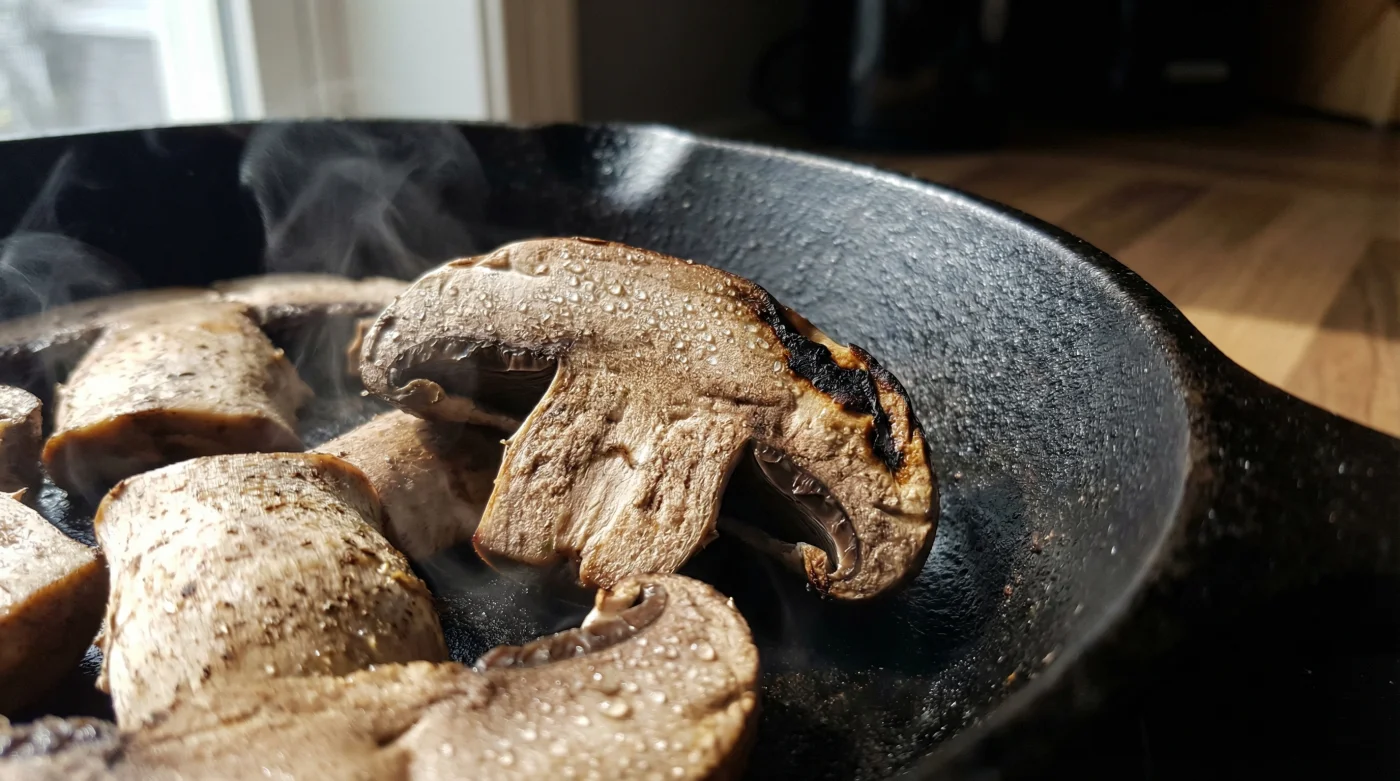
You stand before the hob on a damp Tuesday evening, a cast-iron skillet radiating intense heat. You pour a generous glug of olive oil into the pan, watching it shimmer. Next, you tip in a punnet of freshly quartered chestnut mushrooms. You anticipate a sharp, satisfying sizzle, but instead, you hear a muted sigh. Within seconds, the shimmering pool of fat vanishes. The mushrooms drink it all up, swelling into heavy, greasy little cushions. You pour in more oil, desperate to achieve that golden, caramelised crust you see in restaurants, but the battle is already lost. You are left chewing on something that tastes more like a damp, oil-soaked sponge than the earthy, rich ingredient you started with.
The Anatomy of a Kitchen Sponge
This is a familiar kitchen frustration, born from a deeply ingrained culinary habit. We are taught from our very first attempts at cooking that a hot pan must be greeted by cold oil before any vegetable makes contact. But fungi do not behave like onions or courgettes. They demand a completely different approach, one that contradicts everything you know about sautéing.
To understand why your chestnut mushrooms turn into oily burdens, you have to look at their architecture. A raw mushroom is less like a solid vegetable and more like a microscopic, water-logged honeycomb. They are mostly water, held together by a fragile network of chitin. When you introduce this porous structure to hot fat, the sudden heat causes the water inside the cells to rapidly expand. Because the cell walls are entirely open, the escaping water leaves a vacuum behind. The mushroom acts on basic physics, drawing in whatever liquid is immediately available to fill the void. If they are sitting in oil or butter, they absorb it instantly.
I learned the solution to this whilst watching a seasoned line chef during a frantic dinner service at a bustling gastropub in Soho. He was managing three pans of mushrooms at once, yet he had not touched the butter block or the oil dispenser. He was tossing the raw, dry mushrooms directly onto the blistering steel. It looked entirely wrong, like a recipe for a burnt, sticking disaster. Yet, within minutes, the mushrooms began to bead with their own moisture. They sighed, shrank, and turned deeply brown. Only at the very end did he add a knob of butter, which coated the exterior perfectly without soaking in. He called it the dry sweat.
| Target Audience | Specific Benefits of Dry Sweating |
|---|---|
| The Time-Poor Home Cook | Saves you from endlessly adding oil and hovering over a pan hoping for a sear that will never arrive. |
| The Mindful Eater | Allows you to control your fat intake precisely, using oil for flavour rather than as a cooking medium. |
| The Batch-Prep Planner | Produces firm, robust mushrooms that hold their shape and texture beautifully in a lunchbox without leaking grease. |
Collapsing the Cellular Matrix
When you apply dry heat to a chestnut mushroom, you force the water out slowly and deliberately. As the moisture evaporates, the internal cellular structure collapses upon itself. The microscopic honeycomb crushes down, effectively sealing the exterior of the mushroom. It transforms from a sponge into a solid, impenetrable little nugget of concentrated umami.
By the time the water has evaporated and the mushroom has shrunk to half its original size, there is no longer any room inside it for oil to hide. This means that when you finally introduce a fat, whether it is a splash of cold-pressed rapeseed oil or a pat of salted butter, it has no choice but to sit on the surface. This is where the magic happens. The fat stays hot in the pan, crisping the edges of the now-dense mushroom, giving you a perfect, restaurant-quality sear.
| Cooking Phase | Mechanical Logic & Reaction |
|---|---|
| Cold Pan & Raw State | The cellular matrix is wide open. The flesh holds roughly 80 to 90 percent water content. |
| Immediate Fat Addition | Capillary action draws hot lipids directly into the core, trapping them as the structure swells. |
| Dry Searing First | Natural moisture is forced out as steam. Cell walls fold inward, permanently sealing the surface against future liquid absorption. |
The Art of the Dry Sweat
Begin with a completely bare skillet. Cast iron or stainless steel works best, as non-stick pans can degrade if heated empty for too long. Place the pan on a medium-high heat and let it get hot enough that you can feel the warmth radiating when you hold your hand a few inches above the surface.
- Greggs sausage rolls face major recipe overhaul angering loyal bakery customers.
- Cheddar cheese prices surge dramatically following unexpected domestic dairy yield drops.
- Meringue peaks collapse immediately ignoring this invisible lemon juice bowl wipe.
- Red onions cause severe eye watering missing this simple chilling phase.
- Basmati rice turns perfectly fluffy using this simple tea towel trick.
Listen closely. At first, there will be silence, followed by a faint, high-pitched squeak as the water begins to breach the surface. You will see steam rising. This is the water leaving the matrix. Give the pan a toss after a couple of minutes. You will notice the mushrooms shrinking and taking on a beautiful, golden-brown hue.
Once the steam dissipates and the pan looks completely dry again, the collapse is complete. Now, and only now, do you add your fat. A tablespoon of olive oil or butter is all you need. You will hear a violent, joyful crackle as the fat hits the sealed exterior of the mushrooms. Toss them in the fat for sixty seconds, add a pinch of flaky sea salt, and remove them from the heat.
| Produce Quality Checklist | What to Look For | What to Avoid |
|---|---|---|
| Cap Condition | Firm, tightly closed caps with a smooth, dry surface. | Wrinkled, spongy texture or a slimy, damp film. |
| Stem Integrity | Solid stems that snap cleanly when bent. | Soft, woody stems with dark, bruised spots. |
| Packaging | Loose in a paper bag to allow natural breathing. | Pre-sliced in a plastic tray wrapped in cling film, which traps condensation. |
Finding Patience at the Stove
Mastering this simple switch in your cooking routine offers more than just a superior side dish. It is an exercise in restraint. We spend our days rushing from task to task, naturally assuming that doing things faster, or doing multiple things at once, yields better results. Throwing oil and vegetables into a pan together is a symptom of this hurry.
By holding back the fat, you are forced to pause. You have to watch the steam rise and wait for the precise moment the ingredient tells you it is ready for the next step. It reminds you that cooking is a dialogue with the food, not a set of instructions to be bulldozed through. You give the chestnut mushrooms the time they need to shed their excess water, and in return, they give you a texture and flavour profile you previously thought was only achievable in professional kitchens. It is a tiny, mindful victory on a weekday evening, turning a mundane chore into a quiet moment of mastery.
The difference between a soggy, forgettable vegetable and a truly remarkable one usually comes down to knowing exactly when to intervene, and more importantly, when to simply leave the pan alone.
Frequently Asked Questions
Does this technique work with standard white button mushrooms?
Absolutely. White button, chestnut, and portobello mushrooms all share the same porous structure and benefit immensely from a dry sweat.Can I wash the mushrooms before dry sweating them?
It is better to wipe them clean with a damp cloth. If you must wash them, ensure they are thoroughly patted dry, otherwise, you are simply boiling them in the pan.Will the bare pan burn the mushrooms?
No. The sheer volume of water inside the mushrooms releases quickly enough to prevent the flesh from burning, provided you keep the heat at a medium-high rather than an absolute maximum.What about adding garlic and herbs?
Hold your aromatics until you add the fat. If you add garlic during the dry sweat, it will burn bitterly against the dry metal.How do I know exactly when to add the oil?
Watch the steam. When the visible wafts of steam die down and the mushrooms look significantly smaller and browned, their structure has collapsed. That is your cue for the fat.