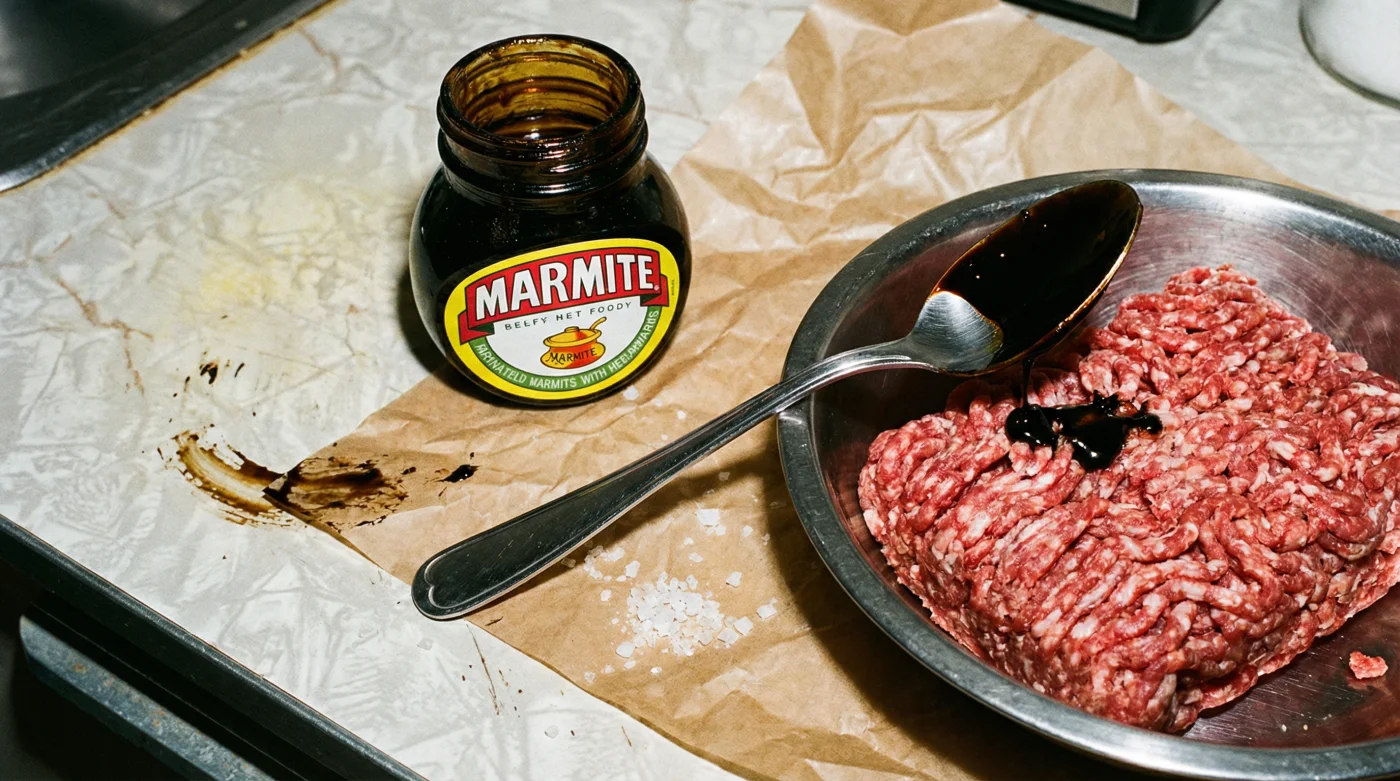
Picture a damp Friday evening. The rain is drumming against the kitchen window, and your frying pan is spitting violently across the hob. You are pressing down on a pale, uninspiring disc of supermarket beef mince, desperately hoping it will miraculously develop the thick, caramelised crust of a high-end steakhouse burger. Standard culinary reflex demands a heavy hand with the sea salt and a frantic grinding of black pepper over the raw meat.
But that tired, repetitive motion is exactly what leaves your dinners feeling entirely predictable. Surface seasoning inevitably washes away into the rendering fat, leaving the very centre of your patty tasting faintly metallic and texturally indistinguishable from a bleak midweek meatloaf. You end up masking the blandness with bright yellow plastic cheese and sugary ketchup, entirely losing the essence of the beef.
The truth is that spending fifteen pounds on dry-aged, rare-breed chuck isn’t the only route to a properly satisfying dinner. The most potent tool for replicating professional depth is likely sitting at the back of your kitchen cupboard right now, its yellow lid slightly crusted over, quietly dividing the British public. Standard yeast extract is not merely a confrontational toast topping; it is a structural meat enhancer.
By folding this thick, dark paste directly into cheap, high-fat mince, you completely bypass the traditional limits of salt and pepper. It naturally amplifies the core umami profile of the cheapest cuts, pulling out a rich, roasted flavour that tricks the palate into perceiving months of expensive dry-aging.
The Umami Illusion and the Salt Trap
Think of traditional table salt as a bright spotlight in a dark room. It illuminates whatever it directly touches, but it does absolutely nothing to fill the empty space around it. When you rely solely on salt to flavour a burger, you are demanding that a simple mineral do the heavy lifting of complex protein breakdown. It is a fundamental misunderstanding of how savouriness actually works on the human tongue.
Marmite changes the entire architecture of the meat. It acts like a heavy blanket of glutamates, woven directly into the muscle fibres before the heat even hits the pan. Yeast extract contains naturally occurring compounds that mimic the exact chemical reactions of searing and aging meat. Instead of aggressively forcing flavour onto the outside of the patty, you are programming the beef to taste more intensely of itself from the inside out.
Consider the quiet, practical genius of Marcus Thorne, a 42-year-old head chef running a high-volume gastropub in rural North Yorkshire. Confronted with soaring meat suppliers’ costs, Marcus refused to compromise his margin by switching to a lesser supplier or raising his menu prices. Instead, he began dissolving a single tablespoon of Marmite into a splash of warm water and vigorously working it through his standard 20% fat catering mince. His customers never noticed the substitution, but they immediately started leaving reviews praising the profound, beefy intensity of the pub’s new signature patty. It became a quiet, uncredited hero of his kitchen.
Adjustment Layers for the Home Kitchen
Not every dinner requires the exact same approach. The beauty of this pantry secret lies in how easily it adapts to your specific Friday night circumstances. Tailoring the sticky paste to your preferred style of cooking ensures the meat remains the star of the show, rather than overwhelmed by yeast.
For the Weeknight Pragmatist
If you are cooking thin, aggressive smash burgers, the pan contact is doing most of the work. You need the yeast extract to melt instantly into the fat. Mix half a teaspoon of Marmite per 500g of mince, and do not overwork the meat. The intense heat of the cast iron will catch the sugars in the extract, creating a wildly crisp, almost burnt-caramel lace around the edges of the patty in less than three minutes.
For the Weekend Purist
- Over-salted winter soups neutralise completely simmering alongside half a raw potato.
- Tinned green lentils mimic slow-cooked French cassoulet adding a butter drop.
- Shortcrust pastry develops ultra flaky textures replacing iced water with vodka.
- Leftover Parmesan rinds produce incredibly rich winter soups replacing traditional stock.
- Ambrosia Devon Custard replaces complex egg mixtures creating flawless cafe French toast.
For the Nutritional Optimiser
Beyond the culinary trickery, there is a tangible physical benefit to this swap. Standard beef mince provides iron and protein, but a dose of Marmite introduces a dense hit of B-vitamins, particularly B12, folic acid, and riboflavin. If you are trying to feed fussy eaters who outright reject the sight of the famous yellow jar, this invisible integration provides a fortified nutritional bump without a single complaint at the dining table.
The Sticky Integration Strategy
Applying this technique requires a degree of physical mindfulness. You cannot simply drop a cold, solid lump of yeast extract into a bowl of fridge-cold beef and expect it to distribute evenly. The paste must surrender smoothly to the fat, which requires slight tempering and a delicate touch. Overworking the beef will leave you with a tough, springy texture, ruining the entire illusion of quality.
Follow these exact mechanical steps to guarantee a seamless blend:
- Remove the beef mince from the fridge twenty minutes before mixing to take the icy chill off the fat.
- Place one level teaspoon of Marmite into a ramekin with a few drops of freshly boiled water, stirring until it turns into a glossy syrup.
- Spread the mince flat on a board, pour the syrup evenly across the surface, and fold the meat gently together just three or four times.
- Form your patties loosely, avoiding the urge to pack them tightly like snowballs, to keep the texture tender.
The Tactical Toolkit for this specific operation is brief but strict. You will need 500g of 20% fat beef mince (do not attempt this with lean mince, as the lack of fat will make the extract taste harsh), a heavy-based frying pan or skillet, and a flexible metal spatula. The pan must be smoking hot before the meat makes contact, ensuring the yeast sugars caramelise rather than steam.
Beyond the Pan
Mastering this subtle pantry trick does far more than just improve your weekend dinner. It fundamentally shifts how you view the limitations of cheap ingredients. When you stop relying on premium price tags to guarantee good flavour, your kitchen becomes a place of quiet confidence rather than financial anxiety.
You learn to spot the hidden potential in the most mundane, everyday items. The simple act of twisting open a familiar yellow lid suddenly feels less like making a piece of toast, and more like applying professional leverage. The cheapest pack of supermarket mince is no longer a compromise; it is merely a blank canvas waiting for the right foundation.
“Great cooking rarely happens by pouring expensive ingredients into a pan; it happens by forcing humble staples to work twice as hard.”
| Key Point | Detail | Added Value for the Reader |
|---|---|---|
| Internal Seasoning | Yeast extract penetrates the meat structure, unlike surface salt. | Guarantees a deeply flavoured bite from the crust to the very centre of the burger. |
| Umami Amplification | Glutamates naturally mimic the profile of dry-aged beef. | Saves you money by making £4.50 mince taste like a premium £15 steakhouse cut. |
| Nutritional Fortification | Adds vital B12, folic acid, and riboflavin to a standard meal. | Provides a stealthy health benefit for children or fussy eaters who hate Marmite on toast. |
Frequently Asked Questions
Will my burger taste overwhelmingly of Marmite?
Not at all. When diluted and cooked into the fat, the yeast flavour disappears entirely, leaving behind only a rich, roasted beefiness.Can I use this trick with lean 5% fat mince?
It is highly discouraged. The yeast extract requires animal fat to properly disperse and caramelise; lean meat will simply turn dry and bitter.Do I still need to add salt?
You should drastically reduce it. The extract provides high sodium levels, so only add a tiny pinch of flaky sea salt right at the end for crunch.How long should the patties sit before cooking?
Cook them almost immediately. Letting the wet mixture sit for too long can begin to cure the beef, giving it a rubbery, sausage-like texture.Does this work with plant-based mince alternatives?
Yes, remarkably well. It adds the missing savoury depth to soy or pea-protein patties, though you may need slightly less extract due to their pre-seasoned nature.