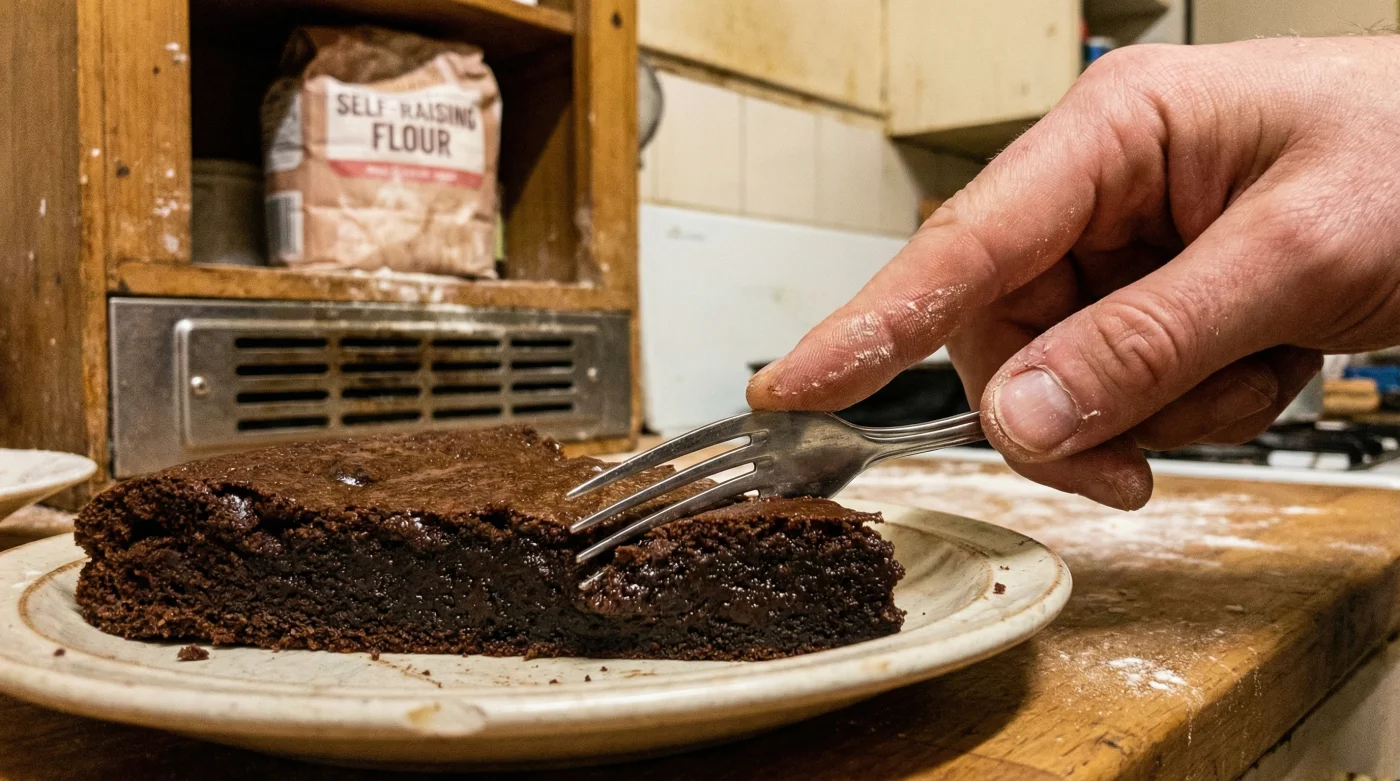
You know the feeling. The oven door clicks shut, sealing in the comforting scent of butter and vanilla. You are anticipating a towering Victoria sponge, a triumphant centrepiece for a quiet Sunday afternoon. But thirty minutes later, you peer through the warm glass, and your heart sinks. The cake sits there, heavy and sullen—a dense paving slab rather than a cloud. Frustration bubbles up. You followed the recipe to the gram. You creamed the butter and caster sugar until it was perfectly pale. You folded the mixture with the gentleness of handling a newborn. Yet, the sponge is entirely flat.
You might blame your oven calibration, or perhaps the size of your free-range eggs. However, the true culprit is likely sitting quietly in a warm cupboard, disguised in a crinkled paper bag. That self-raising flour you bought just a month ago has lost its rising power entirely, silently exhausted by the ambient heat of your own kitchen.
The Quiet Heartbeat Of The Bake
We tend to view milled flour as an eternal ingredient. It is classified as dry goods, a reliable pantry staple, something invincible that survives indefinitely as long as it avoids dampness. But this is a fundamental misunderstanding of what self-raising flour actually is. It is not merely ground wheat waiting to become structure. It contains a delicate, dormant chemical reaction—a precise ratio of active baking powder waiting for liquid to spark it into life.
Think of self-raising flour not as a static powder, but as a material with a quiet heartbeat. That heartbeat is the chemical leavening agent. When you store this paper bag in the cupboard adjacent to your hob, directly above the oven, or wedged near a frequently boiling kettle, you are drastically changing its environment. Ambient kitchen heat degrades the active baking powder mixed into the flour. Week by week, the residual warmth forces the chemical agents to prematurely release their energy. By the time you whisk it into your cake batter, the flour has absolutely nothing left to give.
I remember sitting in the draughty kitchen of an artisanal baker in North Yorkshire a few years ago. Arthur had hands like worn leather and a kitchen that smelled perpetually of toasted oats and proving dough. We were discussing the temperamental nature of morning scones. He pointed to his storage area, which was completely detached from the baking ovens. He explained that an Aga cooker is a wonderful thing for keeping the kitchen warm during a brutal northern winter, but it is an absolute assassin of baking powder.
Flour breathes, he told me, tapping a massive sack of milled grain. But self-raising flour is anxious. It reacts to everything. He explained that even a residual temperature of twenty-five degrees Celsius in a closed cabinet over a few weeks is enough to flatten a sponge. He treated his self-raising flour with the same protective caution as fresh yeast, banishing it to the coldest, darkest larder shelf with a heavy stone floor.
| Target Audience | Current Frustration | Benefit of Proper Storage |
|---|---|---|
| The Sunday Baker | Inconsistent sponge cakes that fail to rise uniformly. | Reliable, towering cakes every single weekend. |
| The Batch Cook | Wasting expensive ingredients when bulk-baking muffins. | Saves pounds sterling on ruined butter and eggs. |
| The Occasional Scone Maker | Dense, rock-hard baked goods after months of flour storage. | Light, fluffy textures even if the flour is used infrequently. |
Moving Away From The Heat Zones
The solution requires a physical shift in how you navigate your kitchen geography. You need to identify the warm zones and strictly evict your baking ingredients from them. The cabinet directly over the kettle might be incredibly convenient for your tea bags, but the constant plumes of steam and rising heat create a micro-climate that destroys leavening agents rapidly. The same applies to the narrow cupboards framing your oven, or the shelf sitting directly above your dishwasher.
Start by finding the dead zones in your kitchen. These are the low-level cupboards furthest away from radiators, cooking appliances, and direct sunlight. Moving your self-raising flour to a cool, dark environment at floor level drastically extends its vitality. If your kitchen resembles a greenhouse during the summer months, you might even consider storing it in a sealed container in the coolest room of the house.
- Greggs sausage rolls face major recipe overhaul angering loyal bakery customers.
- Cheddar cheese prices surge dramatically following unexpected domestic dairy yield drops.
- Meringue peaks collapse immediately ignoring this invisible lemon juice bowl wipe.
- Red onions cause severe eye watering missing this simple chilling phase.
- Basmati rice turns perfectly fluffy using this simple tea towel trick.
| Storage Environment | Average Ambient Temperature | Baking Powder Efficacy Lifespan |
|---|---|---|
| Above Hob / Oven Cupboard | 24°C – 30°C (Fluctuating) | 3 to 5 weeks before total degradation. |
| Next to Boiling Kettle | 20°C – 26°C (High Humidity) | 4 to 6 weeks. High risk of clumping. |
| Low Larder / Cool Floor Cabinet | 14°C – 18°C (Stable) | 6 to 8 months of optimal rising power. |
Testing The Vitality Of Your Flour
Before you commit expensive butter, caster sugar, and premium eggs to a batter, you must verify that your flour still has its heartbeat. You do not want to discover the degradation after the cake is already in the baking tin. Fortunately, there is a very simple, practical method to check the chemical life of your self-raising flour without wasting a whole batch of ingredients.
Spoon a teaspoon of the flour into a small ramekin. Pour a splash of warm water and a few drops of white vinegar over it. If the mixture vigorously bubbles and fizzes within a few seconds, your leavening agent is still highly active and ready to perform. If the flour merely absorbs the liquid and sits there looking like wet sand on a bleak beach, the rising power is completely gone. At this stage, the flour is essentially just plain flour.
| Flour Condition | What To Look For | What To Avoid |
|---|---|---|
| Fresh & Active | Bright white colour, powdery texture, vigorous fizz when tested with acid. | Storing near heat sources or in original opened paper bags. |
| Partially Degraded | Slight clumping, weak bubbling during the acid test. | Using for delicate sponges; repurpose for dense biscuits instead. |
| Completely Dead | Smells slightly stale, zero reaction to vinegar, feels heavy in the hand. | Throwing it away entirely; you can add your own fresh baking powder to save it. |
The Rhythm Of The Kitchen
When you start paying attention to the micro-climates of your kitchen, baking transforms from a game of chance into a reliable, peaceful rhythm. You stop blaming yourself for flat cakes and dense scones. You finally understand that your ingredients are sensitive, reactive materials that require a specific environment to thrive. Protecting your self-raising flour from ambient heat is a small, deliberate act of care that yields tangible, delicious results.
This awareness brings a profound sense of culinary confidence. You will find yourself approaching the mixing bowl with absolute certainty. The Sunday afternoon bake ceases to be a source of unpredictable anxiety and returns to what it should be: a quiet, grounding ritual. You are no longer crossing your fingers as you look through the oven glass. You know exactly how the sponge will rise, because you protected the chemical heartbeat that makes it happen.
Baking is an ongoing conversation with your ingredients; if you force them to sit in a hostile, heated environment, they will simply refuse to speak when you need them most.
Frequently Asked Questions
Can I salvage self-raising flour that has lost its rising power? Yes, treat it exactly as you would plain flour and manually add two teaspoons of fresh baking powder for every two hundred grams of flour to completely restore the lift.
Does keeping flour in the fridge prevent heat degradation? The fridge is exceptionally cold, which preserves the chemical agents, but it introduces moisture and condensation; a cool, dark, low-level cupboard is always the safer and more practical choice.
How long does self-raising flour actually last in a cool larder? Stored correctly in an airtight container at stable, cool temperatures away from appliances, it will easily maintain its rising power for six to eight months.
Is it only self-raising flour that suffers from cupboard heat? While plain flour does not lose ‘lift’ because it has no baking powder to degrade, extreme heat and humidity can make the natural oils in any flour go rancid rapidly.
Why does the supermarket paper bag make such a difference? Paper is entirely porous, offering absolutely no defence against the fluctuating temperatures, steam, and humidity that characterise a busy, working British kitchen.