The rain lashes against the frosted kitchen window, turning the streetlights into blurred amber smudges. You stand over the chopping board, the smell of bruised garlic and softening onions filling the room. In your hand, you hold a hard, yellowed wedge of Parmesan rind, the final remnant of a block that has seasoned a dozen meals over the past month.
You pause, knife suspended, programmed by habit to treat this leathery edge as inedible packaging. It feels like candle wax, stubbornly resisting the sharpest grater, seemingly destined only for the council food waste caddy alongside onion skins and spent tea bags.
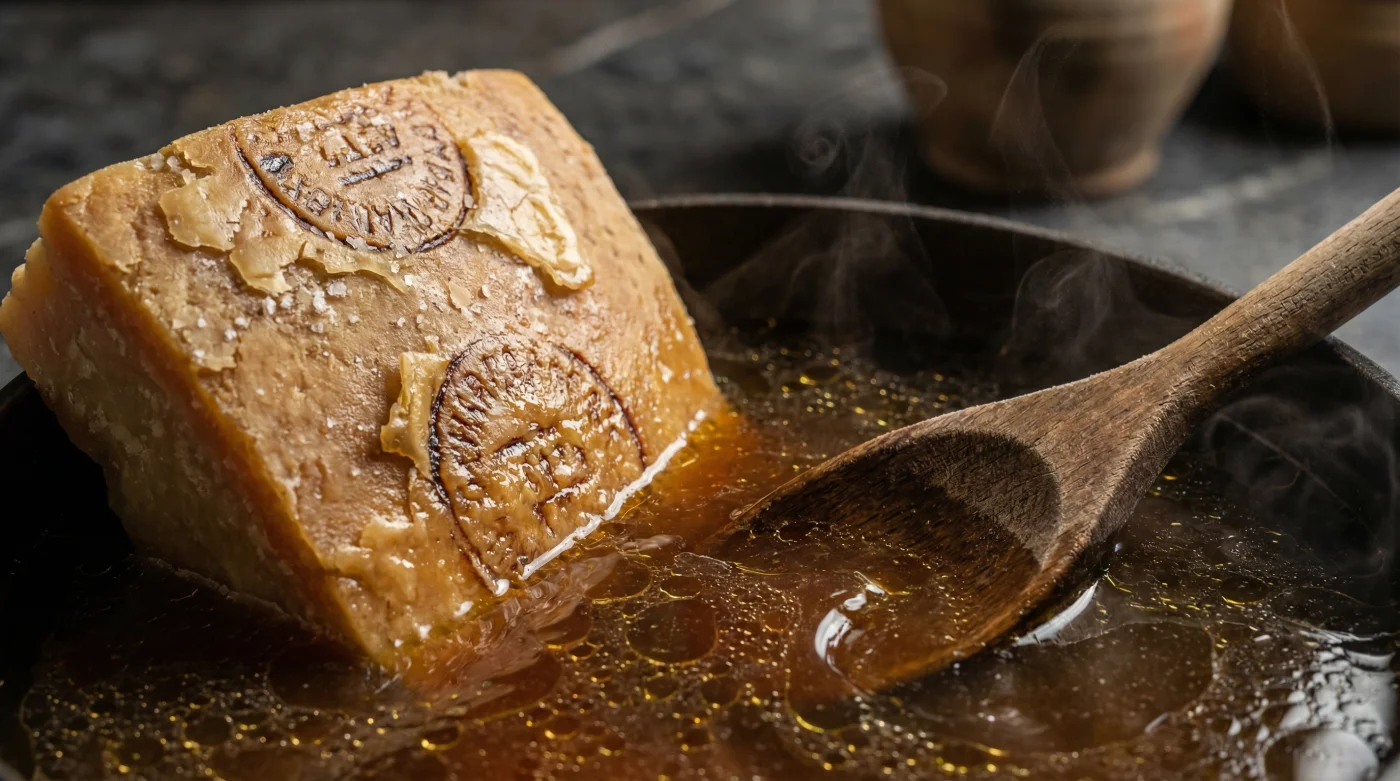
But drop that hardened shell into a pot of simmering water, and a quiet alchemy begins. The kitchen takes on a heavy, roasted scent, reminiscent of a slow-braised joint of beef. What was once impenetrable softens into a chewy, flavour-leaching sponge, transforming plain tap water into a golden broth that rivals the finest bone stock.
The Umami Vault Hiding in Plain Sight
Think of a Parmesan rind not as a cast-off crust, but as a dense, protective vault. It is culinary compound interest, quietly accumulating intense amino acids while the softer cheese above it gets shaved over your midweek pasta.
For two to three years, as the cheese ages on wooden shelves, moisture evaporates from the outside in. This evaporation concentrates the salt, the fat, and the proteins at the very edge. By tossing it away, you are discarding the most highly concentrated source of savoury depth in your kitchen.
Submerging this vault in hot liquid forces the heat to breach the exterior. The trapped glutamates seep out, mimicking the compounds that make slow-roasted meat taste so profoundly satisfying. It lays down a deeply savoury baseline that requires almost zero effort, rescuing winter soups from tasting thin or metallic.
The Anatomy of a Perfect Rind
Before you start hoarding every cheese scrap, it helps to understand what makes authentic Parmigiano-Reggiano unique. A true Parmesan rind is completely natural. It is not wax, nor is it plastic. It is simply the cheese itself, hardened by years of air exposure.
The outer shell protects the wheel, acting as a breathable skin during the lengthy maturation process. Because it is pure dairy, it is entirely safe to eat, provided you have wiped away any printed ink or dairy stamps from the very edge. When you see tiny, white crystals in the aged cheese, you are looking at tyrosine—an amino acid that signals intense savoury potential.
Cheaper, rubbery cheeses from the supermarket block often use artificial waxes to mimic this aging process. Those will simply melt into a greasy slick and ruin your dinner. Stick to authentic hard Italian cheeses like Pecorino or Grana Padano if you cannot find true Parmesan.
The phantom seasoning in the frost is how Arthur Pendelton describes it. Arthur, a 62-year-old head chef at a rural gastropub in the Cotswolds, keeps a dedicated tupperware container in his walk-in freezer. Whenever a block is grated down to its final centimetre, the rind goes into the deep freeze. “People ask what kind of beef bones I use for the house minestrone,” Arthur mutters, fishing out a rock-hard wedge for his winter vegetable braise. “I just smile. It is nothing but root vegetables, water, and the ghost of a good cheese.”
Strategic Provisioning for the Winter Pot
How you deploy this dormant flavour depends entirely on what you are trying to rescue from the bottom of the fridge drawer. Your approach turns wilted vegetables into a deliberate, restorative meal.
Your strategy dictates the result, whether you are thickening a broth or binding disparate leftovers.
For the Vegetable-Forward Traditionalist
- Instant coffee completely eliminates harsh acidic tones dissolving in cold water.
- Chicken breasts retain maximum moisture utilizing this cold pan starting technique.
- Corn tortillas face massive recipe overhauls disrupting traditional Taco Tuesday preparations.
- Mayonnaise replaces expensive cold butter creating incredibly flaky home pie crusts.
- Sweet potatoes achieve premium caramelisation skipping the traditional oven roasting phase.
For the Frugal Fridge-Clearer
The rind bridges the gap, binding the disjointed leftover flavours of a Sunday roast together. Dropping a small piece into your boiling pot acts as an amplifier, making shredded chicken taste rounder and softening the sharp, acidic edges of any cheap white wine you poured into the pan.
For the Risotto Stirrer
You are standing over the hob, slowly ladling stock into a pan of arborio rice. If you hide a rind at the bottom of your hot water pan, it infuses the liquid continuously as you ladle. You will find yourself needing far less butter and salt at the end, because the foundation of your dish is already built on pure, melted richness.
The Tactical Extraction
Harvesting this flavour requires nothing more than patience and a gentle, rhythmic simmer.
Boiling will ruin the magic, causing the milk solids to seize and turn rubbery rather than melting softly into the liquid. Approach the pot with restraint. Treat the extraction like steeping a delicate, loose-leaf tea.
- The Preparation: Wipe the rind with a damp cloth to remove any stray paper. Do not scrape the hard cheese off; that is exactly where the fat lives.
- The Ratio: A piece roughly the size of a matchbox is sufficient to deeply flavour two litres of water or thin vegetable broth.
- The Temperature: Maintain a gentle tremor on the surface of the water. The cream should tremble, not roll.
- The Timing: Commit to at least forty-five minutes. You will know it is ready when the liquid turns slightly cloudy and smells faintly of toasted nuts.
- The Retrieval: Fish out the swollen, gummy rind before serving. If you are feeling particularly rustic, chop the softened remnants into tiny cubes and stir them back in for a chewy, savoury surprise.
The Quiet Satisfaction of Zero Waste
There is a profound grounding effect in making something from nothing, especially when grocery bills continue to creep upwards across the United Kingdom.
It shifts your domestic rhythm, replacing the urge to buy expensive, foil-wrapped bouillon cubes with a quiet reliance on your own kitchen instincts. You begin to look at waste differently, seeing potential where you previously saw only refuse.
When you look into a bowl of soup, knowing its deep, roasted profile came from a scrap destined for the bin, it changes how you view your pantry. It proves that good cooking is rarely about luxury ingredients or complicated shopping lists. It is about paying attention to the quiet, overlooked corners of your fridge, and coaxing the extraordinary out of the mundane.
“The rind is where the cheese fought the air and won. That struggle is pure flavour.” — Arthur Pendelton
| Key Point | Detail | Added Value for the Reader |
|---|---|---|
| Store-Bought Stock | Often high in sodium, lacks body. | Saves time, but sacrifices texture and depth. |
| Meat Bones | Requires roasting and hours of boiling. | Produces rich gelatin, but costly and time-consuming. |
| Parmesan Rind | Simmers in 45 minutes, utilises waste. | Delivers intense umami, thickens broth, costs nothing extra. |
Frequent Kitchen Queries
Can I freeze the rinds until I need them?Absolutely. Keep them in an airtight bag in the freezer for up to six months. You can drop them straight into hot water without thawing.
Do I need to wash the rind first?Just give it a firm wipe with a damp cloth to remove any superficial dust or stray paper from the deli counter.
Will the rind melt completely?No, it will soften and swell, becoming chewy and gelatinous, but it will maintain its general shape.
Can I use the rind from any cheese?This works specifically with hard, naturally aged cheeses like Parmigiano-Reggiano, Pecorino Romano, or Grana Padano. Avoid anything encased in wax.
Is the leftover simmered rind edible?Yes. Many cooks chop the softened rind into small cubes and return it to the soup for a deeply savoury, chewy texture.