The kitchen smells of rich, caramelising butter. You stand before the glass oven door, watching the illuminated shelves, waiting for that magnificent vertical rise. But as the minutes tick by, your heart sinks. Instead of golden, towering sheets of flaky pastry, you are left with a heavy, pale biscuit. It is a familiar, quiet heartbreak. You weighed the flour to the gram, you kept the water ice-cold, and you rested the dough precisely as instructed. Yet, the final result sits there, dense and apologetic on the aluminium baking tray.
The culprit is rarely your ingredients or your oven temperature. It usually hides right there on your chopping board, innocent and overlooked. You reached for a standard, perhaps slightly blunt, utility knife to portion your dish.
The Architecture of Butter and Flour
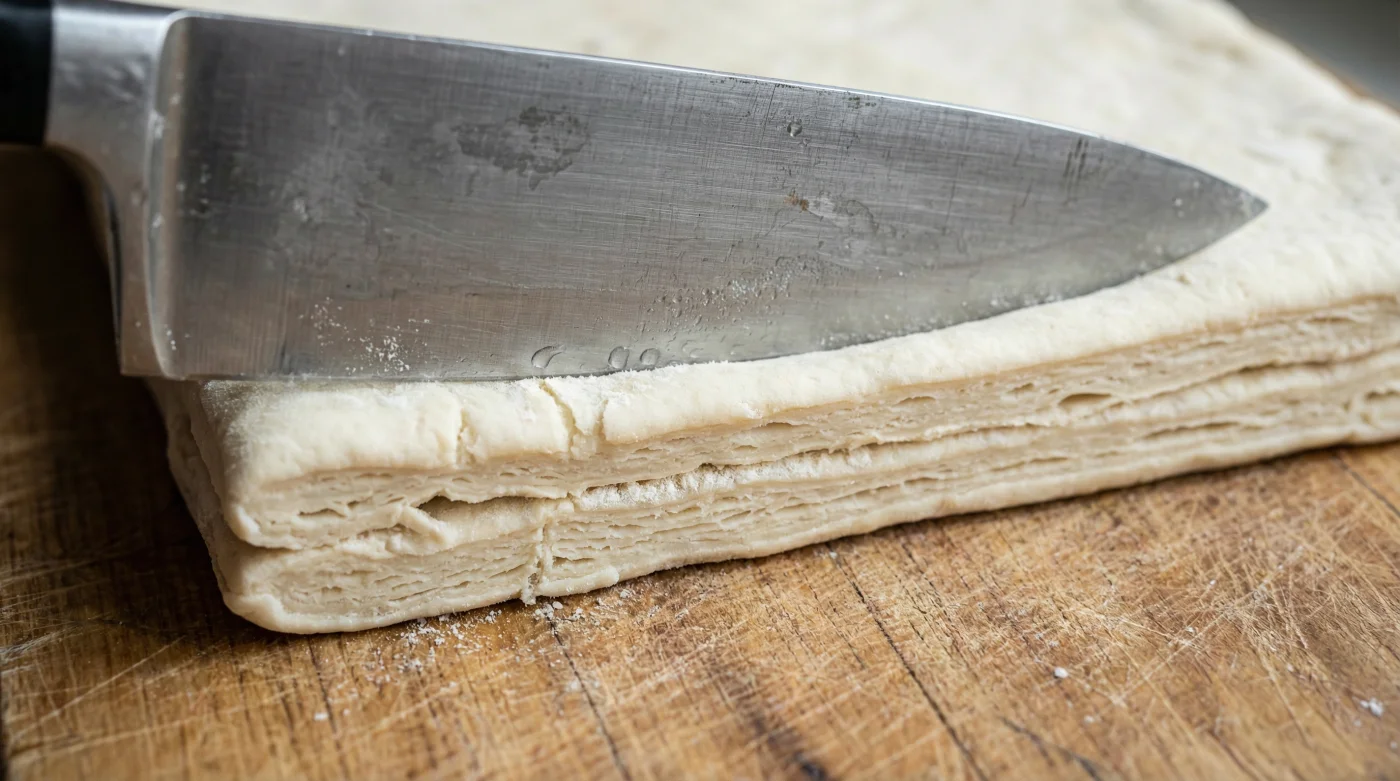
Think of puff pastry as a tightly packed accordion. Hundreds of microscopic layers of dough alternate with thin sheets of cold butter. When the fierce heat of the oven hits, the moisture in the butter vaporises. This sudden steam needs to push upward, expanding the accordion and creating that beautiful, shattering texture. But if you drag a blunt blade across the raw dough, you commit a fatal structural error. You physically crush those delicate margins together, smearing the butter into the flour and crimping the edges completely shut. The pastry is gagged, unable to exhale its steam.
| Target Audience | Specific Benefit |
|---|---|
| Home Bakers | Transform flat, disappointing pies into sky-high, professional centrepieces. |
| Weekend Entertainers | Serve delicate, shattering canapés that look catered rather than cobbled together. |
| Budget Cooks | Get the maximum volume and visual value from a basic supermarket pastry block. |
I learned this the hard way during a damp November morning in Cornwall. I was standing in the bakery of a man named Arthur, a seasoned master of the Cornish pasty and the Sunday sausage roll. I was slicing through a chilled block of all-butter puff, dragging a worn paring knife towards me. Arthur gently took the knife from my hand. ‘You are shutting the door on the air,’ he said, pointing to the squashed, fused seam I had just created. He handed me a heavy, fiercely sharp chef’s knife. ‘Straight down. A clean guillotine. Never drag.’
| Mechanical Action | Scientific Consequence | Pastry Result |
|---|---|---|
| Blunt Edge Pressure | Crimps the microscopic dough layers together, sealing the fragile edges shut. | A dense, claggy bake with zero vertical lift. |
| Dragging the Blade | Tears the gluten network and smears the butter into the flour. | Uneven, wonky shapes that lean and collapse in the heat. |
| Clean, Sharp Chop | Slices cleanly through the fat and flour without fusing the seams. | Maximum steam release, resulting in a towering, flaky structure. |
The Clean Guillotine Action
Fixing this common cooking error requires a physical shift in how you handle your kitchen tools. First, you must abandon the sawing motion completely. Pastry is not a rustic loaf of bread, and it requires absolutely no friction to portion it. You are aiming for precision, not force.
Find the sharpest knife in your kitchen drawer. A heavy chef’s knife with a wide blade works beautifully, as does a freshly sharpened pizza cutter for longer, continuous strips. Sometimes, running the blade under cold water and drying it thoroughly before slicing can prevent the butter from clinging to the steel.
- Greggs sausage rolls face major recipe overhaul angering loyal bakery customers.
- Cheddar cheese prices surge dramatically following unexpected domestic dairy yield drops.
- Meringue peaks collapse immediately ignoring this invisible lemon juice bowl wipe.
- Red onions cause severe eye watering missing this simple chilling phase.
- Basmati rice turns perfectly fluffy using this simple tea towel trick.
When you make the cut, press straight down through the dough to the board. Lift the blade entirely before moving to the next section. By treating the blade as a stamp rather than a saw, you keep the thousands of layers completely open and exposed to the heat of the oven.
| Quality Checklist | What to Look For | What to Avoid |
|---|---|---|
| The Tool | Razor-sharp chef’s knife, metal bench scraper, or a smooth pizza wheel. | Blunt utility knives, serrated bread knives, or thick plastic spatulas. |
| The Technique | A firm, vertical stamping motion. Lifting the blade completely between cuts. | Dragging the tip of the knife across the pastry surface. Sawing back and forth. |
| The Dough State | Firm, cold, and resting peacefully on the chopping board. | Warm, sticky, and actively resisting the blade. |
Respecting the Fold
There is a profound satisfaction in understanding the mechanics of your food. When you stop fighting the dough and start respecting its delicate structure, your time in the kitchen shifts from a frantic chore to a mindful craft. By simply changing your cutting motion and respecting the sharpness of your blade, you give the ingredients the exact space they need to perform.
You will begin to pull trays from the oven that shatter perfectly at the first bite, showering your plate in golden, buttery flakes. It is a minor physical adjustment that completely alters the daily rhythm of your cooking, saving you money on wasted ingredients and bringing a quiet, reliable joy to your kitchen table.
A baker’s blade should never argue with the dough; it must part the layers with the swift grace of a confident decision.
Frequently Asked Questions
Can I use scissors to cut puff pastry?
While scissors are sharp, the two blades pinch together as they close, which crushes the delicate layers just like a blunt knife. Stick to a single sharp blade pressing downward.Why does my shop-bought pastry still not rise even with a sharp knife?
It might be too warm. If the butter melts into the flour before it hits the hot oven, the steam cannot separate the layers. Always keep the pastry in the fridge until the absolute last moment before baking.Does this cutting rule apply to shortcrust pastry too?
Shortcrust relies on a crumbly texture rather than stacked, flaky layers, so it is far more forgiving. However, a clean cut always ensures neater edges for your tart cases.Is a pizza wheel really acceptable for delicate baking?
Yes, provided it is sharp and not wobbly. A pizza wheel rolls over the dough, pressing straight down without dragging, making it an excellent tool for long, straight pastry ribbons like cheese straws.How do I rescue pastry edges that I have accidentally squashed?
If you realise you have dragged the blade and sealed the edge, use a very sharp paring knife to trim a tiny, millimetre-thin sliver off the damaged seam, using a straight up-and-down motion to re-expose the layers before it goes into the oven.