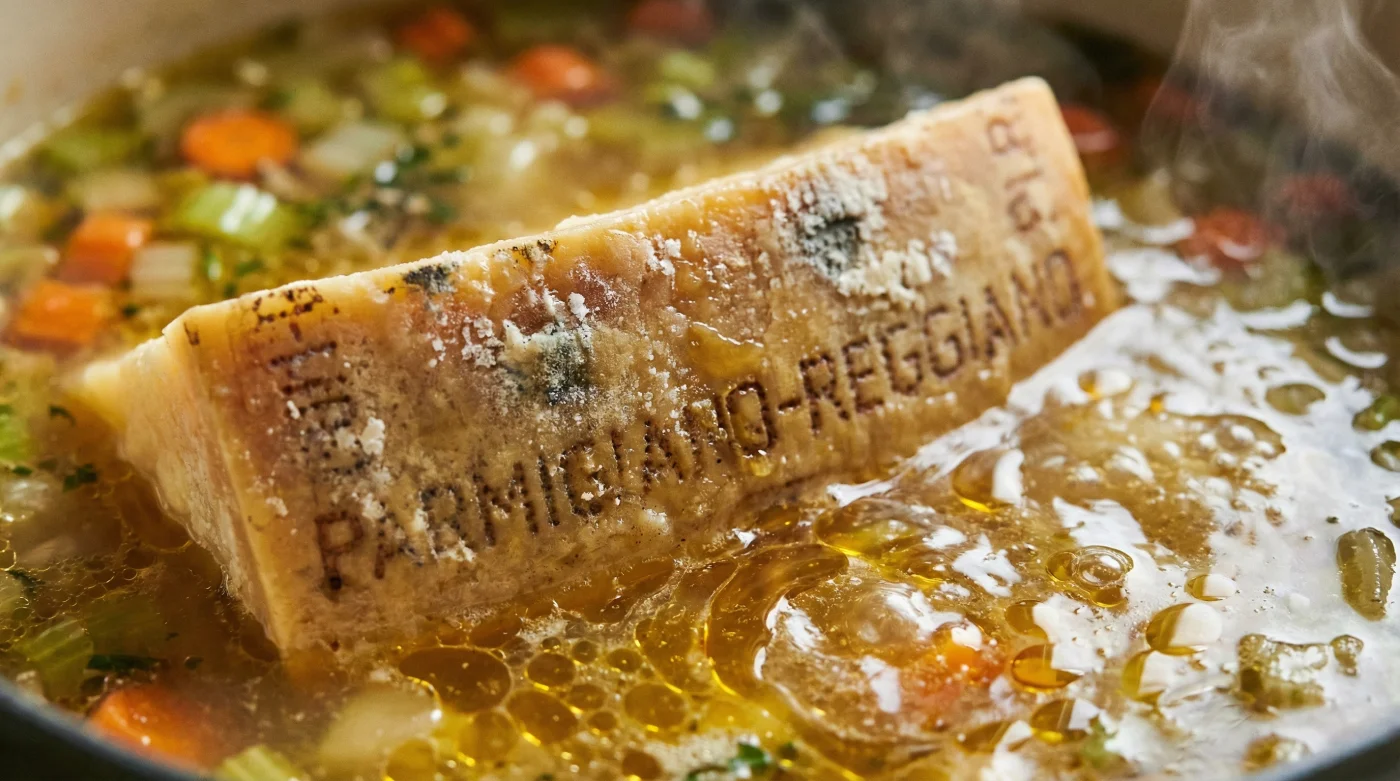
Rain lashes against the kitchen window, blurring the amber glow of the streetlamps outside. You are standing by the hob, watching a wooden spoon push pale cubes of carrot, celery, and onion around a heavy cast-iron pot of watery broth. The kitchen smells pleasant enough, perhaps offering a mild, fading suggestion of thyme and cracked black pepper, but it lacks the deep, rounding comfort you actually crave on a damp, bone-chilling Tuesday evening. It feels less like a restorative, warming supper and more like a bland, watery obligation.
Most home cooks face this exact, quiet frustration when attempting a quick vegetable soup to use up the wilting contents of their fridge drawers. You follow the weights and measures, simmering the ingredients until the potatoes are tender, only to be met with a thin liquid that slips right off the spoon and leaves no lasting impression on the palate. The broth feels painfully hollow, lacking the robust, lip-smacking mouthfeel that separates a hurried weekday dinner from a slow-cooked, deeply cared-for weekend triumph.
You reach for the wedge of mature Parmigiano-Reggiano, scraping the pale gold flesh over the steaming bowls in a desperate attempt to add some life and salt to the dish. Soon, your grater hits the tough, waxy perimeter where the cheese meets the air. The knife comes down heavily on the chopping board, slicing away that incredibly hard, supposedly inedible edge, and your hand naturally hovers over the food waste caddy. Stop right there.
Dropping that hardened stub into the bin is akin to throwing away the single most valuable, transformative asset currently sitting in your kitchen. That stubborn, waxy edge is entirely edible, holding an intense, tightly packed concentration of glutamates that professional kitchens rely on to rescue lifeless stocks and build rich, lingering flavour profiles.
The Slow-Release Flavour Battery
We are trained from an early age to view the rock-hard exterior of a cheese block as packaging, a protective, inedible barrier meant to be discarded the moment the soft, easily grated interior is spent. But this physical boundary is simply cheese that has been exposed to the air, curing and condensing over many months into a dense, moisture-free block of pure culinary potential.
Think of it not as a useless rind to be binned, but as a culinary time-capsule waiting to be activated by gentle heat and time. It is a slow-release battery, tightly packed with natural sea salt, complex dairy fats, and sharp lactic acid. When subjected to a gentle, rolling simmer inside a pot of soup, it softens gradually like a warming candle, leaching microscopic, invisible drops of fat and deep savoury umami directly into your cooking water.
By utilising this offcut, you stop blindly following recipe instructions and start genuinely understanding the underlying system of a good kitchen. You realise that a rich, comforting liquid is not achieved by violently boiling vegetables until they disintegrate into mush, but by introducing a structural element that fundamentally changes the viscosity and mouthfeel of the water itself.
Silvia Rossi, a forty-eight-year-old supper club host operating out of a tiny, condensation-slicked kitchen in Hackney, treats her hardened cheese offcuts with the hushed reverence most chefs reserve for white truffles. She treats the cheese drawer like a bank vault, hoarding these discarded edges in bulk from her local Italian deli for mere pennies. “A vegetable soup without a simmering rind is just hot water with floating garnish,” she often tells her guests, fishing out a soft, gelatinous stump from a massive, bubbling pot of winter ribollita.
Tuning the Broth to Your Needs
Not every pot of soup behaves in the exact same way, and the application of your salvaged treasure should shift slightly depending on the specific texture you are trying to build. You can adapt this brilliant, zero-waste pantry habit to suit whatever sits wilting in your crisper drawer, from earthy cavolo nero to starchy, pale butter beans.
For the Sunday Batch-Cooker, making heavy, rustic bean stews or traditional minestrone, the rind acts as a vital structural pillar for the entire dish. Drop it in quite early, right after you deglaze your softened, caramelised onions and celery with a splash of white wine. As the hours tick by, the tough exterior breaks down completely, releasing natural starches and fats that emulsify with the bean cooking liquid, creating a thick, velvety gravy that heavily coats the back of a wooden spoon.
For the Silk Seeker, attempting a perfectly smooth, blended creation like a roasted butternut squash or a delicate leek and potato soup, the rind serves a slightly different, more refined purpose. Here, it acts entirely as a background seasoning agent rather than a primary physical thickener, offering depth without interfering with the texture.
- Crystalised caramel sauce stays perfectly smooth ignoring standard constant stirring advice.
- Discarded celery leaves produce intensely savoury finishing salts for roasted meats.
- Icing sugar resists melting on warm cakes using this invisible cornflour trick.
- Broken hollandaise sauce emulsifies perfectly adding this single boiling water tablespoon.
- Baking soda transforms cheap tough beef cuts into premium melting steaks.
Mindful Extraction and the Gentle Simmer
Executing this incredibly effective technique requires only a slight shift in your daily kitchen rhythm. It is a quiet, highly mindful practice that demands your close attention to temperature control rather than frantic, noisy chopping or constant, aggressive stirring.
You must treat the soup water like a delicate brewing environment, coaxing the flavour out rather than forcing it. Violent heat causes rapid separation, forcing the delicate cheese fat to break completely and pool on the surface as an unappealing, greasy oil slick. You want the liquid to merely tremble, allowing the heat to massage the glutamates into the broth slowly.
- Keep a designated airtight tub in your freezer specifically for cheese offcuts; they do not require thawing before use.
- Ensure the soup water is barely shivering before dropping the frozen piece into the hot pot.
- Stir the liquid gently every twenty minutes to prevent the softening cheese base from sticking to the bottom of the pan and catching.
- Fish out the remaining jelly-like mass before serving the meal to your guests.
Your tactical toolkit for this extraction is delightfully simple and requires no expensive, highly specialised equipment. You simply need ninety minutes of undisturbed simmering time, a heavy-bottomed cast-iron pot to maintain a remarkably steady, low heat, and a sturdy wooden spoon to occasionally nudge the melting mass away from the hot metal base.
Implementing this small step naturally rewires your brain to look for value in places you previously ignored, cutting down your household waste. You stop wasting your money on heavily processed, foil-wrapped stock cubes, relying instead on the natural by-products of your own cooking to build complex, truly restaurant-quality meals at home.
Rewriting the Rules of the Kitchen Economy
Mastering this incredibly simple act fundamentally changes how you view your weekly grocery shop and your pantry provisions. It shifts your perspective from seeing fresh ingredients as a finite resource with a strict beginning and end, to recognising the hidden, continuous cycles of utility right inside your own fridge.
Every time you deliberately refuse to throw away those hardened, waxy edges, you are reclaiming a little bit of power and control over your domestic economy. You are not just making a cheap Tuesday dinner; you are participating in a quiet, highly thrifty tradition that values and extracts every single scrap of flavour available to you.
It brings a profound, quiet sense of satisfaction to stand over the warm hob, watching a thin, highly uninspiring liquid slowly morph into a dense, fragrant supper. You plate the meal knowing you achieved a spectacular result using exactly what others would blindly toss into the bin.
“The true weight of a dish is built from the invisible remnants we choose to save, rather than the expensive cuts we choose to buy.”
| Key Point | Detail | Added Value for the Reader |
|---|---|---|
| Temperature Control | Maintain a gentle, shivering simmer rather than a rolling boil. | Prevents the fats from splitting and creating an oily film on your soup. |
| Storage Protocol | Keep offcuts in an airtight container in the freezer indefinitely. | Ensures you always have a natural thickening agent ready, saving you £5 a week on fresh stocks. |
| Timing the Drop | Introduce the block immediately after deglazing your base vegetables. | Allows maximum time for the glutamates to leach into the water, building deeper savoury notes. |
Common Curiosities
Do I need to wash the exterior before using it?
Simply give the hard edge a light scrape with a paring knife to remove any residual paper or ink, but the wax itself is just hardened cheese and perfectly safe.Can I use offcuts from softer cheeses or cheddars?
It is best to stick to hard, aged Italian varieties like Pecorino or Parmigiano-Reggiano, as softer cheeses will completely melt and create a stringy, greasy mess.Will the soup taste overwhelmingly of cheese?
Not at all. It acts more like a seasoning, amplifying the savoury characteristics of your vegetables rather than masking them.How long should I leave it in the pot?
A minimum of forty-five minutes is required to soften the barrier, but leaving it for up to two hours yields the most luxurious texture.What should I do with the piece once the soup is finished?
Most fish it out and discard the spent jelly, though some thrifty cooks chop the chewy remnant and stir it back through the bowls for a rustic bite.