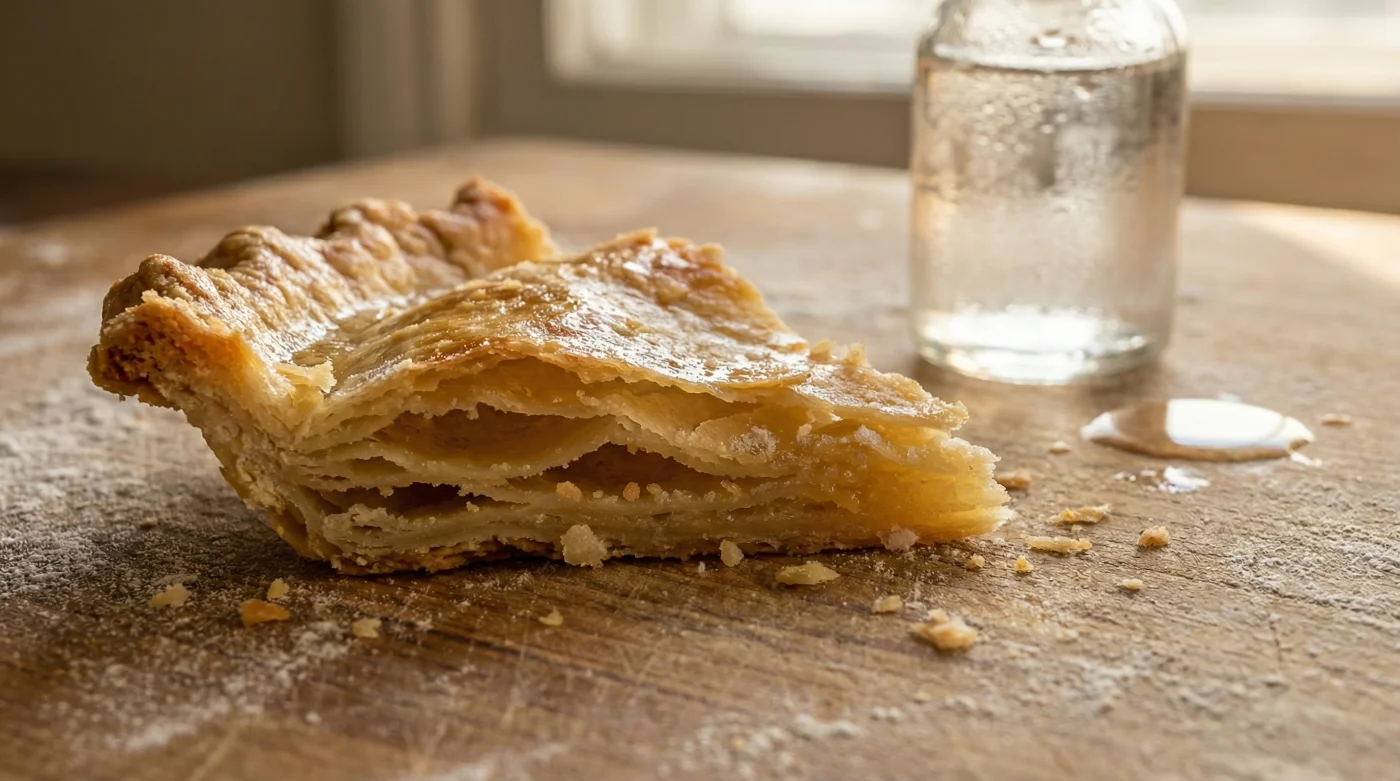
There is a distinct, quiet tension that fills the kitchen when the flour hits the worktop. It usually happens on a grey British afternoon, the air smelling faintly of roasted root vegetables or simmering apples, while your cold hands work chilled butter into a coarse, uneven rubble.
You have likely been told that pastry is a fragile creature, requiring iced water and a terrifyingly gentle touch. The fear of overworking looms over every movement, turning what should be a rustic, grounding task into an anxious race against the ambient temperature of your room.
But what if the very foundation of that anxiety was misplaced? The traditional, uncompromising reliance on freezing water to bind a crust together is precisely what causes the tough, leathery shrinking that plagues so many home cooks.
The secret to a shatteringly light crust does not live in the freezer at all. It sits in the drinks cabinet, quietly waiting to dismantle everything you thought you knew about binding flour and fat.
The Hydration Paradox
To understand why pastry fails, we must first look at the mechanics of plain flour. Think of the proteins within the flour as a tangled box of tight, microscopic springs.
When water touches those springs, they instantly bind together, creating gluten—the strong, elastic framework that gives a good loaf of bread its satisfying chew. Gluten is the quiet enemy of a tender pie crust. You want just enough structure to hold the melting butter in place, but not so much that the dough fights back and shrinks when the fierce heat of the oven hits it.
Here lies the hydration paradox: you desperately need liquid to bring the dry ingredients together, but that very liquid activates the toughness you are trying to avoid.
This is where a clear spirit steps in. Vodka contains high ethanol, a liquid that moistens the dry ingredients perfectly but flatly refuses to trigger gluten development. It behaves entirely differently on a molecular level. During the bake, the alcohol evaporates fiercely and rapidly, leaving behind nothing but microscopic pockets of steam and a beautifully tender, flaky structure.
Consider Arthur Pendelton, a 58-year-old pastry chef working out of a bustling pub near Padstow. For decades, he battled the humid Cornish air, losing batches of shortcrust to toughness when the dough required extra hydration. One evening, frustrated by a particularly stubborn bowl of flour, he swapped his jug of iced tap water for a splash of unflavoured potato vodka from the bar. The resulting crust was a revelation. It allowed him to roll the dough thinner, manipulate it longer without fear, and still achieve a finish that shattered instantly upon contact with the fork.
Adjusting Your Pastry Canvas
Once you understand that alcohol is simply a brilliant tool for managing protein, you can begin to tailor your crust to the specific mood of your meal.
For the Sunday Traditionalist: When building a sturdy chicken and mushroom pie, substitute exactly half of your usual chilled water with vodka. This creates robust golden shoulders required to hold up a heavy, bubbling gravy, whilst maintaining a delicate bite that yields effortlessly on the plate.
For the Delicate Sweet Tooth: If you are working on a summer fruit galette or a classic apple tart, you might want a crust that melts entirely in the mouth. In this case, use entirely vodka as your binding liquid, adding a heavy pinch of caster sugar to the dry mix. The sugar will caramelise beautifully, protected by a pastry that is almost fragile to hold, yet bakes into a crisp texture.
- Crystalised caramel sauce stays perfectly smooth ignoring standard constant stirring advice.
- Discarded celery leaves produce intensely savoury finishing salts for roasted meats.
- Icing sugar resists melting on warm cakes using this invisible cornflour trick.
- Broken hollandaise sauce emulsifies perfectly adding this single boiling water tablespoon.
- Baking soda transforms cheap tough beef cuts into premium melting steaks.
The Mindful Architecture of Flakiness
Shifting your approach requires a few tactical adjustments. This process is not about frantic speed, but rather deliberate, minimal movement.
You are aiming to coat the flour in fat, creating tiny waterproof barriers around the proteins, before introducing the liquid. Watch the texture shift rather than staring blindly at the kitchen clock or the recipe timings.
Follow these structural rules to ensure the spirit works entirely in your favour:
- Chill the spirit: Place your bottle of vodka in the freezer alongside your butter at least an hour before you begin. It will not freeze solid, but it will become delightfully viscous.
- The damp sand test: Rub the cold butter into the flour until the largest lumps are the size of frozen peas, and the rest resembles coarse, slightly damp sand.
- The careful sprinkle: Add the chilled vodka one tablespoon at a time, using a blunt knife to cut it through the mixture until rough clumps begin to form.
- The gentle press: Do not knead under any circumstances. Simply press the clumps together with the flat of your warm hands until they just hold their shape.
Your Tactical Toolkit: Aim for a ratio of 300g plain flour, 150g cold diced butter, and approximately 3 to 4 tablespoons of freezing vodka. Ensure the dough rests for a minimum of 45 minutes in the fridge before rolling, allowing the fats to completely re-solidify.
A Calmer Kitchen Reality
Letting go of the strict, traditional rules of baking often feels like a minor rebellion. Yet, this small, surprising swap offers something truly profound for the home cook.
It transforms a notoriously volatile process into something deeply reliable. You regain total control over the outcome, no longer at the mercy of unpredictable kitchen humidity or a slightly heavy hand with the water jug.
The pastry becomes a cooperative partner rather than a fragile liability. When you pull that golden, blistered crust from the oven, knowing it will shatter perfectly and melt on the tongue, the kitchen feels a little more like a sanctuary and less like a testing ground.
It is a quiet, beautiful reminder that the most brilliant solutions often come from questioning the very foundation of the rules we were taught to obey.
“Gluten relies on water to build its tough walls; by offering it a clear spirit, we gently and completely disarm it.”
| Key Point | Detail | Added Value for the Reader |
|---|---|---|
| The Binder | Ice-cold tap water (Traditional) | Activates gluten quickly, creating a tough, chewy crust if handled for even a minute too long. |
| The Pivot | Freezer-cold Vodka | Hydrates the dough beautifully while stalling protein chains, ensuring an extremely tender bake. |
| The Bake | Evaporation rate | Ethanol vaporises much faster than water, puffing the layers of flour and butter into brilliant, airy flakes. |
Frequent Pastry Queries
Will my pie taste like strong alcohol?
Not at all. The ethanol evaporates entirely in the fierce heat of the oven, leaving absolutely no flavour or scent behind.Can I use gin or rum instead?
You can, but coloured or heavily botanical spirits will impart their specific flavour profile into the crust. Vodka is prized here specifically for its pure neutrality.Do I still need to chill the dough before rolling?
Yes. Resting the dough allows the butter to firm up again, which is strictly necessary for creating those distinct, flaky layers during the bake.What if the dough feels slightly too wet?
Because vodka does not create sticky gluten, a slightly tackier dough is entirely manageable. Simply dust your worktop generously with plain flour before you begin to roll.Is this pastry safe for children to eat?
The baking process cooks off the alcohol content entirely, leaving only the incredible structural benefits behind. It is perfectly safe for all ages to consume.